

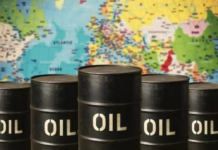



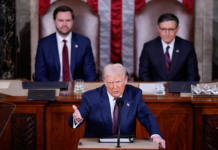










Donald Trump told reporters at the United Nations on Wednesday that a three-hour meeting between American and Iranian representatives had gone “very good, very productive,” sending oil prices down and pulling both major benchmarks back below the symbolic $100-a-barrel level for the first time in weeks.
Brent crude fell to $98.41 a barrel and West Texas Intermediate dropped to $89.23 in afternoon Asian trading, declines of 0.9 percent and 1.4 percent respectively. Both benchmarks had repeatedly traded above $100 since the war between the United States, Israel and Iran began on February 28, when American and Israeli strikes on Iran triggered retaliatory strikes on Israel and on Gulf states hosting US military bases.
Trump said US and Iranian negotiators had scheduled a further round of talks in the near term, a claim that followed a combative address he had delivered to the UN General Assembly only hours earlier, in which he framed his choice as either striking a deal with Tehran or moving to destroy the Islamic Republic outright. The State Department had confirmed on September 17 that it would grant visas to a “core delegation” from Iran, including President Masoud Pezeshkian and Foreign Minister Abbas Araghchi, to attend the General Assembly under the terms of the UN’s host-country obligations, while keeping the delegation under travel restrictions and barring its members from purchasing luxury goods.
“The three-hour US-Iran meeting matters because it shifts the market from pure escalation pricing toward a genuine diplomatic process, even if a final deal still looks distant,” said Stephen Innes, an analyst at Quintex Intel.
Read Also: China Pledges To ‘Safeguard’ Iran’s Rights Amid War
Nearly seven months into the conflict, Iran has kept the Strait of Hormuz closed and the United States has maintained a counter-blockade of Iranian ports, while fighting between Saudi-backed government forces and Iran-aligned Houthi rebels in Yemen has spread into the kingdom and squeezed energy exports moving through the Red Sea. Sourcing reviewed by The Eastern Update indicates the Houthis separately pledged, during talks with US officials in Oman this month, to honor a 2025 ceasefire and avoid targeting American and Israeli vessels, while continuing to exclude only Saudi shipping from that assurance.
The price relief also followed word that Saudi Arabia, the world’s largest crude exporter, was restarting its East-West Pipeline after drone strikes forced its shutdown. Bloomberg reported the kingdom aims to resume exports along the route later this week, with Saudi state producer Aramco reportedly telling Asian refiners they could soon resume lifting crude from the Red Sea port of Yanbu, even as it told European customers they would receive no allocation in October.
Trump has said repeatedly that oil prices would fall once the United States prevails in the conflict, a framing that ties crude markets directly to the war’s trajectory rather than to underlying supply and demand.
Asian equity markets moved unevenly on the day.
Read Also: President Trump Backtracks On Plan To Toll Hormuz Ships
Hong Kong’s Hang Seng index fell 1 percent even as Chinese technology group Alibaba announced plans to expand its overseas data centres into Europe and the Middle East, part of a renewed burst of confidence in artificial intelligence this week after Anthropic and OpenAI released new, lower-cost models within hours of each other. Shanghai’s Composite index closed down 0.4 percent. South Korea’s Kospi and Taiwan’s Taiex, home to chipmaker TSMC, rose 0.9 percent and 0.8 percent, while Tokyo’s markets were shut for a holiday. London’s FTSE 100 opened 0.3 percent higher.
Traders were also positioning ahead of a Thursday summit in Washington between Trump and Chinese President Xi Jinping expected to focus on trade between the world’s two largest economies, whose roughly year-old tariff truce has yet to produce a lasting agreement. Kyle Rodda, a senior market analyst at Capital.com, said the bigger factor for markets remained the Middle East war and whatever leverage Washington could persuade Beijing to exert on Iran.
Currency markets reflected similar caution: the dollar strengthened to 157.76 yen from 157.37, the euro slipped to $1.1425 from $1.1451, and the pound eased to $1.3314 from $1.3344, while the euro held flat against the pound at 85.81 pence. Anthropic’s release comes weeks ahead of its expected stock market debut, while OpenAI has pushed its own initial public offering into next year.
No date has been set for the next round of US-Iran talks Trump referenced, and neither government’s negotiating team issued a joint statement following Wednesday’s meeting.