




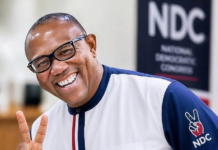










A Nigeria Democratic Congress chieftain in Abia State said Saturday that presidential candidate Peter Obi will not withdraw from the 2027 race over recent allegations from the Anambra State government concerning unpaid loans from his tenure as governor, calling the timing of the claims a coordinated attempt to force him out of contention.
Uko Nkole, the party’s Abia North senatorial candidate, told reporters the loan allegations were engineered by the presidency to derail Obi’s candidacy and accused Anambra Governor Charles Soludo of assisting the effort by helping surface material that could be used against Obi. “It gives you the idea that the man has been investigated all round and they found nothing on him,” Nkole said, framing the fact that no other allegations have previously stuck to Obi as evidence the current claims are similarly unfounded rather than as a coincidence.
The claims Nkole was responding to stem from a report published by the Anambra State government alleging Obi’s administration left unpaid loans on the books when his tenure as governor ended. Nkole did not dispute the loans’ existence directly but characterized the timing and source of their publication as politically motivated, arguing that the presidency’s interest in the matter revealed more about its own anxieties than about Obi’s record in office.
Read Also: 2027: Oyo APC Rep Aspirant Backs Party After Ending Feud
“Whatever claim that is being peddled that got the presidency attracted is to tell you that it does not wish Nigerians well,” Nkole said. “But unknown to the APC and the presidency, they are helping Obi’s campaign.”
The Eastern Updates has learned that Nkole, a former member of Nigeria’s House of Representatives, tied the current controversy to lingering unease within the ruling party over the electoral movement that carried Obi to a strong third-place finish in the 2023 presidential election. He argued the presidency remains concerned about a repeat of that showing and is searching for ways to discredit Obi’s party ahead of 2027, though he said the strategy has so far produced the opposite of its intended effect by drawing continued attention to Obi’s candidacy.
Nkole separately cautioned Nigeria’s electoral commission against what he described as repeating an excuse used during the 2023 presidential and National Assembly elections, when technical failures at result collation centers were attributed to network problems. He said Nigerians would not accept a similar explanation in the 2027 cycle and urged voters to safeguard their ballots at polling units.
“Nigerians should be vigilant on election day by protecting their votes and should even be prepared to provide hotspots to INEC officials if they claim that there is no network,” Nkole said, framing voter vigilance as a check against any repeat of the disputed 2023 collation process.
Nkole’s remarks arrive amid broader turbulence within Nigeria’s opposition landscape ahead of 2027, including a separate dispute this week in which the NDC’s national leadership publicly disowned a 59-member presidential campaign council announced by the Obi-Kwankwaso Movement, warning that only the party’s National Working Committee has authority to constitute official campaign structures. That episode, unfolding alongside the loan controversy, illustrates the layered coordination challenges facing Obi’s coalition as competing camps within his support base jostle over structure and messaging heading into the election.
Read Also: Niger State Names New Commandant After Miners’ Deaths
The Anambra state government has not issued additional detail beyond its initial report on the disputed loans, and the presidency has not publicly addressed Nkole’s allegation that it played a role in surfacing the claims. Obi himself has not issued a direct public response to the loan allegations, leaving allies such as Nkole to carry the party’s messaging on the matter in the days since Anambra’s report was published.
Political analysts tracking the 2027 cycle have noted that allegations tied to past gubernatorial tenures have featured prominently in prior Nigerian presidential contests, often surfacing during the campaign season regardless of a candidate’s actual legal exposure, a pattern Nkole invoked directly in dismissing the current claims as a familiar tactic rather than a substantive threat to Obi’s candidacy.
Obi served as Anambra governor from 2006 to 2014, a tenure he has frequently cited on the campaign trail as evidence of fiscal discipline, pointing to savings and reserves he says the state accumulated under his administration. Allegations that his government instead left unpaid obligations on the state’s books directly challenge that central plank of his political narrative, which helps explain why Nkole and other allies moved quickly to characterize the claims as politically motivated rather than allow them to sit unanswered ahead of the 2027 campaign season.