


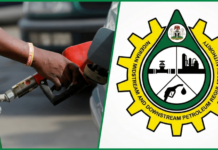














Nigeria’s midstream and downstream petroleum regulator said Friday it has no legal authority to set pump prices for petrol, even as it announced tighter surveillance against price-gouging following another jump in fuel costs across the country’s major cities.
The Nigerian Midstream and Downstream Petroleum Regulatory Authority, NMDPRA, said in a statement that Section 205(1) of the Petroleum Industry Act places wholesale and retail petroleum pricing under unrestricted free-market conditions, leaving the agency without power to issue administrative price templates. “The Authority does not fix pump prices or issue administrative price templates,” the regulator said, adding that intervention is legally permitted only in exceptional circumstances involving a formally declared market failure — a declaration the agency said has not been made.
Checks conducted independently found petrol selling between 1,400 and 1,450 naira per liter at retail outlets in major cities, with variation between filling station brands. Most stations in Lagos were dispensing petrol between 1,400 and 1,430 naira per liter, while MRS stations in the city sold at 1,395 naira. In Abuja, pump prices ranged between 1,400 and 1,450 naira per liter, reflecting the uneven pricing that has become common across Nigeria’s deregulated downstream market.
Read Also: Atiku Tells Tinubu To Stop Blaming Past Govts On Refineries
The latest increase extends a sharp climb in domestic fuel costs that began earlier this year. Petrol sold for around 830 naira per liter before the onset of the Middle East crisis, before rising past 1,300 naira in many parts of the country in the months since — a trajectory the regulator has attributed to a combination of crude oil sourcing costs, domestic refining capacity, and logistics and transportation expenses layered on top of a fully deregulated pricing structure.
Global oil markets have added further pressure. International crude prices remained above $100 a barrel last week following the breakdown of talks over the Strait of Hormuz, a shipping chokepoint whose disruption has fed directly into the cost refiners and fuel suppliers pay for crude feedstock and finished products, according to market data reviewed by The Eastern Updates.
While insisting prices remain market-driven, the NMDPRA said deregulation does not exempt fuel marketers from regulatory oversight or fair-trading rules. The agency cited Section 216 of the Petroleum Industry Act, which grants it authority to act against anti-competitive practices, price-fixing and abuse of market dominance within the industry, and said it is working with the Nigeria Customs Service and other security agencies to intensify surveillance along Nigeria’s border corridors to curb the illegal diversion and smuggling of petroleum products.
The regulator also pointed to an existing memorandum of understanding with the Federal Competition and Consumer Protection Commission, under which the two agencies are jointly monitoring the market for price-gouging, collusion, under-dispensing at the pump and compromised fuel quality. NMDPRA said it is opening dedicated channels through which members of the public and industry stakeholders can report irregular pricing and other exploitative practices for investigation.
The price increases have rippled beyond the pump. Transportation costs have climbed in parts of Lagos as operators adjust fares to reflect higher fuel expenses, adding to broader pressure on household budgets already strained by the cost of food, rent and school fees.
Read Also: Niger State Names New Commandant After Miners’ Deaths
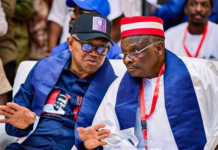
Former Vice President Atiku Abubakar, the African Democratic Congress presidential candidate, used a recent press conference in Abuja to call on President Bola Tinubu to intervene directly to lower petrol prices, arguing that the president should be willing to adopt the proposal even though it originated from a political opponent, with the stated priority being relief for ordinary Nigerians.
The Nigeria Labour Congress has pressed for a different remedy, calling on the federal government to introduce immediate wage awards for workers. NLC President Joe Ajaero said rising transport costs tied to the fuel increases were eroding workers’ purchasing power and risked pushing up the cost of food, school fees and rent still further. The union has also called for expanded crude supply to local refineries and additional petroleum storage capacity as longer-term measures to stabilize the market.
NMDPRA has not indicated whether it considers current pricing conditions close to meeting the threshold for a declared market failure that would trigger the intervention powers it says it otherwise lacks.
The regulator’s posture reflects the broader framework established when Nigeria fully deregulated its downstream petroleum sector, ending decades of government-set pump prices and fuel subsidies that had previously shielded consumers from swings in global crude costs but placed a heavy recurring burden on the federal budget. Since deregulation took hold, price movements at the pump have tracked international crude benchmarks and the naira’s exchange rate far more closely than in the subsidy era, leaving Nigerian motorists more directly exposed to shocks such as the Strait of Hormuz disruption than they were in previous years.