










|
Listen to article
|
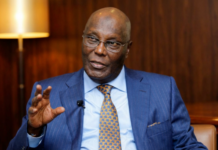
Former Vice President Atiku Abubakar accused President Bola Tinubu of shifting blame for Nigeria’s troubled petroleum refineries onto previous administrations, arguing the government must account for a sharp rise in refinery-related financial obligations recorded under its own watch.
Atiku’s Senior Special Assistant on Public Communication, Phrank Shaibu, issued the accusation in a statement Sunday, arguing that more than three years into Tinubu’s presidency, the administration can no longer attribute the refineries’ financial troubles to inherited liabilities.
Atiku grounded his criticism in figures drawn from Nigerian National Petroleum Company Limited records, which he said showed the combined obligations of the Port Harcourt, Warri, and Kaduna refineries to NNPCL rising from approximately 4.52 trillion naira in 2023 to 8.67 trillion naira in 2024, an increase of roughly 4.15 trillion naira in a single year. He argued the jump raises unanswered questions about what financial commitments to the refineries actually produced for the country.
The African Democratic Congress presidential candidate also pointed to a February 2026 admission from NNPCL Group Chief Executive Officer Bayo Ojulari, who said during a fireside chat at the Nigeria International Energy Summit in Abuja that the state-owned refineries had been operating at a “monumental loss” and that continuing to run them under the existing arrangement was destroying value. Ojulari said NNPCL had halted operations after an internal assessment found low utilization, no credible path to profitability, and continued financial losses.
Atiku characterized Ojulari’s admission as exposing a contradiction in how the government had earlier presented its refinery rehabilitation program. “President Tinubu cannot have it both ways. When the cameras were rolling in November 2024, his government told Nigerians that the Port Harcourt refinery was back. NNPCL announced that it was operating at 70 per cent capacity and expressly presented it as an achievement under President Tinubu’s leadership,” the statement read, adding that the administration now wants Nigerians to view the same facilities as inherited liabilities once the celebration turned to embarrassment.
NNPCL had announced on November 26, 2024, that the old 60,000-barrel-per-day Port Harcourt refinery had resumed processing, with trucks beginning to load petrol, diesel, and kerosene. The company said at the time the facility was running at 70 percent of installed capacity, with plans to raise utilization to 90 percent.
Atiku challenged Tinubu to take ownership of both the successes and failures under his administration. “Mr President, you claimed the refinery when you thought it was working. You cannot disown it now that the smoke has cleared,” he said, calling on the Federal Government to explain how obligations rose by more than 4 trillion naira in a single year and what Nigerians received in exchange. “Nigerians deserve answers. If the combined obligations of these refineries jumped by more than ₦4tn in 2024 alone, what exactly did Nigerians receive in return. Where did the money go? Where are the products? Where are the savings Nigerians were promised? And where is the refinery your government celebrated before television cameras,” he said.
The dispute unfolds against a backdrop of repeated, unsuccessful attempts by successive Nigerian administrations to revive the country’s state-owned refineries. NNPCL had presented the Port Harcourt restart in November 2024 as a major milestone toward restoring domestic refining capacity and improving energy security. Questions about the commercial viability of the government-owned plants persisted, however, and by February 2026 NNPCL management concluded that continued operation under the prevailing structure would generate further losses, prompting a temporary shutdown of the state-owned facilities.
Read Also: Gwarzo: Adeleke’s Win Shows Voters Ready To Defend Mandate
Atiku said the situation is particularly troubling given that Nigerians continue paying high prices for petroleum products despite the scale of funds committed to restoring domestic refining. He suggested the 4 trillion naira increase alone could have funded improvements to universities, hospitals, roads, electricity, and potable water access nationwide, calling the outcome “an unforgivable failure of stewardship.”
He accused the administration of selectively claiming credit for successes while attributing failures to predecessors. “You cannot spend three years claiming credit for everything that appears to work and blaming your predecessors for everything that fails. Leadership does not work that way,” Atiku said, describing Tinubu’s record after more than three years as “increasingly a story of fire and smoke — enormous expenditure, extravagant announcements and very little Nigerians can hold in their hands.”
Read Also: The Bloodline Execution — Part 28
Atiku closed by warning against what he called four more years of “paying for failure,” urging the administration to take responsibility for liabilities accumulated during its own tenure rather than continuing to invoke inherited problems. “Mr President, stop blaming your predecessors. After more than three years, you are no longer merely managing inherited liabilities. You are creating your own — and increasingly, your government itself has become the biggest liability Nigerians are being forced to carry,” he said.
Atiku previously served as Nigeria’s Vice President from 1999 to 2007 under President Olusegun Obasanjo and has run for the presidency multiple times since leaving office, most recently finishing second to Tinubu in the 2023 general election under the Peoples Democratic Party before more recently aligning with the African Democratic Congress ahead of the 2027 race. Nigeria’s refineries, including the Port Harcourt, Warri, and Kaduna facilities cited in Atiku’s statement, have operated well below installed capacity for over a decade, forcing the country to rely heavily on imported refined petroleum products even as it remains one of Africa’s largest crude oil producers, a dependency successive governments have repeatedly pledged to end through rehabilitation programs that have yet to yield sustained domestic output.