







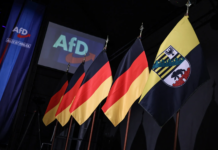












Voters in Berlin and Mecklenburg-Vorpommern went to the polls Sunday in state elections widely seen as a test of Chancellor Friedrich Merz’s grip on power, with pollsters projecting further gains for the far-right Alternative for Germany just two weeks after the party’s landslide win in Saxony-Anhalt.
Merz, 70, scheduled a crisis meeting of his center-right Christian Democratic Union leadership to review results as they arrive from the two regional contests, and cleared his calendar for the days following the vote. The chancellor skipped a planned trip to the United Nations General Assembly in New York to remain available for the political aftershocks the elections could produce for his 16-month-old government.
Polling stations opened at 8 a.m. local time and were due to close at 6 p.m., with the AfD’s Saxony-Anhalt result — 44% of the vote against 17% for the CDU — looming over both contests as a marker of how far the party’s momentum has traveled since. In Mecklenburg-Vorpommern, pre-election surveys from public broadcaster ZDF showed the AfD narrowly trailing the governing Social Democrats, 36% to 37%, while Merz’s CDU registered at just 6%, dangerously close to the 5% threshold required to retain any seats in the state legislature — a level that, if breached, would mark the first time the party has been shut out of a German state parliament entirely.
Read Also: Thousands March In Geneva, Lausanne Over Climate Inaction
Berlin presented a different dynamic, with the CDU defending its position as the city-state’s ruling party against a tight three-way contest involving the AfD and the far-left Die Linke, which has built support around a platform promising aggressive intervention in the capital’s housing crisis and has found particular traction among younger voters. A CDU loss to Die Linke in Berlin would compound the pressure building on Merz following Saxony-Anhalt.
The Eastern Updates understands Merz received a show of qualified support from within his own party days before the vote, when eight CDU state premiers issued a joint statement arguing Germany needs “stability now more than ever” rather than “discussions about personnel” — language widely read as an attempt to head off open leadership speculation without offering Merz a personal endorsement.
Pollster Roland Abold of the Infratest Dimap research institute described Merz’s personal standing in stark terms, noting that only 13% of respondents in the institute’s most recent survey said they were satisfied with his performance — the lowest figure Infratest Dimap has recorded for a sitting chancellor since it began tracking the measure. “In personal terms, the situation is quite dramatic” for Merz, Abold said.
Several analysts have pointed to forces largely outside Merz’s direct control as drivers of his declining position. The wars in Ukraine and the Middle East have pushed energy prices higher, feeding a cost-of-living squeeze that has weighed on households since Merz took office in May 2025 promising to revive Germany’s economy, rebuild its military against the threat from Russia, and curb irregular immigration. China’s rapid industrial rise has meanwhile turned a longtime German export market into a direct competitor, adding further strain to an economic picture Merz inherited already under pressure.
Holger Schmieding, chief economist at the investment bank Berenberg, argued Merz has drawn an unusually difficult hand regardless of his own performance in office. “Tough luck for Friedrich Merz,” Schmieding wrote, pointing to a recent surge in petrol prices and the swirling public debate over Merz’s political future as compounding factors beyond the AfD’s rise. He noted that Presidents Trump and Putin “have triggered the crises that have sent oil and gas prices into the stratosphere,” even as elements of the AfD maintain warmer relations with both leaders than Merz’s own coalition does.
Read Also: Trump Touts 25 Achievements As Midterm Jitters Mount
Despite the AfD’s polling ties to figures voters increasingly blame for their economic pain, Schmieding said voters have tended to direct their frustration at Merz’s governing coalition rather than at the AfD’s international sympathies. He judged it more likely than not that Merz would survive the current political turbulence and serve out his term through 2029, even as Sunday’s results threatened to intensify pressure within his own party in the near term.
Full results from both state elections were expected later Sunday evening, with Merz’s CDU leadership meeting scheduled to convene shortly after polls close.
Sunday’s twin elections also carry consequences beyond Merz’s immediate political standing. A CDU collapse below the 5% threshold in Mecklenburg-Vorpommern would strip the chancellor’s party of any voice in a state legislature for the first time in the party’s postwar history, a symbolic blow that could accelerate internal calls for a change in national leadership regardless of how narrowly the party clears or misses the mark. In Berlin, a defeat at the hands of Die Linke would hand the far left control of Germany’s capital for the first time in decades, a result that would carry outsized symbolic weight in national politics even though the CDU’s Berlin mayor, who is not standing for reelection, has already stepped back from frontline leadership of the local race.