


















Iran’s Revolutionary Guards warned Thursday that American military bases across the Middle East would come under attack if the United States continues escorting ships through the Strait of Hormuz, escalating a standoff that has already drawn four fresh strikes on vessels in the Gulf overnight.
“If this trend continues, the conflict will extend to its bases in the region,” the Guards said in a statement posted to their Sepah News website, describing the message as a serious warning rather than rhetoric.
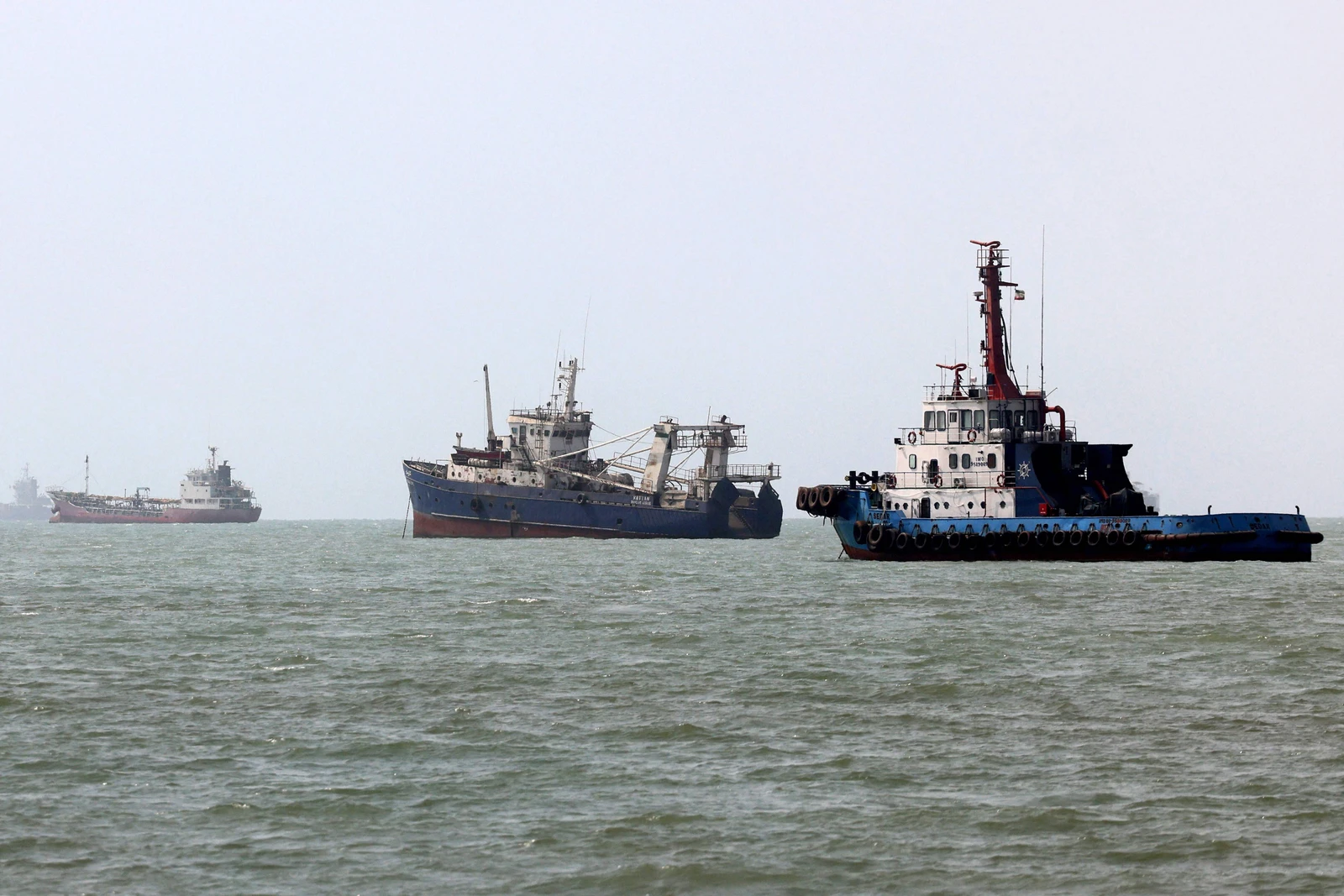
Iranian forces said they struck four ships overnight Thursday as the vessels attempted to pass through the wider Gulf, part of a pattern of escalating attacks that has accompanied a steady increase in the number of US Navy escorts moving through the waterway in recent weeks. The Eastern Update understands the overnight strikes bring to well over a dozen the number of vessels Iran has targeted in the strait since the broader war between the United States, Israel and Iran began in late February, with the pace of attacks climbing in step with the volume of American-escorted shipping.
Hormuz, which separates Iran to the north from Oman to the south, narrows to roughly 30 kilometers at its tightest point and carried close to a fifth of the world’s seaborne oil supplies before the war disrupted traffic through the corridor. Iran has repeatedly asserted that it maintains effective control of the strait and has at various points ordered vessels to use only a navigation corridor of its own designation, warning that ships deviating from that route would face what its naval command called decisive action.
Read Also: Iran Tells US ‘No Military Solution’ As Tanker Hit
Washington has paired its escort operations with a naval blockade of Iranian ports intended to squeeze the country’s oil-dependent economy, even as the two sides’ negotiators have met periodically at the United Nations without reaching a breakthrough. US and Iranian officials held a three-hour meeting this week that both sides described in positive terms, though talks over ending the wider conflict remain deadlocked, according to officials briefed on their status.
The Guards’ statement did not specify which American installations it considered potential targets, but the United States maintains a dense network of bases and naval facilities across Gulf states including Qatar, Bahrain and the United Arab Emirates, several of which sit within range of Iranian ballistic and cruise missiles. Washington ordered US embassy staff and their families to leave Saudi Arabia earlier in the conflict as a precaution against the risk of retaliatory strikes on American personnel in the region.
Iran’s threat against US bases is not new in substance; the Guards have issued similar warnings at several points since the war began, including threats to strike American and Israeli-linked shipping specifically while insisting the strait itself would remain technically open. What has shifted, officials tracking the conflict say, is the frequency of actual strikes on vessels moving through the waterway, which has climbed alongside the scale of the US escort mission rather than receding as Washington had hoped it would.
Read Also: UK Gathers Over 40 Countries To Press Iran To Reopen Hormuz
The conflict has already drawn in regional actors beyond Iran and the United States. Fighting between Saudi-backed government forces and Iran-aligned Houthi rebels in Yemen has spread into Saudi territory itself, squeezing energy exports moving through the Red Sea and adding a second front to the broader confrontation playing out across Gulf waterways. Egypt’s president has said his country stands ready to defend Saudi Arabia militarily if requested, a statement that illustrates how far the conflict’s potential reach now extends beyond its original combatants.
The strait has effectively functioned as a chokepoint for global energy markets since the war began, with roughly 2,000 vessels at one point stranded in or near the waterway as shipping companies struggled to secure war-risk insurance for the crossing. Washington’s escort mission, known internally as Project Freedom, was designed to unlock that backlog by providing US naval protection to commercial vessels willing to risk the transit, and officials have said two American-flagged ships have already completed the passage under escort. The program has nonetheless drawn criticism from maritime industry figures who say no number of naval escorts can fully offset the risk for commercial crews while Iranian forces continue actively targeting shipping in the strait.
Iran’s Foreign Minister Abbas Araghchi has separately cautioned that deeper American involvement in the strait risks drawing Washington further into what he described as a prolonged regional entanglement, a message Tehran has repeated even as its forces continue to press attacks on vessels transiting the waterway. The gap between Iran’s diplomatic messaging, which has periodically signaled openness to negotiation, and its military posture in the strait itself has become one of the more consistent features of the seven-month conflict.
No American base in the region had been struck as of Thursday, and the Pentagon had not issued a public response to the Guards’ statement by the time of filing.