


















|
Listen to article
|
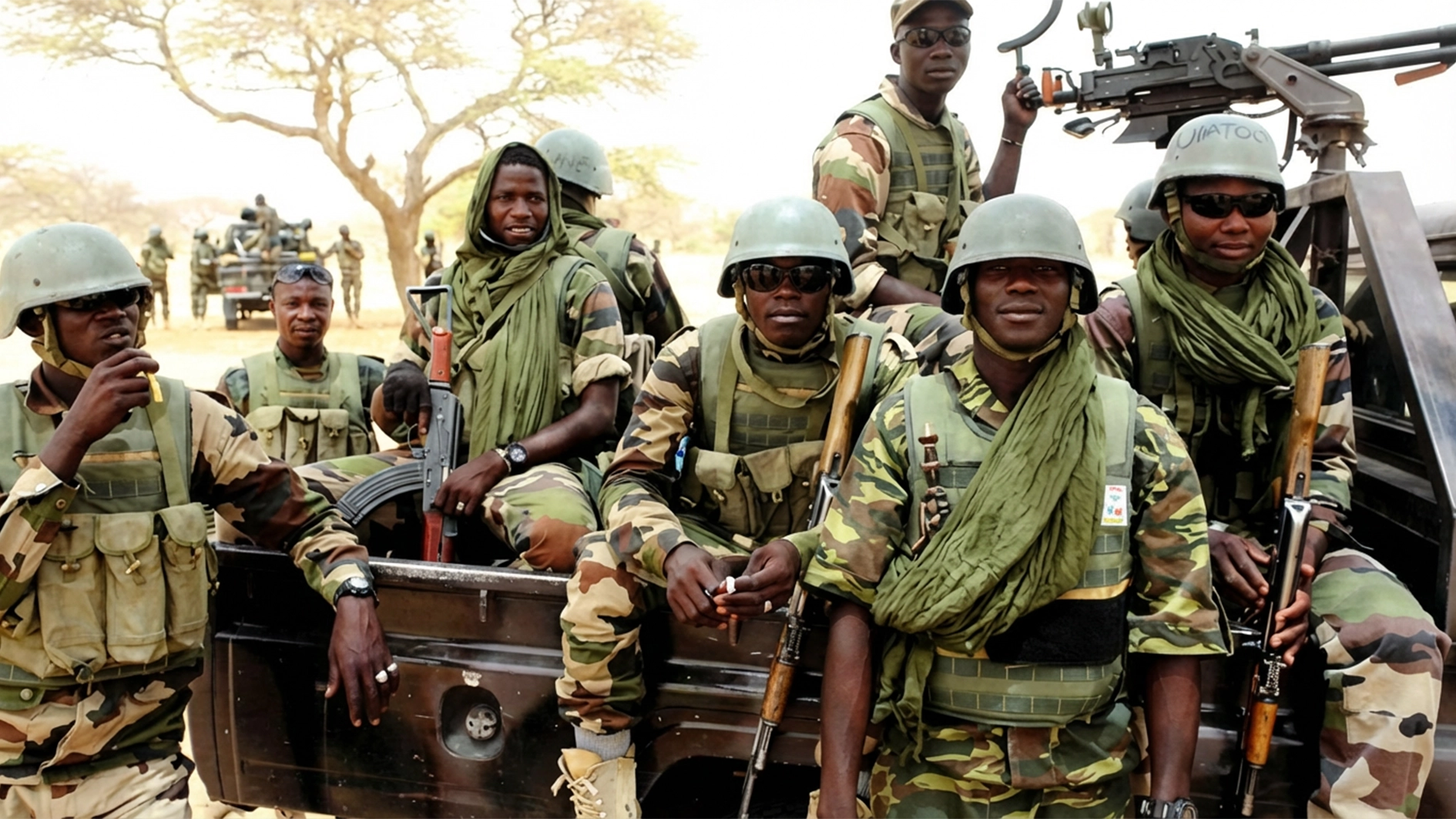
Nigerian troops of Operation Hadin Kai killed five Boko Haram and Islamic State West Africa Province fighters in the Sabsawa area of Borno State over the weekend, rescuing three children from the same family who had been held in captivity for approximately two months, operations that form part of an intensified dry-season offensive against insurgent networks across Nigeria’s northeast that has produced sustained combat engagement over the past three weeks.
The operations were conducted between February 20 and 21. In the first, troops of Sector 1 encountered suspected Jama’atu Ahlis Sunna Lidda’awati wal-Jihad and ISWAP fighters during a fighting patrol around Sabsawa village in Borno State. The troops responded with overwhelming firepower, forcing the terrorists to flee in disarray, and killed five during the subsequent exploitation of the area. In a separate operation the same day, troops deployed at Ngurosoye in Bama Local Government Area rescued three children, Abba Abba, aged 12, Fatima Abba, aged 8, and Aisha Abba, aged 6, during a perimeter patrol. Preliminary findings indicated the three siblings had been abducted approximately two months earlier along the Gubio axis before being moved to Bula-Daloye by their captors. The children were handed to the Nigeria Police Force for further care and documentation. In a third incident, an 18-year-old man identified as Abubakar Abubakar surrendered to troops at Geidam in Yobe State and is currently in military custody undergoing profiling and deradicalization screening.
The operations were disclosed in a statement by Operation Hadin Kai Media Information Officer Lieutenant Colonel Sani Uba, who described the three developments as part of sustained aggressive offensive and stabilisation operations across the theatre.
The weekend results come within a broader operational tempo that has seen near-daily military contact with insurgent forces since the start of February. On the night of February 14, ISWAP launched coordinated large-scale attacks against military positions in Pulka and Mandaragirau communities in Gwoza Local Government Area. Troops of Sector 1 came under heavy fire from what military sources described as a large group of insurgents advancing from multiple directions. The attack was repelled through sustained defensive fire and rapid reinforcement from Kirawa, Ngoshe, and Gwoza, resulting in the death of a senior ISWAP commander. The military confirmed that some Nigerian soldiers and members of the Civilian Joint Task Force were killed during the engagement, with others evacuated by air for medical treatment. Follow-up operations along the Kimba axis discovered blood trails, shallow graves, and abandoned equipment, suggesting significant insurgent losses.
Read Also: Army Arrests Gunrunner, Seizes Six Machine Guns In Taraba
Senator Ali Ndume, who represents Borno South and has served as an informal monitor of security conditions in the area, commended the troops for repelling what he described as a major attempted territorial incursion. “The timely reinforcement of troops from Kirawa, Ngoshe and Gwoza towns saved many lives and property in Pulka,” he said.
Earlier in February, Operation Desert Sanity, a sub-operation conducted under the Hadin Kai umbrella, cleared multiple ISWAP enclaves in the Kashimori axis of Borno State, with troops of the 21 Special Armoured Brigade working alongside volunteer forces to recover arms, logistics materiel, and improvised explosive devices from abandoned camps. The insurgents reportedly fled upon detecting the advancing column, suggesting that ground movements are increasingly known to commanders before they begin, a shift analysts attribute partly to improved signal intelligence and drone surveillance integration.
On February 12, insurgents attacked the Kwatan Dadin Kowa fish market in Doron Baga in Kukawa Local Government Area, abducting seven fishermen. By the time the second week of captivity had elapsed, one of the seven had been killed, with the group’s handlers demanding N20 million from the families of the remaining six. The incident illustrates the persistence of kidnapping-for-ransom as an economic model for factions whose territorial ambitions have been substantially degraded but whose capacity to prey on economically vulnerable rural populations, fishermen, farmers, and traders, remains largely intact.
The operational geography of the weekend engagement connects several nodes in the northeast’s long-running security landscape. Sabsawa sits in the corridor between the Sambisa Forest, the principal forest redoubt of Boko Haram and ISWAP factions since 2014, and the Lake Chad basin, through which fighters move supplies and personnel across porous international boundaries with Niger, Chad, and Cameroon. Gubio, where the rescued Abba children were originally abducted, lies approximately 100 kilometres northeast of Maiduguri and has been the site of repeated attacks on its market and farming communities. Bula-Daloye, where they were held, sits in the broader Bama–Konduga corridor that the military has designated a priority clearance zone for the 2025–2026 dry season.
Read Also: Nigeria Divided Over US Troops As Aircraft Land In Borno
The integration of drone surveillance with ground patrol units has been cited repeatedly in recent military statements as a significant operational factor in identifying insurgent transition corridors — the routes through which fighters move between forest camps and rural communities to resupply, conduct reconnaissance, or stage attacks on civilian concentrations.
The “See Something, Say Something” civilian intelligence programme, through which local populations report suspicious movements to security contacts, has also contributed to several recent tactical successes, according to the military’s own assessments, though verifying those claims independently against any specific operation is not possible from outside the theatre.
The military high command commended troops for their sustained morale and fighting efficiency and said pressure on insurgent elements would be maintained until lasting peace and economic stability are achieved in the northeast.