

















|
Listen to article
|
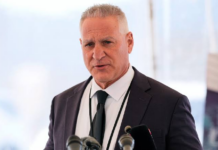
Chief Justice of Nigeria Kudirat Kekere-Ekun will swear in Justice Joseph Olubunmi Kayode Oyewole as a Justice of the Supreme Court on Wednesday, completing a five-week constitutional process that began with the National Judicial Council’s recommendation in January and culminating in the restoration of the apex court to its full statutory complement of 21 justices for the first time since the retirement of former Chief Justice Olukayode Ariwoola.
The inauguration ceremony is scheduled for 2 p.m. at Courtroom Two of the Supreme Court Complex in Abuja. Guests have been advised to comply with court security protocols. The ceremony was announced on Sunday by the court’s Director of Information and Public Relations, Dr Festus Akande.
The appointment process began formally at the NJC’s 110th meeting on January 13 and 14, when Kekere-Ekun presided over proceedings that yielded a single Supreme Court recommendation, Oyewole, alongside approvals for 35 other judicial officers for courts across multiple states. Those 35 included 27 state high court judges spread across Borno, Niger, Benue, Taraba, Plateau, Delta, and Ekiti, as well as six Sharia Court of Appeal kadis and two Customary Court of Appeal judges. The breadth of the January exercise illustrated both the persistent shortage of judicial officers at multiple levels of Nigeria’s court system and the NJC’s attempt to address that gap through a single large coordinated round.
Oyewole fills the South-West geopolitical zone’s slot on the Supreme Court bench, which became vacant following the retirement of Justice Ariwoola, who served as Chief Justice of Nigeria from 2022 until his compulsory retirement at 70. The bench had been reduced to 20 justices, including the CJN, until Wednesday’s inauguration.
The constitutional pathway to the appointment was adhered to in full. The NJC forwarded its recommendation to President Bola Tinubu, who transmitted a formal nomination letter to the Senate in late January pursuant to Section 231(2) of the 1999 Constitution. The Senate referred the nomination to its Committee on Judiciary, Human Rights and Legal Matters, chaired by Senator Adeniyi Adegbonmire representing Ondo Central, which screened Oyewole, reviewed a 31-page curriculum vitae circulated to all lawmakers in advance, and returned a favourable report to the full chamber. The Senate confirmed the appointment unanimously on February 3. Senate President Godswill Akpabio, congratulating Oyewole after the vote, expressed hope that he would “do justice to all and sundry, irrespective of circumstances.” Akpabio separately described Tinubu as having found “a square peg in a square hole.”
Oyewole, born on May 13, 1965, and a native of Ila-Orangun in Osun State, brings more than two decades of judicial service to the apex bench. His career carries a notable biographical thread: it was Tinubu himself, then serving his first term as Governor of Lagos State, who appointed Oyewole to the Lagos State High Court bench on May 24, 2001, making the president’s 2026 nomination of his former judicial appointee to the country’s highest court an uncommon coincidence of institutional history.
Read Also: Supreme Court Throws Out INEC’s Appeal Against SDP
His High Court years in Lagos produced several judgements that drew national attention and, in some cases, controversy. In 2005, he convicted Emmanuel Nwude, Nzeribe Okoli, and Amaka Anajemba for their roles in one of the largest fraud cases in Nigerian judicial history, a scheme in which a fictitious airport construction project was used to defraud Banco Noroeste of Brazil of $242 million, a fraud later linked to the collapse of that bank in 2001. The sentences drew commendation from anti-corruption advocates and marked Oyewole as a judge willing to apply the law to major economic crimes regardless of the stature or connections of the accused.
In January 2007, he sentenced Chukwuemeka Ezeugo, widely known by the religious title Reverend King, to death by hanging for the murder of a church member, Ann Uzoh, and the attempted murders of others in a case that shocked Nigerians who had watched Ezeugo preside over a prominent religious television ministry. The case illustrated the reach of Oyewole’s docket at a time when high-profile religious figures enjoyed unusual social deference.
The most politically significant, and legally contested, of his Lagos judgements concerned Bode George, a senior Peoples Democratic Party official who served as chairman of the Nigerian Ports Authority. In October 2009, Oyewole sentenced George to 30 months in prison for conspiracy, abuse of office, disobedience to lawful authority, and the illegal award of contracts worth N84 billion. The conviction was at the time considered an unusual instance of judicial accountability applied to a well-connected political figure at the height of PDP dominance. The Court of Appeal affirmed the judgment in January 2011. The Supreme Court, however, overturned both the conviction and the sentence in December 2013, a decision that generated debate within the legal community about the appellate management of public office corruption cases.
Oyewole was elevated to the Court of Appeal on March 24, 2014, and subsequently rose to become Presiding Justice of the Enugu Division, one of the court’s more consequential divisional benches, handling appeals from the South-East states on matters that include governorship and legislative election petitions. His tenure at the appellate level deepened his exposure to constitutional and electoral jurisprudence, the two areas that generate the most politically sensitive matters before the Supreme Court in any Nigerian election cycle.
Osun State Governor Ademola Adeleke, in a congratulatory statement issued after the Senate confirmation, described Oyewole as “an embodiment of integrity” and said his appointment was “a proud moment for Osun State.” He added: “Going by his antecedents in effectively and dispassionately dispensing justice in over two decades on the bench, I have no iota of doubt that Justice Oyewole will excel in this new role.”
Read Also: Supreme Court Affirms Death Sentence For Maryam Sanda
The Supreme Court of Nigeria sits as the final court of appeal in all civil and criminal matters and is the court of first instance in disputes between the federation and one or more states, or between states. It determines the constitutional validity of legislation and, in the Nigerian context, regularly adjudicates high-stakes post-election disputes that can determine who governs states or occupies federal office. Its composition and the judicial philosophy of its members therefore carry significance that reaches well beyond purely legal circles. The restoration of the bench to 21 justices, with Wednesday’s inauguration, comes as the court manages a caseload that has grown consistently in recent years alongside Nigeria’s expanding litigation culture and recurring electoral contestations.
No further Supreme Court vacancies are currently anticipated before the 2027 general elections.