













|
Listen to article
|
US President Donald Trump branded NATO allies “cowards” for not heeding his demand for help in securing the Strait of Hormuz, saying “We will remember”.
Meanwhile, Trump on Friday ruled out reaching a ceasefire agreement with Iran, as more Marines headed to the Middle East in a possible sign of a coming ground operation.
Trump insisted Washington had the upper hand in the three-week-old war, despite Iran effectively blockading the Strait of Hormuz in a move that has sent global oil prices skyrocketing.
Read Also: Trump Threatens To Destroy South Pars If Iran Hits Qatar Again
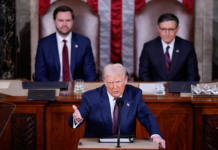
“I think we have won,” Trump told journalists at the White House alongside Secretary of State Marco Rubio.
“I don’t want to do a ceasefire. You know you don’t do a ceasefire when you’re literally obliterating the other side.”
Trump would not confirm a report by the Axios news outlet that he was considering an occupation or blockade of Iran’s Kharg Island to pressure Tehran to reopen the strait.
“I may have a plan or I may not,” Trump said when asked by an AFP reporter. “It’s certainly a place that people are talking about but I can’t tell you.”
The White House told AFP earlier that the United States could “take out” the vital oil hub “at any time” if Trump chose.
US forces hit Kharg on Friday in strikes that Trump said had “totally obliterated” all military targets on the island, but Washington has so far avoided hitting its oil infrastructure.
Surging oil prices have put pressure on Trump to bring the war to an end, amid Republican fears the economic shock could hurt the party in November’s midterm elections.
Trump has previously said he does not plan to put boots on the ground in Iran.
But The Wall Street Journal said Washington is deploying between 2,200 and 2,500 US Marines from the California-based USS Boxer Amphibious Ready Group and 11th Marine Expeditionary Unit.
Asked about the reports, the Marine Corps said the two groups are “deployed at sea,” while the US 3rd Fleet said they are “conducting routine operations.”
A week ago, US media reported a separate deployment to the Middle East of some 2,500 Marines aboard as many as three ships.
Trump meanwhile branded NATO allies “cowards” for not heeding his demand for help in securing the Strait of Hormuz.
“So easy for them to do, with so little risk. COWARDS, and we will REMEMBER!” Trump posted on his Truth Social network.
“Without the U.S.A., NATO IS A PAPER TIGER!” Trump posted.
He has blamed Iran’s stranglehold on the narrow waterway, through which around one fifth of global crude supplies pass in peacetime, for the current oil price spike.
Six key powers including Britain, France, Germany and Japan – whose premier met Trump at the White House on Thursday – say they are ready to “contribute to appropriate efforts” but have not made any commitment.
But the 79-year-old Republican – who rose to power on a promise to end America’s long Middle Eastern wars – nevertheless insisted the joint US-Israeli operation was going “extremely well.”
“It’s not even a contest,” Trump said earlier Friday as he presented naval cadets with an American football trophy at the White House.
Trump added of Iran that “we want to talk to them, and there’s nobody to talk to,” because of the killing of Iran’s former supreme leader and a host of other top officials.
President Donald Trump threatened Thursday to destroy the entirety of Iran’s South Pars gas field — the world’s largest natural gas reserve — if Tehran launched further missile strikes against Qatar’s energy infrastructure, a sweeping ultimatum delivered on social media that simultaneously contradicted his own administration’s account of how the previous day’s strikes on the same field had been authorized, while global energy markets recorded their sharpest single-day surge since the war began on February 28.
“NO MORE ATTACKS WILL BE MADE BY ISRAEL pertaining to this extremely important and valuable South Pars Field,” Trump posted on his Truth Social platform in the early hours of Thursday. “Unless Iran unwisely decides to attack a very innocent, in this case, Qatar — in which instance the United States of America, with or without the help or consent of Israel, will massively blow up the entirety of the South Pars Gas Field at an amount of strength and power that Iran has never seen or witnessed before.” He added that he did not want to authorize “this level of violence and destruction because of the long term implications that it will have on the future of Iran,” but stated he would not hesitate to act if Qatar’s LNG facilities were struck again.
The statement carried an internal contradiction that Israeli and American officials moved quickly to expose. Trump claimed on Truth Social that Israeli forces had “violently lashed out” at South Pars “out of anger for what has taken place in the Middle East” and insisted that the United States “knew nothing about this particular attack.”
U.S. and Israeli officials, speaking on condition of anonymity, told Axios that Trump’s account was inaccurate. Prime Minister Benjamin Netanyahu and Trump had coordinated the strike in advance, with the aim of deterring Iran from continuing to restrict tanker traffic through the Strait of Hormuz. Qatar was not informed beforehand.
After the first Iranian missile strike on Ras Laffan, Qatari officials contacted White House envoy Steve Witkoff and CENTCOM commanders, demanding to know whether the U.S. had prior knowledge of the Israeli attack. Witkoff conducted a series of calls with Qatari officials to organize an urgent call between Trump and Qatar’s Emir, Sheikh Tamim bin Hamad Al Thani. The phone call took place Wednesday night. French President Emmanuel Macron separately called both leaders and publicly demanded an immediate halt to strikes on civilian energy infrastructure.
Iran’s response to the South Pars strike was extensive and double-barreled. QatarEnergy confirmed that in addition to Wednesday’s first missile strike on Ras Laffan Industrial City — which it said caused “extensive damage to the Pearl GTL Gas-to-Liquids facility” — several other LNG facilities at the complex were struck in a second wave of Iranian missile fire in the early hours of Thursday, causing significant fires and extensive further damage. Qatar’s interior ministry said all fires had subsequently been brought under control with no casualties reported. A vessel was reported struck approximately four nautical miles east of Ras Laffan by the United Kingdom Maritime Trade Operations Center early Thursday morning.
All crew were said to be safe. A second vessel was reported hit off the UAE coast near the Strait of Hormuz the previous night — part of a sustained pattern of maritime incidents that has accumulated to more than 20 reported vessel strikes since the conflict began.
Iran escalated further overnight, setting two Kuwaiti oil refineries ablaze, striking a Saudi refinery on the Red Sea, and targeting energy facilities in Abu Dhabi. Mobile phone alerts sounded in Dubai on Thursday morning as incoming Iranian missiles were tracked by UAE air defenses. Bahrain activated its missile sirens. Kuwait confirmed it had shot down Iranian drones headed toward the country’s oil infrastructure.
Brent crude surged past $116 a barrel in Thursday morning trading — an increase of nearly 10 percent in a single session and approximately 70 percent above pre-war levels. The European TTF benchmark for natural gas prices rose 24 percent. World equity markets retreated sharply on the combined fears of uncontrolled energy supply destruction and potential further military escalation. South Asian economies including India, Pakistan, and Bangladesh, which rely on Ras Laffan for the bulk of their LNG imports, were bracing for power cuts and industrial slowdowns, according to reporting by CNN.
Read Also: Gabbard Dodges Iran Threat Question At Senate Hearing
The South Pars field holds an estimated 1,800 trillion cubic feet of usable natural gas — enough to supply the world’s total consumption for approximately 13 years. Iran draws approximately 80 percent of its domestic energy supply from the field. Unlike oil storage infrastructure that can be rebuilt on short timelines, LNG production and processing facilities require extended periods and enormous capital expenditure to repair, making the damage inflicted both immediate and long-lasting.
Russia has emerged as one of the financial beneficiaries of the energy crisis the war has generated. The U.S. Treasury issued a 30-day sanctions waiver on Russian energy sales the previous week, allowing Moscow to sell oil already loaded onto tankers. Treasury Secretary Scott Bessent described it as a narrowly tailored short-term measure to promote energy market stability. Some analysts disagreed with that framing, noting that the combination of Strait of Hormuz closure and Gulf energy infrastructure damage has driven demand for Russian crude at premium prices.
Saudi Arabia’s Foreign Minister Prince Faisal bin Farhan, speaking Thursday at a joint press conference alongside French Foreign Minister Jean-Noel Barrot in Riyadh, escalated the kingdom’s public posture.