

















|
Listen to article
|
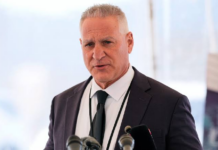
Reno Omokri, Nigeria’s nominee ambassador to Mexico, has strongly dismissed insinuations that Mexicans are making Nigeria a drug hub, describing the fears as unfounded and warning that such labelling harms bilateral relations.
Omokri responded directly to a query from a journalist on his social platform, who asked for his reaction to the growing concerns as the ambassador-designate.
“There is no truth to such insinuations,” Omokri declared. “Yes, there have been isolated cases involving some individuals, and I think that in our fifty years of bilateral relations with the United Mexican States, such a thing had only happened twice. This indicates that the unfortunate cases were isolated incidents.”
He emphasised that both nations reject criminality. “Neither Nigeria nor Mexico want to protect criminals. If individuals break the law, they must face the consequences,” Omokri stated. “But to blame their nations or tar all citizens of that country with the same brush is not expedient. It hurts legitimate business people.”
Read Also: NNPC Seeks Stronger Ties To Build Africa Energy Ecosystem
The ambassador-designate drew attention to Mexico’s economic strength and its importance to Nigeria. “Nigerians ought to know that Mexico has a $2 trillion economy and is the thirteenth-largest economy on Earth,” he said. “We have been trading with Mexico for decades, and the trade balance is in our favour. Three times in our favour. So, this is a friendly country, and the Nigerian media should understand the implications for our country of mislabelling a country whose policies towards us have been benevolent.”
Omokri highlighted the disparity in citizen presence between the two countries. “Might I make you aware that there are 50,000 Nigerian citizens in Mexico, versus only 500 Mexicans in Nigeria,” he noted. “And, sadly, we do have Nigerians, which runs afoul of the law in Mexico. But that country has prudently refrained from defining its bilateral relationship with Nigeria along those lines.”
He urged the media to support stronger ties. “People like you, and your newspaper, which I believe is Vanguard, should use your wide reach as the most-read paper in Nigeria to help build our bilateral relations with a country that has made an exponential success out of the NAFTA and USMCA trade agreement, which is something Nigeria would like to achieve with ACFTA,” Omokri said.
The nominee linked the issue to Nigeria’s broader economic goals. “We have a national ambition under President Tinubu to be a $1 trillion economy by 2031. We should not be undermining our relationship with a $2 trillion economy that can give us valuable, experience-based, practical insight and assistance that will help us attain that vision,” he added.
Omokri concluded by calling for a clear distinction between crime and nationality. “Leave the law enforcement agencies in Nigeria to handle isolated cases of criminality unrelated to nationality.”
Nigerian National Petroleum Company Limited Group CEO Bayo Ojulari said Monday the state oil company is repositioning itself as an ecosystem builder connecting capital, technology, policy, and talent across Africa’s energy sector, rather than functioning solely as a hydrocarbon producer.
Ojulari made the remarks in a statement reflecting on NNPC Ltd.’s participation at the 2026 Nigeria Oil and Gas Energy Week, where the company presented its strategy for expanding partnerships across the continent’s energy industry.
NOG Energy Week functions as Nigeria’s largest annual energy conference, drawing policymakers, regulators, international and indigenous oil companies, investors, and technology providers to discuss investment opportunities, energy security, decarbonization, and gas development across Africa. This year’s edition centered on expanding collaboration and attracting investment into the sector amid ongoing federal government reforms.
Ojulari described the week as productive for the company, citing both his keynote address and the range of conversations held on its sidelines. He said NNPC no longer views itself as merely an energy producer, but as an “ecosystem builder” tying together capital, technology, policy, talent, and markets to generate lasting value for Nigeria and the continent.
That reframing, according to Ojulari, will guide how the company approaches partnerships and investment decisions across the energy value chain going forward, forming what he called the foundation for deepening industry partnerships and accelerating Africa’s energy prosperity. NNPC also released a video recapping its engagements throughout the week-long conference.
NNPC Ltd. transitioned into a commercially oriented entity under Nigeria’s Petroleum Industry Act, a shift that ended the company’s prior status as a purely state-run corporation and required it to operate on commercial terms, including profit accountability to shareholders, namely the federal and state governments that hold its equity. Since that transition, the company has pursued strategic partnerships and operational efficiency measures aimed at positioning it as a significant player in Africa’s energy landscape, alongside continental and international oil majors.
Read Also: MTN Explains Its Push To Deepen Nigeria’s Broadband Reach
The company’s repositioning message arrives as Nigeria’s federal government continues to frame the energy sector as central to national economic growth, with reform efforts aimed at attracting investment, increasing oil and gas output, expanding domestic gas utilization, and establishing the country as a leading energy hub on the continent. NNPC has positioned itself at the center of implementing several of these initiatives through collaborations with local and international stakeholders.
Ojulari’s “ecosystem builder” framing places NNPC’s public messaging in line with a broader trend among national oil companies globally, several of which have sought to diversify their public identity beyond upstream production amid pressure to demonstrate relevance in an energy transition era, even as fossil fuel output remains their primary revenue source. Nigeria’s own gas utilization push, including efforts to expand domestic gas-based industries and reduce reliance on imported refined products following the commissioning of large-scale domestic refining capacity in recent years, has featured prominently in the government’s stated energy strategy.