
















The United Nations Environment Programme warned Wednesday that the world is on course for 2.6 degrees Celsius of warming by 2100 even if every government delivers its current climate pledges in full, a level far beyond the Paris Agreement’s goal of holding the increase well below 2C.
The estimate comes from the agency’s annual Emissions Gap Report, released 19 days before delegates open the COP31 summit in Antalya, Turkey. Under the policies governments have actually put in place, the report projects 2.8C. Global greenhouse gas emissions in 2025 landed roughly level with the record set in 2024, the authors found, with the difference between the two years too small to call. Carbon dioxide from burning coal, oil and gas, the main driver of warming, edged up.
Read Also: UN Warns Earth Could See Hottest Years On Record By 2031
The United States produced the sharpest movement. Preliminary 2025 data in the report show US emissions rising by 133 megatons of CO2 equivalent, an increase the report says far exceeded that of any other country and ties to higher electricity demand and a rebound in coal-fired generation. Turkey, the summit host, posted the next-largest increase. Among the world’s six biggest emitters, Indonesia and China also recorded rises, while India, Russia and the European Union recorded declines.
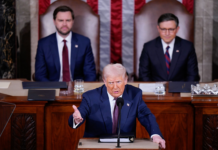
Anne Olhoff, a co-author, said this year’s outlook is worse than last year’s for two reasons: the formal US exit from the Paris Agreement and upward revisions to historical emissions. Washington’s withdrawal took effect January 27, one year after President Donald Trump ordered it on his first day back in office. Trump has called climate change a hoax and has rolled back clean energy policies while promoting fossil fuel production. UNEP chief Inger Andersen told reporters that no country is shielded from climate impacts, the United States included.
Sourcing reviewed by The Eastern Update indicates the new figure is higher than the one UNEP published ahead of COP30 in Belem, Brazil. That edition put warming at 2.3C to 2.5C if pledges were fully implemented and 2.8C under current policies, while cautioning that changes in method make year-to-year comparisons imperfect. It also recorded 2024 emissions at 57.7 gigatons of CO2 equivalent, up 2.3 percent from the year before.
This year’s report treats the 1.5C limit as a threshold the world can no longer avoid crossing. The planet has already warmed roughly 1.4C since pre-industrial times, and scientists expect it to pass 1.5C within years. They warn that every additional fraction of a degree raises the likelihood of extreme weather and of irreversible changes, from dying coral reefs to thawing permafrost.
One pathway in the report offers a 50 percent chance of bringing warming back to 1.5C by 2100. It requires temperatures to peak near 1.8C around 2050, removal of vast quantities of carbon dioxide from the atmosphere, and immediate emissions cuts of six percent every year until 2035. Current projections come nowhere near that rate, according to the report.
UN Secretary-General Antonio Guterres, launching the report, said overshooting 1.5C “is not surrender,” while acknowledging a leadership gap among governments. He called for deep and immediate cuts and said every country, especially the largest emitters, must do more. The Group of 20 economies account for about three-quarters of global emissions. Their combined emissions growth slowed in 2025, though the report singles out the United States as a major exception.
Read Also: IEA Warns Of Near-Record Methane Emissions In 2024
Bill Hare, chief executive of the policy institute Climate Analytics, said the central message is simple: governments need to “get on with enacting policies” that cut fossil fuel use as quickly as possible. Mohamed Adow, director of the Kenya-based think tank Power Shift Africa, went further. He described the findings as “a historic failure of political leadership” and said the consequences would be counted in lives lost rather than only degrees of warming.
Diplomatic friction is already visible. Some climate-vulnerable developing nations have accused bigger emitters of abandoning the Paris goals, and a showdown over the 1.5C target is expected in Antalya.
The summit’s management structure is itself unusual. Under a compromise reached at COP30 in November 2025, Turkey hosts the conference and holds the presidency, led by Environment Minister Murat Kurum, while Australia’s climate minister, Chris Bowen, serves as president of negotiations with exclusive authority over the talks. Kurum said last month that Turkey is not co-chairing the summit with Australia and that final decisions rest with the COP31 presidency. A pre-COP meeting was assigned to the Pacific region as part of the same arrangement.
The Emissions Gap Report measures the distance between the pollution that will still be released under national decarbonization plans and the level the Paris goals require. Last year’s edition recorded the United States as one of the factors that offset an improvement in methodology, a 0.1C gain canceled out by Washington’s planned exit from the pact.
COP31 runs November 9 to 20 at the Antalya Expo Center, with world leaders due to gather there November 11 and 12.