
















|
Listen to article
|
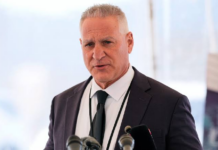
President Bola Ahmed Tinubu has nominated Lamido Abubakar Yuguda as Deputy Governor of the Central Bank of Nigeria, CBN, subject to confirmation by the Senate.
The nomination was announced on Wednesday in a statement issued by the President’s Special Adviser on Information and Strategy, Bayo Onanuga.
According to the statement, the appointment is in line with Section 8(1) of the Central Bank of Nigeria Act, 2007, which empowers the President to appoint the CBN governor and deputy governors, subject to Senate confirmation.
Yuguda’s nomination follows the recent appointment of former Deputy Governor Bala Bello as Special Adviser to the President on Political Economy.
Read Also: Tinubu Reveals Why He Finally Signed The Electoral Act
President Tinubu urged Yuguda to discharge his duties with dedication, professionalism, and commitment to strengthening Nigeria’s economic stability and growth.
Before his nomination, Yuguda served as Director-General of the Securities and Exchange Commission (SEC) from 2020 to 2024.
He is an alumnus of Ahmadu Bello University, where he obtained a Bachelor of Science degree in Accountancy in 1983. In 1991, he earned a master’s degree in Money, Banking, and Finance from the University of Birmingham in the United Kingdom.
Yuguda is a Fellow of the Institute of Chartered Accountants of Nigeria (ICAN) and a Chartered Financial Analyst (CFA).
He began his career at the Central Bank of Nigeria in 1984 as a Senior Supervisor in the Foreign Operations Department. Between 1997 and 2001, he worked as an economist in the Africa Department of the International Monetary Fund (IMF) before returning to the CBN.
He later rose to become Director of the Reserve Management Department and retired from the apex bank in 2016 after six years in that role.
President Bola Ahmed Tinubu has said he had “no choice” but to sign the Electoral Act, explaining that the bill was passed with overwhelming support by the National Assembly of Nigeria.
According to Tinubu, he chose to respect the rule of law rather than plunge the country into political turmoil.
He made the remarks while addressing the All Progressives Congress, APC, leaders and the Inter-Party Advisory Council (IPAC) on Wednesday at the State House, Abuja, where he reflected on the challenges of governance and the nature of politics in a democratic system.
Read Also: Peter Obi Slams Tinubu Over ADC Leaders’ Arrests
Speaking on the Electoral Act, the president said he chose to respect the decision of the National Assembly of Nigeria, which passed the legislation with overwhelming support.
“I had no choice. I didn’t want to throw the country into turmoil of argument,” Tinubu said.
“There was an overwhelming majority in the National Assembly that passed the law. If I had serious questions or reservations, I would have raised them. But I submitted myself to the principle of the rule of law and democracy. I signed, and the rest is history.”
The president stressed that democracy requires compromise and mutual support among political actors, noting that political competition often feels rewarding only when one is victorious.
“The game of politics is sweet only when you’re winning,” he said.
Tinubu added that leaders and citizens alike must learn to accommodate and support one another in order to strengthen democratic institutions.
“We must accommodate one another. We must help one another. We must strengthen the platform. But in democracy, yes, there must be peace, stability, and commitment to the rule of law,” he said.
Former presidential candidate Peter Obi broke weeks of public silence on Monday to condemn the arrests and ongoing detention of African Democratic Congress leaders Nasir El-Rufai and Abubakar Malami, accusing President Bola Tinubu’s administration of weaponizing criminal prosecution against political opponents ahead of the 2027 general elections.
In a statement posted on X, Obi described the situation as a “blatant persecution of political opponents disguised as criminal prosecution,” saying the timing of the arrests — which coincided with both men’s public commitment to removing the Tinubu administration from power in 2027 — raised serious questions about the government’s motives. He called the integrity of Nigeria’s rule of law “non-negotiable,” warning that its erosion threatened both economic development and national stability.