












|
Listen to article
|
Norwegian police said Wednesday that three brothers had been arrested on suspicion of a “terrorist bombing” over a weekend explosion at the US embassy in Oslo, that caused minor damage but no injuries.
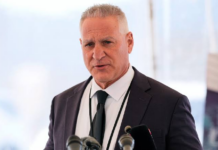
Police prosecutor Christian Hatlo told a press conference the brothers, who were Norwegian citizens of Iraqi origin, had been arrested in Oslo around 3:30 pm (1430 GMT), and that police were investigating the motive.
“We are still working from several hypotheses. One of them is whether this is an order from a government entity,” Hatlo said.
“This is quite natural given the target — the US embassy — and the security situation the world is in today,” he said.
Hatlo said the investigation would seek to clarify exactly what roles the brothers, who were in their 20s and not previously known to police, had played.
“We believe that one of them is the person who placed the bomb outside the embassy and that the other two were complicit in the act,” Hatlo told reporters.
Read Also: Israeli Strikes Hit Beirut As Lebanon Death Toll Tops 400
Hatlo also said that they were also not ruling out links to “criminal networks”.
In its annual threat assessment, the Norwegian security service PST said last month that Iran, which it considers one of the main threats to the country, could rely on “proxy actors,” including “criminal networks,” to commit acts.
On Tuesday, Iran’s ambassador in Oslo denied any involvement by his country in the embassy explosion.
“It is unacceptable that we are being singled out,” Alireza Jahangiri told Norwegian newspaper Verdens Gang.
According to police, the perpetrators of the bombing, described as “powerful” may also have acted out of their own motives.
US embassies have been placed on high alert in the Middle East due to American strikes on Iran. Several have faced attacks as Tehran responds by targeting industrial and diplomatic facilities.
The blast took place at around 1:00 am (0000 GMT) on Sunday at the entrance to the embassy’s consular section.
On Monday published two images from surveillance camera footage of a suspect dressed in dark clothing with a hood over his head and wearing a backpack.
Roughly at the time the incident occurred, a video had been uploaded to the Google Maps page for the US embassy.
The video, which has since been taken down appeared to show Iran’s late supreme leader Ayatollah Ali Khamenei, who was killed on the first day of the US-Israeli strikes in Iran.
According to Norwegian public broadcaster NRK, the person who uploaded the video wrote in Persian: “God is great. We are victorious.”
Police have also opened an investigation into this.
Israeli forces struck an apartment building in central Beirut on Wednesday, Lebanese state media reported, the latest in a series of aerial attacks on the Lebanese capital that have escalated sharply since Hezbollah resumed hostilities against Israel ten days ago in response to the killing of Iranian Supreme Leader Ayatollah Ali Khamenei.
The Israeli military did not immediately comment on the strike, and no casualties were reported at the time. A separate Israeli attack on Sunday targeted a room at the Ramada Hotel in Beirut’s coastal Raouche district, killing five senior commanders in the Quds Force, the extraterritorial arm of Iran’s Islamic Revolutionary Guard Corps, the Israel Defense Forces said in a statement. The IDF said the commanders had been “hiding in a civilian hotel” while coordinating financial transfers and intelligence operations in support of Hezbollah and Hamas. Ten people were injured in the Raouche attack, Lebanon’s health ministry said, and the hotel was also housing civilians displaced by the ongoing fighting.
Among those killed in the Ramada strike was a senior Quds Force official responsible for transferring $770 million from Iran to Hezbollah over the past year, according to the IDF. Israel said it had issued advance warnings to hotel residents before carrying out the attack, and that most occupants had evacuated. The Lebanese government and international human rights groups have continued to raise concerns about strikes on civilian infrastructure.
Lebanon’s Health Minister Rakan Nassereddine said Israeli strikes had killed 394 people in Lebanon in the week following the resumption of hostilities on March 2, including 83 children and 42 women, with nine rescue workers also among the dead. Those figures predate several subsequent strikes, and the toll is expected to rise.
The renewed conflict in Lebanon is a direct consequence of the broader regional war triggered by the joint US-Israeli strikes on Iran on February 28. Ayatollah Ali Khamenei, who had led Iran since 1989, was killed at his compound in central Tehran during those strikes, with his death confirmed by Iranian state media the following day. Hezbollah launched its first strikes on Israel since the November 2024 ceasefire on March 2, targeting a missile defense site south of Haifa, with Hezbollah Secretary-General Naim Qassem vowing the group would not leave “the field of honor and resistance.”
Israel responded the same night with strikes on Beirut’s southern suburbs, issuing evacuation orders to dozens of villages across the south. Israeli forces have since carried out more than 250 strikes across Lebanon, ordered civilian evacuations in several border villages, and deployed ground forces deeper into southern Lebanese territory. Targets have included weapons depots, financial institutions associated with Hezbollah, and what the IDF described as command infrastructure in Beirut’s Dahiyeh district.
Read Also: Iran Vows Full Oil Blockade Until War Ends
A Hezbollah intelligence commander, Hussein Makled, was killed in overnight strikes in Beirut on March 2, and a subsequent strike eliminated Reza Khazaei, chief of staff of the IRGC’s Lebanon Corps. The IDF said last week that it had also killed Daoud Alizadeh, the acting commander of that corps, in a separate strike in Tehran.
The Lebanese government, which has stated it is working toward disarming Hezbollah, publicly condemned the group’s renewed missile and drone attacks on Israel, accusing it of pulling Lebanon into a regional war without governmental consent. Prime Minister Nawaf Salam warned of an impending “humanitarian disaster” as displacement figures mounted.
More than half a million people have been displaced within Lebanon since fighting resumed, according to Lebanese government registration figures, with the actual number believed to be higher.
Following an Israeli military warning that IRGC-linked officials in Lebanon would be targeted if they did not leave the country, Reuters reported that more than 150 Iranian nationals — including diplomats and their families — had departed Lebanon in recent days. The Lebanese government separately announced on March 5 that it would detain and expel anyone in the country connected to Iran’s Revolutionary Guards.