















|
Listen to article
|
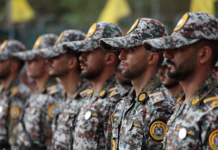
Iran’s Revolutionary Guards declared on Tuesday they would not allow a single litre of oil to leave the Middle East as long as US and Israeli strikes continued, triggering the most explicit threat Trump has issued in the eleven-day war and sending oil markets into a historic $30 swing before partially reversing on Trump’s signals of a swift end to hostilities.
“Tehran will not allow one liter of oil to be exported from the region if US and Israeli attacks continue,” the IRGC spokesperson said in a statement carried by state media. “We are the ones who will determine the end of the war.”
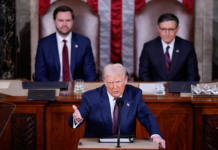
Trump responded within hours at a Miami press conference, then reinforced the warning on Truth Social: “If Iran does anything that stops the flow of Oil within the Strait of Hormuz, they will be hit by the United States of America TWENTY TIMES HARDER than they have been hit thus far. Death, Fire, and Fury will reign upon them.”
He also warned that the US had held back its most destructive targets. “We’ve left some of the most important targets for later, in case we need to do it,” Trump said. “If we hit those targets, it’s going to take many years for them to be rebuilt. They have to do with electricity production and many other things.”
Brent crude peaked at $119.50 per barrel on Monday, its highest level since Russia invaded Ukraine in 2022 — before plunging more than 10 percent on Tuesday as markets absorbed Trump’s comments predicting a quick end to the war and reports of imminent US sanctions waivers on Russian oil.
The US stock market careened through a manic Monday, going from a steep early loss to a solid gain as worries turned into hope that the war with Iran may not last long. A Reuters/Ipsos poll released Monday found 67 percent of Americans expected gas prices to rise further in coming months, and only 29 percent approved of the war — political pressure that was visibly shaping Trump’s price management messaging. Attacks on merchant ships near the strait have killed at least seven mariners, according to the International Maritime Organization.
By March 9, tanker traffic through the Strait of Hormuz had dropped by 90 percent, with more than 150 vessels anchored outside the strait. Insurance companies had withdrawn coverage and oil companies had suspended shipments. The deficit amounted to 8 to 10 million barrels per day, figures the market could not cover from alternative sources. The Saudi East-West pipeline and Abu Dhabi pipeline could redirect a maximum of 10 to 12 million barrels per day between them, leaving a structural gap that no combination of strategic reserve releases or sanctions waivers could fully bridge in the short term.
Read Also: Dangote Fertilizer Wins Big As Iran War Cuts Global Supply
After a phone call with Russian President Vladimir Putin, Trump announced the US would waive oil-related sanctions on “some countries” to ease the shortage. Putin’s foreign affairs adviser Yuri Ushakov said Putin had “voiced a few ideas regarding a quick political and diplomatic settlement.” Three sources familiar with the matter told Reuters the primary beneficiary of the waiver was likely to be Russia, enabling Indian and Chinese refiners to purchase stranded Russian crude — an arrangement that would ease global supply but complicate Washington’s Ukraine sanctions architecture. Trump declined to specify which countries would benefit, saying only there would “be so much peace” that sanctions might not need to be reimposed.
Iran’s Foreign Minister Abbas Araqchi ruled out any resumption of negotiations with Washington in an interview with PBS, describing the bitter experience of the three rounds of talks that preceded the strikes. “After three rounds of negotiation, the American team in the negotiations said itself that we had made big progress. Still, they decided to attack us. So I don’t think talking to the Americans anymore would be on our agenda anymore,” Araqchi said. The statement closed off the diplomatic track that the Omani-mediated process had kept open as recently as February 27 — the day before the war began — when Oman’s foreign minister had described “significant progress” in talks on Iran’s nuclear programme.
Read Also: Iran Threatens Diaspora With Asset Seizures For Pro-US Posts
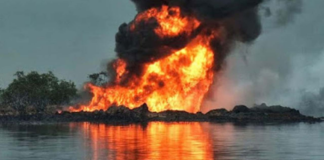
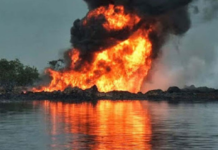
Tehran was blanketed in black smoke on Tuesday after Israeli airstrikes hit an oil refinery in a further escalation of the campaign against Iran’s domestic energy infrastructure. WHO Director-General Tedros Ghebreyesus issued a formal warning that the refinery fire risked contaminating food, water, and air supplies for millions of residents. Turkey confirmed that NATO air defence systems had shot down a ballistic missile fired from Iran that entered Turkish airspace — the second such intercept of the war. Israel said it launched new strikes in central Iran and struck Beirut, where the Lebanese death toll had crossed 400 since Hezbollah entered the conflict on March 2.
In Australia, five members of the Iranian women’s football team were granted humanitarian visas after requesting asylum, citing fear of persecution. Canberra simultaneously confirmed it was deploying an E-7A Wedgetail airborne early warning aircraft and Advanced Medium Range Air-to-Air Missiles to the UAE — the most operationally significant expansion yet of Australia’s involvement, following the government’s formal acknowledgement the previous day that it was evaluating Gulf state requests for defensive military assistance.