


















|
Listen to article
|
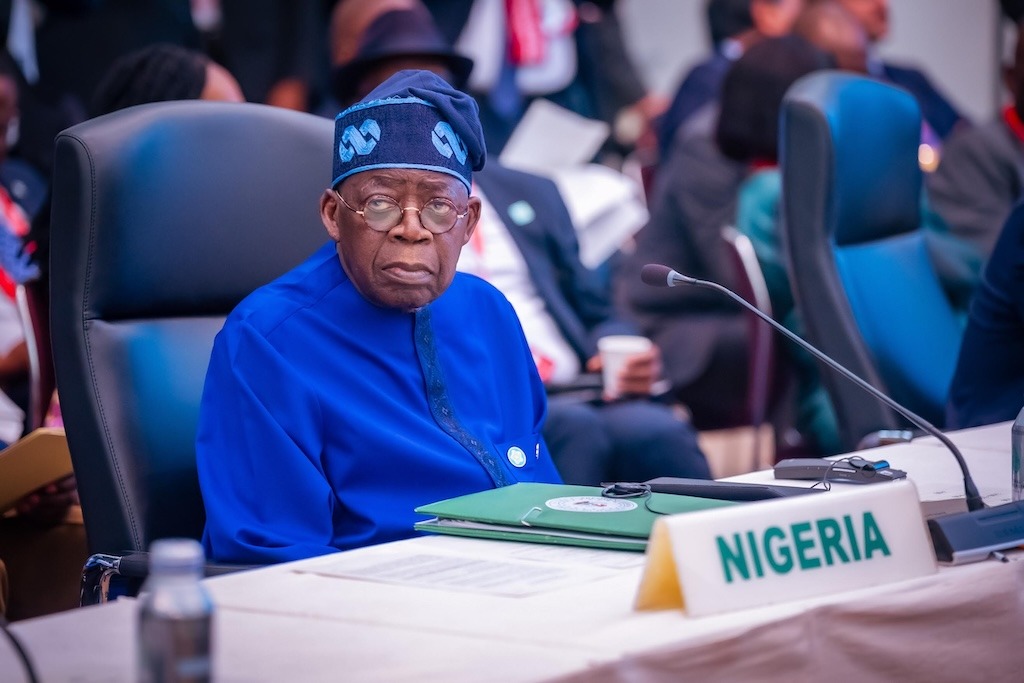
President Bola Ahmed Tinubu has said he had “no choice” but to sign the Electoral Act, explaining that the bill was passed with overwhelming support by the National Assembly of Nigeria.
According to Tinubu, he chose to respect the rule of law rather than plunge the country into political turmoil.
He made the remarks while addressing the All Progressives Congress, APC, leaders and the Inter-Party Advisory Council (IPAC) on Wednesday at the State House, Abuja, where he reflected on the challenges of governance and the nature of politics in a democratic system.
Read Also: Peter Obi Slams Tinubu Over ADC Leaders’ Arrests
Speaking on the Electoral Act, the president said he chose to respect the decision of the National Assembly of Nigeria, which passed the legislation with overwhelming support.
“I had no choice. I didn’t want to throw the country into turmoil of argument,” Tinubu said.
“There was an overwhelming majority in the National Assembly that passed the law. If I had serious questions or reservations, I would have raised them. But I submitted myself to the principle of the rule of law and democracy. I signed, and the rest is history.”
The president stressed that democracy requires compromise and mutual support among political actors, noting that political competition often feels rewarding only when one is victorious.
“The game of politics is sweet only when you’re winning,” he said.
Tinubu added that leaders and citizens alike must learn to accommodate and support one another in order to strengthen democratic institutions.
“We must accommodate one another. We must help one another. We must strengthen the platform. But in democracy, yes, there must be peace, stability, and commitment to the rule of law,” he said.
Former presidential candidate Peter Obi broke weeks of public silence on Monday to condemn the arrests and ongoing detention of African Democratic Congress leaders Nasir El-Rufai and Abubakar Malami, accusing President Bola Tinubu’s administration of weaponizing criminal prosecution against political opponents ahead of the 2027 general elections.
In a statement posted on X, Obi described the situation as a “blatant persecution of political opponents disguised as criminal prosecution,” saying the timing of the arrests — which coincided with both men’s public commitment to removing the Tinubu administration from power in 2027 — raised serious questions about the government’s motives. He called the integrity of Nigeria’s rule of law “non-negotiable,” warning that its erosion threatened both economic development and national stability.
The intervention was notable for two reasons. First, Obi is himself a member of the ADC, having declared his 2027 presidential ambitions under the party’s platform — making the arrests of its two most prominent members a direct attack on the party’s organizational capacity as it builds toward the election cycle. Second, Obi had been publicly silent on both cases for weeks despite mounting pressure from political commentators who noted the contradiction between his anti-corruption platform and his reluctance to defend colleagues facing prosecution. Critics had pointed out that Obi was vocal when it came to the detention of Nnamdi Kanu, insisting the IPOB leader should be freed, while staying silent as the EFCC and ICPC moved against El-Rufai and Malami. Monday’s statement resolved that silence with a direct and unambiguous critique.
Malami, his wife Asabe Bashir, and his son Abdulaziz were arraigned before a Federal High Court in Abuja on a 16-count charge bordering on conspiracy, concealing, and laundering proceeds of unlawful activities totaling N8,713,923,759.49. All three pleaded not guilty, but the court ordered their remand in Kuje and Suleja prisons pending bail applications. The arraignment was the latest development in a legal process that began with Malami’s initial detention and has widened to encompass his immediate family members — a development the ADC described as crossing constitutional lines.
El-Rufai’s legal situation has been equally turbulent. He was detained by the EFCC on February 16, released on February 18, and immediately re-arrested by ICPC operatives. He has remained in ICPC custody since then. He is standing trial on charges of allegedly intercepting the phone communications of National Security Adviser Nuhu Ribadu — charges filed before the Federal High Court Abuja as Case FHC/ABJ/CR/99/2026. Separately, a N432 billion probe into his tenure as Kaduna State governor is ongoing, making his legal exposure the broadest of any current opposition politician in Nigeria.
Read Also: Edo Attack: Nobody Has Monopoly Of Violence – Peter Obi
Obi singled out El-Rufai’s case as particularly alarming, citing the former governor’s repeated transfers between the EFCC, ICPC, and DSS as evidence of institutional overreach.
“The situation surrounding Malam El-Rufai is particularly concerning; his repeated transfers between the EFCC, ICPC, and DSS suggest a desperate search for any charge that might stick, straying dangerously close to a fishing expedition rather than a credible investigation,” he said. He added that the denial of bail or the imposition of unjustly stringent bail conditions left “little doubt that the government is wielding criminal prosecution as a weapon against its political opponents.”
The ADC had already issued its own formal response to the arrests the previous week. ADC National Publicity Secretary Bolaji Abdullahi questioned whether detention was being used as an investigative shortcut or as pressure to keep opposition figures out of circulation, stating: “Nigeria and Nigerians will not accept a situation where the coercive instruments of the Bola Tinubu-led federal government are perceived to move with unusual speed against opposition figures, while similar matters elsewhere travel at a gentler pace.” The party drew a pointed contrast with a separate high-profile case involving allegations of passport forgery and international conspiracy in which the defendants were swiftly granted bail and proceedings advanced at normal pace — a comparison the ADC said demonstrated the selective application of pretrial detention rules.