















|
Listen to article
|
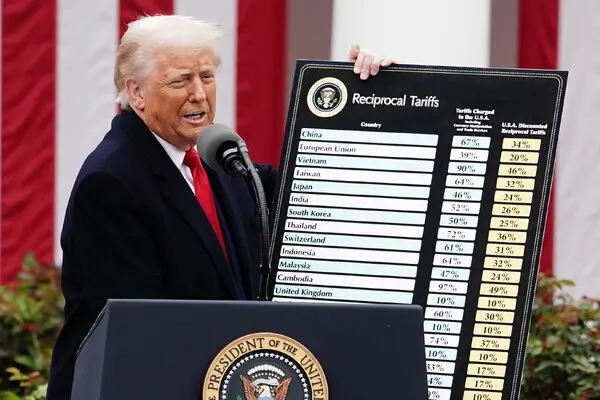
New U.S. import tariffs began taking effect Tuesday as President Donald Trump pressed ahead with a revised trade strategy following a Supreme Court ruling that struck down a large portion of his earlier global duties.
The measure introduces a baseline 10 percent tariff on a broad range of imported goods, a policy the administration said is intended to address what it described as persistent U.S. balance of payments deficits.
The levy will run for 150 days unless Congress acts to extend it and is widely viewed by trade analysts as a temporary step while a longer term framework is prepared.
Trump has already indicated he intends to raise the rate to 15 percent. Exemptions remain for products covered by separate investigations and for goods traded under the United States Mexico Canada Agreement.
The move comes days after the Supreme Court ruled 6–3 that the president exceeded his authority by using the International Emergency Economic Powers Act, a 1977 law, to impose sweeping tariffs on individual countries. The decision invalidated a significant portion of duties previously collected under that emergency authority but left intact tariffs imposed through other statutes, including those covering steel and automobiles.
Read also: EU Orders US To Honor Trade Deal As Court Blocks Trump Tariffs
U.S. Customs and Border Protection said it would halt collection of the tariffs struck down by the court while simultaneously beginning to apply the new universal duty. Importers therefore face a shift in legal basis rather than a pause in tariff collection.
The scale of the new policy is substantial. Erica York, vice president of federal tax policy at the Tax Foundation, estimated the tariffs would apply to about $1.2 trillion in annual imports, roughly one third of all goods entering the United States.
York said earlier tariff measures amounted to an average tax increase of about $1,000 per U.S. household in 2025. Even after the court ruling, she projected existing and replacement duties would still impose roughly $700 in additional costs per household in 2026.
Trump maintained the decision did not weaken his position, arguing the ruling clarified other authorities available to the presidency.
He suggested additional tools could be used against trading partners and warned countries against challenging U.S. trade demands.
Analysts say the administration is now recalibrating rather than retreating. Wendy Cutler, a former U.S. trade negotiator now at the Asia Society Policy Institute, said the court limited one approach but left others intact, forcing the White House to adopt alternative mechanisms.
Read more: Trump Slams Tariffs On Countries Doing Business With Iran
U.S. Trade Representative Jamieson Greer said existing bilateral tariff arrangements remain binding and that Washington expects partners to honor them. However, for some countries including Britain and Australia, a potential 15 percent rate would exceed the duties they faced under the previous program.
Over the past year the administration has frequently adjusted tariff levels, using them as leverage in negotiations with both allies and competitors.
The revised policy may further complicate relations with trading partners who had believed agreements reached under earlier threats of tariffs settled the matter.
Economists say retaliation is uncertain but warn that trading partners could instead accelerate efforts to diversify supply chains and reduce reliance on the U.S. market.
That shift would carry long term implications for trade flows, manufacturing investment and export strategy in multiple regions.
Customs authorities are now implementing the new tariff schedule at U.S. ports of entry, while legal challenges are expected to follow in federal trade courts as companies contest the scope and application of the duties.