















|
Listen to article
|
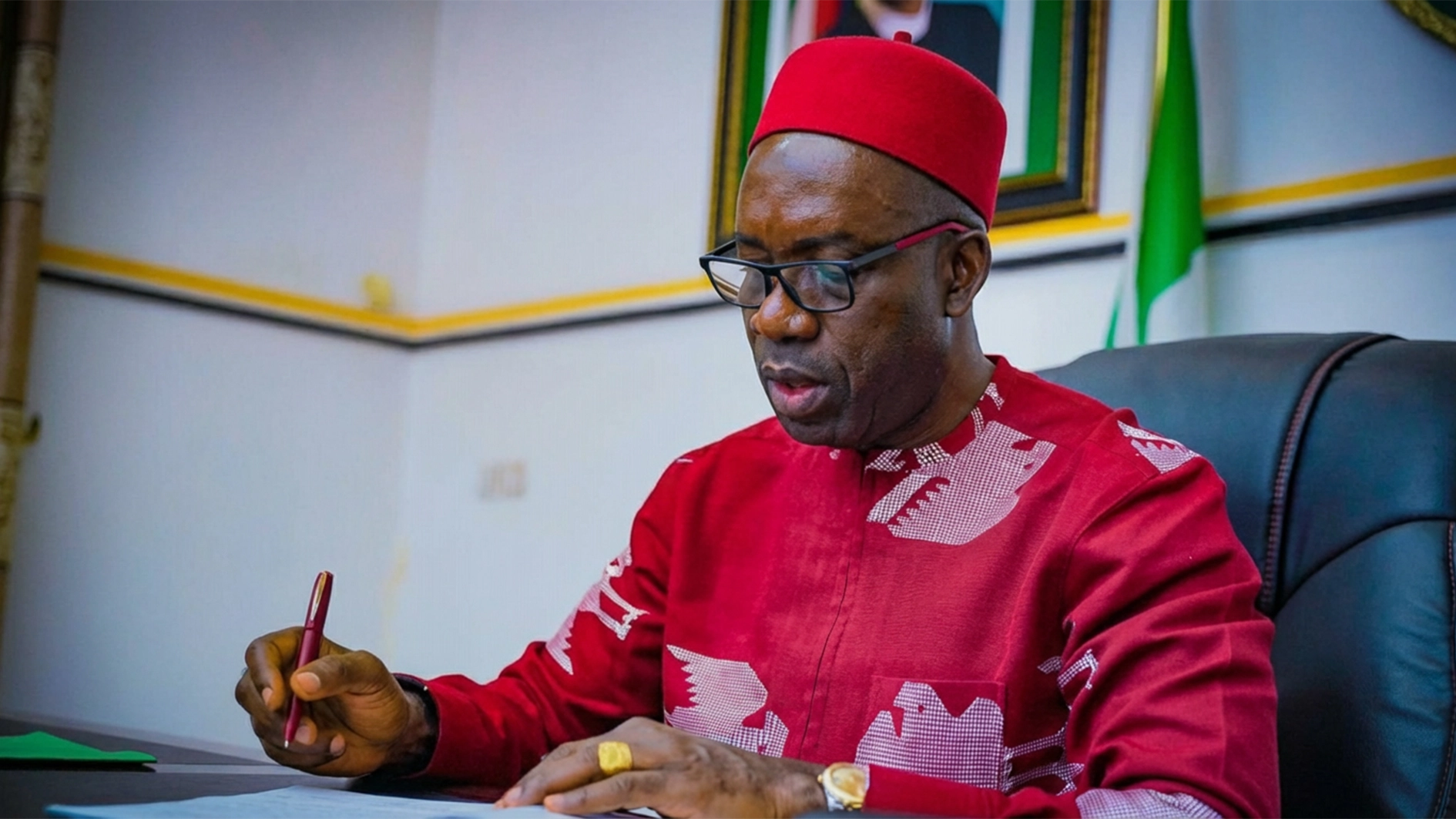
Anambra State Governor Professor Chukwuma Soludo ordered the closure of the New Auto Spare Parts Association Market at Nkwo Nnewi on Monday, February 23, 2026, after state officials conducting a monitoring exercise found that traders had again shuttered their shops in observance of a Monday sit-at-home directive linked to the proscribed Indigenous People of Biafra, the second major market shutdown the governor has imposed within a month as he intensifies efforts to break the four-year grip of the weekly economic lockdown on the state.
The closure, effective from midnight on Monday, February 23, will remain in force until Monday, March 2, 2026. State authorities warned that the shutdown could be extended beyond that date if traders fail to demonstrate substantial compliance when the market is due to reopen. Security agencies were deployed to enforce the order, and residents were advised to stay away from the Nkwo Nnewi market area to avoid confrontation with law enforcement personnel.
The order was conveyed on behalf of Governor Soludo by his Special Adviser on Trade and Markets, Chief Evarist Uba, who was accompanied at the market by Commissioner for Information Dr. Law Mefor, Special Adviser on Security Air Vice Marshal Ben Chiobi (rtd), and Nnewi North Local Government Area Mayor Honourable Echezona Anazodo. A formal public announcement was subsequently issued under Commissioner Mefor’s signature.
The Nkwo Nnewi closure follows a nearly identical sequence of events that played out in Onitsha less than four weeks earlier. On January 26, 2026, Governor Soludo shut the Onitsha Main Market, widely described as one of the largest commercial hubs in West Africa, after traders there also observed the IPOB Monday directive. That closure ran for one week and the market reopened on February 2, when Governor Soludo visited in person, moved through the stalls, and declared an end to the sit-at-home in Onitsha.
The Anambra State House of Assembly has estimated the weekly economic cost of the sit-at-home to the state at approximately ₦19.6 billion, with the Onitsha market alone accounting for roughly ₦8 billion of that figure every Monday.
Read Also: Sit-At-Home: Again, Soludo Seals Shops, Commends Other Traders
The sit-at-home directive was introduced across Nigeria’s South-East in August 2021 by IPOB as a pressure campaign to secure the release of the group’s leader, Nnamdi Kanu, who was then facing terrorism charges at the Federal High Court in Abuja. The practice, enforced in many areas through intimidation, has since severely disrupted commercial activity, schooling, and transportation across the region. Governor Soludo formally declared the order ended in Anambra on April 4, 2022, following a public rally and consultations with stakeholders, but the directive continued to be observed by traders in parts of the state, including Nnewi.
Shortly after the Onitsha market reopened on February 2, IPOB’s detained leader Nnamdi Kanu, now serving a life sentence following a terrorism conviction, announced the total cancellation of the Monday sit-at-home across the South-East. The announcement was seen by some observers as a significant shift, though its practical effect has been uneven. While compliance has improved markedly in parts of Anambra, Enugu, Abia, and Ebonyi states, traders in Nnewi and sections of Imo State continued to observe the shutdown despite the formal cancellation.
Senior Special Assistant to the Governor Dr. Ejiofor Opara dismissed any suggestion that the traders’ continued non-compliance reflected a legitimate grievance. He described Monday closures as economic sabotage and stressed that the sit-at-home had formally ended within Anambra long before Kanu’s recent announcement.
“The Monday sit-at-home ended on April 4, 2022, when the governor and all the stakeholders came together after a rally and agreed on putting an end to the practice,” Dr. Opara said. He added that Governor Soludo had been consistent in his position and had backed his public declarations with enforcement action. “The governor has matched his calls to end the stay-at-home order with action,” he said.
The ruling All Progressives Grand Alliance welcomed the broader restoration of commercial activity in Onitsha following the earlier market reopening, framing it as a vindication of Governor Soludo’s approach.
Beyond the immediate enforcement action, the sit-at-home’s wider economic consequences have rippled into the transportation sector. Transporters speaking separately to journalists in Abuja on Monday said the continued uncertainty surrounding Monday travel in the South-East had suppressed interstate passenger and freight movement even as some markets resumed normal operations. They called on both the federal government and South-East state administrations to deepen security cooperation across the region, arguing that improved road safety would allow traders, students, and passengers to move freely and restore full confidence in the transportation network. Greater interagency coordination, they said, was essential to consolidate the gains made under Governor Soludo’s enforcement campaign.
Read Also: Nnamdi Kanu: IPOB Finally Cancels Sit-At-Home In South-East
The Nnewi auto parts market is a major commercial node in Nigeria’s spare parts distribution network, serving buyers and suppliers from across the country. Its closure for a full trading week is expected to disrupt supply chains that extend well beyond Anambra State.
The market is scheduled to reopen on Monday, March 2, 2026. State authorities have not announced what criteria will be used to assess compliance levels on that date, nor have they specified the additional sanctions that could follow if traders again fail to open for business.