














|
Listen to article
|
Nigeria’s First Lady, Senator Oluremi Tinubu, has said many Nigerian leaders command respect and recognition on the global stage but are frequently criticized, mocked, and undervalued by citizens at home, a trend she attributed to politically driven narratives and growing hostility in public discourse.
Mrs. Tinubu made the remarks in a statement shared on her official Facebook page on Friday, days after the public recognition she received from U.S. President Donald Trump during the annual National Prayer Breakfast in Washington, D.C. The high-profile event brought together U.S. lawmakers, faith leaders, and international guests to reflect on leadership, religion, and global freedom of belief.
Her comments have sparked renewed discussion in Nigeria about leadership accountability, public criticism, and the widening gap between how Nigerian leaders are perceived internationally and how they are treated domestically.
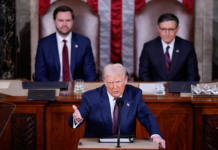
During his address at the National Prayer Breakfast, President Trump acknowledged the presence of Nigeria’s First Lady and praised her public and religious roles. Speaking to attendees, Trump highlighted her position as both First Lady and an ordained pastor in the Redeemed Christian Church of God (RCCG), one of Nigeria’s largest Pentecostal Christian denominations. “We’re honored to be joined today by the First Lady of Nigeria, who also happens to serve as a Christian pastor at the largest church in Nigeria,” Trump said during the event.
He went on to describe her as “a very respected woman,” adding, “First Lady, please, where are you? Thank you very much. It’s a great honor. Very respected person, too.”
The National Prayer Breakfast, held annually in Washington, is traditionally attended by senior U.S. officials and foreign dignitaries and often serves as a platform for symbolic diplomatic engagement. Past editions have included heads of government and senior officials from Africa, Europe, and Asia, according to coverage by Reuters and the Associated Press.
Read Also: ‘Very Respected Woman’ – Trump Hails Oluremi Tinubu
Reacting to the remarks, Mrs. Tinubu said the recognition showed what she described as a troubling contradiction: Nigerian leaders are often welcomed and respected abroad but face sustained criticism and hostility at home.
In her post, she suggested that public attitudes toward leadership in Nigeria have increasingly been shaped by divisive political messaging rather than balanced assessment. “Most of our leaders are highly respected and honored abroad, yet many Nigerians fail to value what they have because of hatred and the narratives planted in their minds by political paymasters, which have also hardened their hearts,” she wrote.
Her statement did not single out specific individuals or political parties but broadly criticized what she described as a culture of sustained negativity toward public office holders.
Mrs. Tinubu also pointed to the role of social media in amplifying criticism of Nigerian leaders, arguing that public discussion has increasingly crossed from scrutiny into personal attacks and ridicule. “They bully these leaders, speak ill of them, demean them, curse them, and even seize upon their mistakes to drag them across social media, ridiculing and mocking them publicly,” she said.
Nigeria, Africa’s most populous country, has one of the continent’s largest and most active online populations. Platforms such as X, Facebook, and Instagram have become central to political debate, accountability campaigns, and citizen activism. At the same time, analysts cited by the BBC and AFP have noted that online discourse has grown more polarized, with misinformation and politically motivated narratives often shaping public opinion.
Mrs. Tinubu warned that sustained hostility toward leaders, regardless of political affiliation, could weaken social cohesion and undermine efforts to address the country’s challenges.
Emphasizing what she described as Nigeria’s foundational values, the First Lady urged citizens to balance criticism with constructive engagement and national solidarity.
“Nigeria is built on love, unity, and collective effort toward shared success,” she wrote. “Let us come together to support our respected leaders and work hand in hand with them to make our country great.”
Read Also: ‘Nigeria Will Not Disintegrate’ – First Lady Oluremi Tinubu
Her remarks reflect a broader appeal often made by senior government figures for unity amid Nigeria’s complex economic, security, and social challenges. President Bola Tinubu’s administration has faced criticism over economic reforms, including the removal of fuel subsidies and currency adjustments, measures that have drawn mixed reactions at home but have been welcomed by some international financial institutions.
Mrs. Tinubu’s comments also come at a time of heightened international attention on Nigeria, particularly regarding security and religious freedom. In recent months, U.S. lawmakers and advocacy groups have renewed concerns over violence affecting religious communities in parts of the country, especially in the north and central regions.
President Trump and some members of the U.S. Congress have previously claimed that Christians in Nigeria face widespread persecution, statements that Nigerian officials have contested. The Nigerian government maintains that insecurity in the country is driven primarily by terrorism, banditry, and communal conflicts rather than state-backed religious targeting.
Reactions to Mrs. Tinubu’s remarks have been mixed. Supporters say her comments highlight the need for civility and respect in political discourse, while critics argue that public officials should expect scrutiny and criticism, particularly in a democratic society facing economic and security pressures.
As Nigeria continues to navigate economic reforms, security challenges, and international scrutiny, the debate over leadership, accountability, and public discourse is likely to remain central.