













|
Listen to article
|
Former lawmaker who represented Kaduna Central Senatorial District, Senator Shehu Sani, has picked up the All Progressives Congress, APC, Expression of Interest and Nomination forms in a bid to return to the upper legislative chamber in 2027.
Sani picked up the form in Kaduna State on Tuesday ahead of the party’s primary elections.
The 58-year-old politician represented Kaduna Central in the Senate after winning the election in 2015.
The human rights activist has remained a prominent voice in Nigeria’s political landscape, making notable contributions to national issues.
His decision is expected to shape the dynamics of the contest in the district, given his grassroots appeal and political experience.
The Eastern Updates reports that APC primary elections will commence on May 15, 2026, starting with the House of Representatives, followed by the Senate.
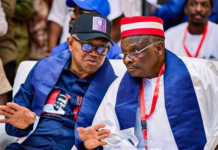
The opposition’s search for a single presidential candidate to face the All Progressives Congress in 2027 moved off the public stage on Monday, with former President Goodluck Jonathan and African Democratic Congress (ADC) chieftain Peter Obi sitting down for closed-door talks in Abuja.
The meeting was confirmed by the ADC Vanguard, the mobilisation arm of the ADC coalition, in a series of posts on its X handle. The group described the engagement as high-level, and said the discussion centred on the question of whether Nigeria’s fragmented opposition can converge behind one flagbearer ahead of the next general election.
Obi did not arrive alone. He was accompanied by a delegation drawn from the South-East, including Igbo elders, senators aligned with the ADC from the zone, and a circle of political associates — a composition that read less as a courtesy call and more as a regional bloc presenting itself at the negotiating table. The optics matter. Any consensus arrangement that excludes the South-East, or that fails to engage Obi’s base in particular, has limited chance of holding through to a campaign.
Read aslo: ‘I Won 2023 Presidential Election’ – Peter Obi Insists
Monday’s meeting comes against a backdrop of widening consultations. Obi has been traversing the country in recent weeks, and speculation has intensified around a possible understanding between him and former Kano State governor Rabiu Kwankwaso, who is also now part of the ADC. A Kwankwaso alignment would matter for the same structural reason the South-East delegation matters: it brings demographic weight that no single candidate, Obi included, can deliver alone.
The Abuja sit-down also follows the recently concluded opposition summit in Ibadan, hosted by Oyo State Governor Seyi Makinde and chaired by former President Olusegun Obasanjo.
That gathering pulled in some of the most prominent figures positioning themselves for the 2027 race, including Atiku Abubakar, Kwankwaso and Rotimi Amaechi, alongside other opposition leaders.
The Ibadan Declaration, issued at the close of the summit, set out three commitments: a united front against the APC, public opposition to what participants described as a drift toward a one-party state, and a working agreement to present a consensus presidential candidate. None of those commitments resolves the underlying problem of which figure that candidate will be — a question that summits, by their nature, are not designed to answer.