












|
Listen to article
|
Members of the United States Congress have formally demanded that the Pentagon explain the legal basis, targeting decisions and civilian impact of American airstrikes conducted in Nigeria on Christmas Day 2025, raising pointed questions about whether the operation was properly authorised, accurately described and correctly executed.
In a March 9 letter addressed to Defence Secretary Pete Hegseth and copied to US Africa Command chief Dagvin Anderson and Secretary of State Marco Rubio, lawmakers led by Representative Sara Jacobs — ranking member of the House Foreign Affairs Subcommittee on Africa — and Congressman Jason Crow posed 11 specific questions to the Department of Defence. The letter, obtained Saturday, demanded a response by March 20. Whether the Pentagon has replied could not be confirmed.
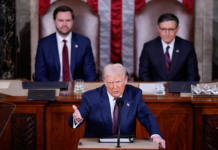
Trump announced on December 25 that US forces had struck Islamic State-linked militants in Nigeria’s North-West region. The Nigerian federal government subsequently stated the operation, carried out in Sokoto State, had been authorised and did not violate the country’s sovereignty or territorial integrity. The administration described the strikes as “multiple flawless strikes” against “ISIS terrorist scum” targeting militants for “viciously killing, primarily, innocent Christians.”
The congressional letter challenged each of those characterisations in turn.
On the question of ISIS presence, the lawmakers wrote that “Nigerian and international experts have noted that there is currently no credible public evidence of a sustained or operational ISIS presence in Sokoto State” — directly undercutting the administration’s framing of the targets. On the question of precision, the letter cited reports that “at least four of 16 missiles failed to detonate as intended or missed their intended targets by hundreds of miles,” with some strikes reportedly hitting farmland and residential buildings. Unexploded munitions were reported found in civilian areas with no known links to militant activity.
Read also: Nigerians Don’t Trust Their Govt – US Congressman Riley Moore
The letter specifically asked for the Pentagon’s assessment of reported Tomahawk missile failures near Tambuwal and Ofa in Kwara State, and whether those incidents resulted from technical malfunction, targeting error or other causes.
Legal authority sits at the core of the congressional inquiry. The lawmakers asked directly: “Under what legal authority did the United States undertake these strikes?” and pressed for an explanation of why the operation was not reported to Congress under Section 4(a)(1) of the 1973 War Powers Resolution — the law requiring the president to notify Congress within 48 hours of committing US forces to hostilities. A similar question was posed about approximately 200 US troops reportedly deployed to Nigeria in February to train local forces, alongside an existing smaller military presence providing intelligence and targeting support. The lawmakers asked why that deployment also did not trigger War Powers reporting requirements.
Questions about civilian casualties were raised specifically in relation to areas near Jabo and Ofa, with the committee asking how US Africa Command had engaged with affected communities following the strikes. A full financial accounting was also requested, covering munitions expended, platform and personnel costs, intelligence and surveillance support, and post-strike assessments.
The letter asked what metrics the administration was using to evaluate the effectiveness of the strikes, what the broader US strategy for addressing armed violence in Nigeria entailed, and — with particular forward-looking significance — what the Pentagon’s “current posture and plan for any future US strikes, or US-enabled strikes, in Nigeria” was.
Read more: Senate Dismisses US Congress’ Christian Genocide Narrative
The inquiry reflects growing congressional unease about American military operations in Africa being conducted without adequate legislative oversight or public transparency. The War Powers Resolution was designed to prevent exactly the kind of open-ended, undeclared military engagement that the lawmakers appear to believe the Nigeria strikes represent. If the administration has not responded to the March 20 deadline, that silence will itself become part of the congressional record on a matter that touches Nigeria’s sovereignty, America’s legal obligations and the lives of civilians in communities where missiles may have fallen far from their intended destinations.