
















|
Listen to article
|
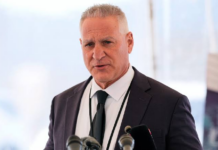
President Tinubu on Tuesday held separate closed-door meetings with former Kano State Governor Abdullahi Ganduje and former Minister of Defence, Badaru Abubakar at Aso Villa.
Details of the meeting, however, are yet to emerge.
Badaru, a former governor of Jigawa State and ex-Minister of Defence, has been in a running battle with Governor Namadi over the All Progressives Congress (APC) structure in Jigawa.
This battle led to the dropping of Badaru’s nominee, Bashir Gumel, as the All Progressives Congress (APC) National Financial Secretary, with Governor Namadi nominating another person to take over the role.
Read Also: Tinubu Offers Nigerians Hope For Enhanced Power Delivery
Badaru has also been rumoured to be considering a defection to the African Democratic Congress (ADC), but the former governor has denied any plans to do so.
It was gathered that Ganduje, on the other hand, is expected to remain in the APC, as the former governor and former APC National Chairman has no plans to defect to the ADC coalition.
Ganduje is also expected to nominate the next deputy governor of Kano State following the resignation of Aminu Gwarzo, with his preferred candidate rumoured to be Murtala Garo. However, there are reports that the Speaker of the Kano State House of Assembly, Jibrin Fagge, might also be interested in the seat.
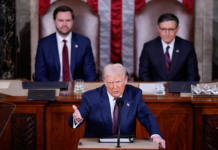
President Bola Tinubu stood before his party faithful in Abuja on Friday and offered Nigerians the one thing they have been receiving in abundance since his administration began: a promise that the electricity situation is about to improve.
The setting was the National Convention of the All Progressives Congress, which is to say the president was speaking to an audience already disposed toward belief. He told them the recurring power outages that have darkened homes, killed refrigerators full of food, silenced factories and driven generators to their breaking point across the country in recent weeks would soon give way to something better. The Grid Asset Management Company, he said, would inject approximately 1,500 megawatts into a new grid corridor. The lights, in other words, are coming.
“I assure you, many of you lamenting the problem of electricity and power; we are paying attention to that,” Tinubu said. “Electricity will become better.”
Nigerians have been here before, which is not a minor detail. The history of electricity promises in this country is long enough to constitute its own literary genre — a genre characterised by high expectations, technical explanations, and dawns that arrive later than announced, if they arrive at all. The national grid has collapsed multiple times since the beginning of the year. Generation has fallen. Distribution has faltered. The minister of power has apologised and suggested the problem exceeds the federal government’s capacity to fix, which is either an honest assessment of structural reality or an abdication dressed in candour, depending on your tolerance for institutional explanation.
Tinubu on Friday was not in the mood for either apology or abdication. He was in the mood for assertion. “The impact of our programmes is visible, tangible, impactful, and measurable — not mere rhetoric as some opposition elements like to suggest,” he said. “We are moving from survival mode to stability.”
The opposition has a different account. The fuel subsidy removal and exchange rate unification that Tinubu introduced shortly after taking office in 2023 have driven up the cost of virtually everything that Nigerians buy, eat, transport and power their lives with. These reforms have drawn sustained criticism as having inflicted disproportionate hardship on ordinary people in the name of macroeconomic correctness. That the reforms may be structurally necessary does not make them experientially painless, and the gap between those two truths has been the central tension of the Tinubu presidency.
Read also: Stranded Whale Breaks Free Off Germany’s Baltic Coast
The president acknowledged as much, if only partially. “The road to reform would be tough,” he admitted, before pivoting toward the metrics his administration prefers — oversubscribed Eurobonds, improved investor confidence, Nigeria’s exit from the financial grey list, a revived oil and gas sector attracting foreign capital again. These are real data points, and they matter. They matter more to the people watching dashboards in London and New York than to the woman in Onitsha running a generator for eight hours a day because the grid has given her nothing else.
Ogun State Governor Dapo Abiodun offered, separately, the kind of assessment that tends to get lost in convention-hall optimism. Nigeria, he said recently, will not get electricity right in three and a half years. The timeframe he referenced roughly corresponds to what remains of Tinubu’s first term. It was a statement of structural honesty from a governor in the president’s own party — the sort of thing that lands differently outside a convention centre than inside one.
The 1,500 megawatts Tinubu announced would be meaningful if delivered. Nigeria’s current generation has been fluctuating well below the demand its population of over 220 million people requires. Any genuine addition to the grid’s stable capacity would move the needle. Whether the Grid Asset Management Company can deliver on that figure, on what timeline, and whether the transmission and distribution infrastructure can absorb and convey additional generation to actual end users — these are the technical questions that follow every Nigerian electricity announcement and whose answers arrive, when they arrive at all, considerably later than the announcement itself.