














|
Listen to article
|
Abia State has confirmed 6,381 glaucoma cases since 2024, health officials disclosed Saturday, warning that the figure represents only a fraction of the disease’s actual reach across the southeastern state as thousands more residents remain undiagnosed and untreated.
The numbers, presented at a health event in Umuahia, paint a sobering picture of one of Nigeria’s most quietly destructive public health crises. Glaucoma strips vision gradually and without pain, often advancing undetected until the damage is beyond repair.
In Abia, where illiteracy rates remain significant and informal medicine competes openly with formal healthcare, the conditions for mass undiagnosed blindness are well established.
Dr Betty Emeka-Obasi, administrator of the Abia Eye Health Management Bureau, said the confirmed case count should be treated as a floor, not a ceiling. Large numbers of residents living with glaucoma have not come forward for diagnosis, she said, held back by limited health awareness and the widespread influence of unqualified practitioners offering cheaper alternatives to clinical care. Quackery, as she described it, is not a peripheral problem — it is one of the primary reasons patients reach formal facilities only after irreversible vision loss has already occurred.
Read also: UNESCO Applauds Otti’s School Reforms, Promises Backing
“Glaucoma is a leading cause of irreversible blindness in Nigeria,” Emeka-Obasi said, noting that Africa carries the heaviest burden of the disease globally. She called on stakeholders to confront what she described as a “silent epidemic” — language that captures both the disease’s symptomless progression and the institutional inertia that has historically surrounded it.
The bureau was created by executive order in July 2024, when Governor Alex Otti signed the instrument establishing it as a dedicated state agency for eye health. In the roughly 20 months since, it has moved with some urgency. Four public eye health centres across Abia have been upgraded, and the bureau has treated more than 20,500 patients through those facilities. Free screening programmes have reached over 13,500 residents statewide, and surgeons have completed more than 2,000 sight-restoring operations — procedures that for many patients represent their only realistic path back from advancing vision loss.
Ten eye care units have also been established inside existing primary healthcare centres, pushing services into communities rather than requiring patients to seek out specialist facilities in larger towns.
The approach reflects a basic insight: in a state where distance, cost, and cultural habit already conspire to keep people from seeking care, making an eye clinic easier to reach removes at least one obstacle from a long list.
Read more: Otti Launches First General Hospital Project In Abia
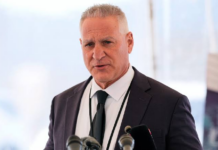
Otti, represented at Saturday’s event by Health Commissioner Professor Enoch Uche, said the state is bringing its screening and treatment infrastructure up to World Health Organisation standards.
He encouraged residents to visit available facilities and have their eyes checked — an appeal that carries particular weight given the scale of undetected disease the bureau’s own data suggests is circulating through the population.
The urgency behind that appeal lies in glaucoma’s unforgiving biology. Unlike infections that can be cleared, or injuries that can heal, the optic nerve damage glaucoma causes is permanent. A patient diagnosed early can be treated to slow or stop the disease’s progression. A patient who waits — whether because they don’t know they are sick, or because a roadside practitioner assured them otherwise — may arrive at a clinic having already lost vision that no surgery can restore. Every month of delay is a month of damage that compounds irreversibly.
That reality gives the bureau’s outreach numbers their true weight. Thirteen thousand free screenings sounds substantial until measured against a state population of several million, most of whom have never had their eyes examined by a qualified professional.
The 2,000 surgeries performed since the bureau’s creation represent genuine, life-altering interventions for the individuals who received them — but they also suggest a treatment pipeline that is only beginning to address a backlog built up over decades of neglect.
Nigeria’s glaucoma burden does not exist in isolation. Across sub-Saharan Africa, the disease accounts for a disproportionate share of total blindness, driven by weak specialist infrastructure, low screening rates, and health systems historically oriented toward communicable diseases rather than chronic, progressive conditions like glaucoma. Abia’s attempt to build a dedicated institutional response — an agency with its own mandate, reporting structure, and gubernatorial backing — is a more deliberate approach than most Nigerian states have taken, though its long-term impact will depend on whether political and financial support outlasts the administration that created it.
Officials gave no specific timeline Saturday for completing the WHO-standard facility upgrades, and the bureau’s full geographic coverage across Abia’s 17 local government areas remains unclear from what was disclosed.
What the figures confirm is that glaucoma is embedded deep in the state’s population, that the system catching it is still scaling up, and that the gap between the two is measured, for many residents, in sight they cannot afford to lose.