















|
Listen to article
|
United Nigeria Airlines (UNA), has ruled out an immediate increase in airfares despite the sharp rise in Jet A1 (aviation fuel) prices in the last one week.
The product now goes for between N1,803.19 per litre, N1,839.19 and N1,852.19 in Lagos, Abuja and Kano airports, respectively.
The prices of aviation fuel have surged by over 100 per cent in over one week, rising from N900 per litre as of February 28 when the crisis between Israel/U.S and Iran broke out.
As of Monday, a litre of the product was still sold for N1,500 and N1,600, depending on the airport and the major fuel marketer.
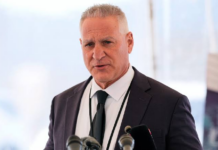
The Chief Operating Officer (COO), UNA, Mazi Osita Okonkwo in an interview with The Guardian, said that the sudden hike in the price of the product, the single largest cost component in airline operations, was placing significant pressure on operators’ finances.
Read Also: Oil Price Relief: Countries Agree To Tap Strategic Reserves
Okonkwo, however, warned that increasing ticket prices at this time, could further reduce passenger traffic, which has remained at less than 16 million yearly despite all the projections for increased traffic.
Okonkwo said the airline was struggling to absorb the sudden increase in operating costs, but insisted that the management was yet to consider raising ticket prices.
According to him, the price of aviation fuel had doubled within a week, worsening the operating environment for local carriers.
He noted that while airlines technically had the ability to raise fares, doing so at this time could negatively impact passenger demand.
He said: “Within one week, the price has doubled by 100 per cent increase. If you increase fares, already passengers are not flying, the economy is down. So, increase in airfare is not an option. There must be an intervention from somewhere.
“Anybody can increase fares, but what does it do with your passenger loads? About two weeks ago, a litre of fuel was going for 900 per litre and now, it has crossed the N1,800 threshold.
“on increase in airfares, I don’t know. It depends on whoever the operator is. You can survive it if you have enough cash to burn. I can’t speak for any airline, but at United Nigeria, we are looking at all options.”
Okonkwo also challenged a section of the public who accused the airlines of indiscriminatory airfare increase to dissect the current situation.
He insisted that a call for airfare reductions does not reflect the harsh realities of operating in the current environment.
The COO further stressed the need for urgent intervention to prevent the situation from deteriorating further, noting that intervention could come from different quarters, including government policies or global developments affecting fuel supply and pricing.
“Intervention can come from anywhere. If they can stop the war, it’s an intervention. We are in a situation now that we don’t want to reach a point of no return,” he lamented.
Aviation fuel accounts for about 40 to 50 per cent of airline operating costs, while equipment maintenance closely follows.
Major oil-consuming nations committed Wednesday to releasing 400 million barrels from strategic reserves in an effort that experts say cannot compensate for Iran’s closure of the Strait of Hormuz, even as the coordinated intervention represents the largest such drawdown ever attempted.
The International Energy Agency’s decision reflects the scale of disruption caused by the war, which has choked off roughly one-fifth of global oil and liquefied natural gas flows and sent prices swinging between $70 and nearly $120 per barrel in the space of days.
Crude traded just under $90 Wednesday morning after dropping below $87 the night before when news of the pending release leaked.
IEA Executive Director Fatih Birol called the action by member countries, which together control some 1.8 billion barrels of stockpiled crude, a “major” step to ease market strain. But he acknowledged the fundamental problem remains unsolved.
“To be clear, the most important thing for a return to stable flows of oil and gas is the resumption of transit through the Strait of Hormuz,” Birol said.
The waterway normally carries millions of barrels daily to markets across Asia, Europe and beyond. Iran’s decision to block it has forced Iraq and Kuwait to halt production at some fields because storage tanks have filled and tankers cannot leave. Oil that cannot be shipped has nowhere to go.
Saudi Arabia has redirected exports through a pipeline to the Red Sea. The United States waived sanctions on Russian crude to ease pressure. Now the IEA’s 32 member countries are tapping reserves built up over decades as a buffer against exactly this type of supply shock.
Read also: MidEast War Could Push Oil To $130 As Fuel Prices Steady
It marks only the sixth time the group has coordinated such a release since forming in the 1970s oil crisis. The previous intervention came in 2022 when Russia invaded Ukraine.
Details on how much each country will contribute and when the oil will flow have not been announced. Physical limits constrain how quickly stockpiles can be drawn. Underground storage facilities can release only so much volume per day, meaning the 400 million barrels cannot flood markets immediately.
Angie Gildea, global oil and gas leader for KPMG, said the response offers marginal relief but cannot replace what the Strait closure has cut off. “There is simply no substitute for restoring access through the Strait of Hormuz,” she said. “The tools at our disposal, including strategic reserves, rerouting some exports and floating inventories, can provide some relief at the margins, but they are not structural solutions.”
The IEA was established as a counterpart to OPEC, the producer cartel that coordinates output among oil-exporting nations.
While OPEC represents suppliers, the IEA protects consumers. Membership requires countries to maintain reserves covering at least 90 days of imports and commit to reducing oil dependency.