













|
Listen to article
|
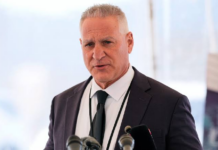
Italian Prime Minister Giorgia Meloni used a parliamentary address on Wednesday to condemn the destruction of a girls’ primary school in Minab, Iran, on the opening day of the US-Israeli military campaign, while simultaneously defending Rome’s support for the war on the grounds that an Iran armed with nuclear weapons would pose a direct threat to European security.
Speaking to the Italian Senate, Meloni called for swift attribution of responsibility for the Minab school strike and offered her government’s solidarity with the families of the children killed. “On behalf of the government, I express my firm condemnation of the massacre of girls at the school in Minab, southern Iran,” she said. She described the dead as “very young victims” and said she wanted “responsibility for this tragedy be swiftly ascertained.”
The Shajareh Tayyebeh girls’ elementary school in Minab, in Iran’s southern Hormozgan province, was destroyed on the morning of February 28, 2026 — the first day of the US-Israeli strikes — during school hours, when it was struck three times by missiles in rapid succession. After two days of removing rubble, Iranian authorities confirmed 165 people killed and 95 wounded, most of them children. Separate reports by Iranian state media have cited figures as high as 180 dead. Independent journalists have not been able to access the site to verify the death toll.
The question of who fired the missiles has become one of the most contested and politically consequential disputes of the war.
Iran has formally accused the United States and Israel. President Donald Trump has publicly blamed Tehran. Israel’s military has denied any connection. A preliminary US assessment, described by a person briefed on the intelligence to CBS News, suggests that the United States was “likely” responsible for the strike and may have hit the school in error, possibly because of outdated intelligence that wrongly identified the compound as still housing an active Iranian military installation. That preliminary finding has not been officially confirmed, and the Pentagon’s investigation remains ongoing.
Independent analyses by The New York Times, CBC, NPR, and BBC, as well as sources within the US military’s own internal inquiry, similarly concluded that the United States was the most probable source of the strike, though none described the finding as definitive. Satellite imagery verified by Al Jazeera’s Digital Investigations Unit showed the school building was intact at 10:23 a.m. local time on February 28, and had been struck by 10:45 a.m., with geolocation confirming it was the Shajareh Tayyebeh building that was hit.
The school’s relationship to the adjacent military infrastructure has been the subject of competing assessments. The compound sits within what was formerly the Sayyid al-Shuhada military complex in Minab, a known hub for the IRGC Navy’s Asif missile brigade. However, Minab’s mayor and the mother of one of the students stated that the military base had been closed approximately fifteen years earlier, with all personnel relocated, and that the school was the sole operational facility on the former base. The Guardian found no indication that the school served any military purpose at the time of the strike, noting that adjacent buildings were a medical clinic and a pharmacy.
Read Also: US Dollar Dips On Signs Of Iran Conflict Cooling
One medic who responded to the scene recounted that following the first strike, the school’s principal moved a group of students to a prayer room and called parents to collect their children; a second missile then struck that same area, killing most of those who had sheltered there. A parent corroborated this account, saying he received a phone call from the school informing him that his daughter had survived the first strike, but that she was killed before he could reach her. The school was hit a third time, according to Iranian officials.
UNESCO condemned the bombing as a “grave violation of humanitarian law,” stating that pupils in educational settings are expressly protected under international law. UN Secretary-General António Guterres and a panel of eighteen independent experts on the UN Committee on the Rights of the Child separately condemned the strike and called for an independent investigation.
Nobel laureate and education campaigner Malala Yousafzai said she was “heartbroken and appalled,” calling the killing of civilians “unconscionable.” Six senior US Senate Democrats also called on the Pentagon to provide “clear answers,” saying that the killing of schoolchildren was “appalling and unacceptable under any circumstance.”
Read Also: Valentino Garavani, Italy’s Fashion King, Dies At 93
Meloni’s parliamentary address went beyond condemning the school strike. The Italian prime minister offered a broader justification for the war’s prosecution, arguing that a nuclear-armed Iran posed an existential risk that outweighed the costs of the current conflict.
“We cannot afford an ayatollah regime in possession of nuclear weapons, combined, moreover, with a missile capability that could soon be capable of directly striking Italy and Europe,” she told senators. She described a return to diplomacy as impossible while Iran continued its retaliatory strikes across the region.
On the question of the nuclear programme specifically, Meloni said Italy was not party to the relevant intelligence assessments and could not “definitively corroborate, or to refute, the US assessments regarding Iran’s unwillingness to reach a definitive agreement.”
With energy prices surging across Europe following the shutdown of Gulf refining capacity, Meloni said Rome was considering a reduction in fuel excise duties to cushion Italian consumers, but that no decision had been made. She also warned energy companies against profiteering, saying the government was prepared to recover excessive profits through targeted taxation if necessary.
The Pentagon has not set a date for the completion of its investigation into the Minab strike. Secretary of Defense Pete Hegseth has said the inquiry is ongoing, stopping short of corroborating Trump’s claim that Iran was responsible. White House Press Secretary Karoline Leavitt has said the administration will accept whatever conclusion the investigation reaches.