














|
Listen to article
|
Nigeria’s Senate has pledged to accelerate constitutional amendments enabling the creation of state police forces, with a senior lawmaker saying near-unanimous agreement has already been reached among federal legislators on a reform that has eluded successive administrations for decades, though the National Assembly’s ongoing recess until March means the “weeks” timeline offered by its spokesman may be aspirational rather than imminent.
Senator Yemi Adaramodu, Chairman of the Senate Committee on Media and Public Affairs, told The Guardian that the legislature had achieved near unanimity on state policing before President Bola Ahmed Tinubu even made his public appeal Wednesday night, and that the only reason for delay was the legislative bandwidth consumed by the recently concluded Electoral Act amendment. “The urgency created by the Electoral Act amendment demanded that all legislative attention be given to it. We practically had to abandon many other legislative duties to concentrate on it,” Senator Adaramodu said. “Now that we have put it behind us, the next issue is the constitution review, which we have all agreed in the National Assembly to give accelerated hearing. So we have no problem at all with the appeal by the President because we are very much on course.”
The senator cited what he described as unprecedented stakeholder alignment behind the proposal.
“Our case is being aided by agreements among many strata of leadership in Nigeria, including the Nigeria Governors’ Forum, the state Houses of Assembly and traditional rulers,” he said. The combination of executive pressure, legislative readiness, and institutional consensus represents the strongest convergence of political will behind state policing that Nigeria has witnessed since the debate entered mainstream governance discourse in the late 1990s.
President Tinubu addressed the state police question at three consecutive interfaith Iftar events this week, with governors on Monday, senators on Wednesday, and members of the House of Representatives on Friday. The frequency of the appeals marked an acceleration in the President’s public posture on the issue, with Wednesday night’s Senate gathering the third interfaith breaking of fast event he hosted within a single week. His language at each event was consistent and direct. “What I am asking for tonight is for you to start thinking how best to amend the Constitution to incorporate the State Police, for us to secure our country, take over our forests from marauders, free our children from fear,” he told senators. He made identical commitments to governors on Monday, declaring that state police “will not be postponed” and describing security as “the foundation of prosperity.”
The procedural pathway to delivery is demanding, regardless of political will. Amending the 1999 Constitution to transfer “Police” from the Exclusive Legislative List to the Concurrent Legislative List requires a two-thirds majority in both the Senate and the House of Representatives, and subsequent ratification by a minimum of 24 of Nigeria’s 36 state Houses of Assembly. The National Assembly is currently on recess and is not expected to resume plenary sessions until March 2026 — a fact that necessarily compresses the window for Senator Adaramodu’s “weeks” prediction to materialise. No bill has been formally introduced, assigned to committee, or scheduled for first reading as of Saturday.
Read Also: Tinubu Presses Senate To Embed State Police In Constitution
The reform has visible support within the chamber. Senator Sani Musa, representing Niger East, argued that the security situation had become too acute and too universal to permit further delay. “When we are talking about state police, every state in this country is facing one insecurity challenge or the other,” he said. “If we look at the issue of state police carefully, it will be good for us.” Former Senate Leader Mohammed Ali Ndume of Borno South, however, restated his opposition plainly. “Personally, I don’t support state police,” he said. “Right now, we have less than 400,000 police personnel nationwide, and you are clamouring for the creation of state police. Why don’t you increase the number and train, equip, arm and motivate them, what I call TEAM?” Senator Ndume maintained that properly resourced and equipped federal security forces were capable of decisively addressing the country’s security challenges without structural decentralisation.
The historical argument against state police in Nigeria is well-established and cuts across ideological lines. Critics consistently point to Nigeria’s First Republic, during which regionally controlled police forces were used to harass political opponents, suppress dissent, and manipulate elections. Dr. Salaudeen Hashim, Director of Programme at the CLEEN Foundation, expanded on that concern at a recent stakeholder dialogue in Kaduna.
“If we don’t show carefulness in putting state police in perspective, we may end up having ethnic police; and an ethnic police in a country that is already deeply polarised along ethnic and religious lines definitely would have problems,” he said. He argued that state policing as an approach was preferable to state police as a structure, and warned that introducing decentralised forces without an accompanying State Criminal Justice System, including state custodial services, independent oversight bodies, and clear firewalls between political office holders and operational command, would create new problems rather than resolve existing ones.
Read Also: Senate Faults Envelope Budget System Amid Security Crisis
Professor Freedom Onuoha of the University of Nigeria, Nsukka’s Department of Political Science noted that the recurring debate itself was part of the problem. The to-and-fro over state police, he argued, had become a substitute for the harder work of reforming what exists.
The reform also attracted voices from the diaspora. UK-based writer Sola Adeyemi, in an essay submitted to The Guardian, argued that Nigeria had reached a point where inaction carried greater risks than reform.
“The country has reached a point where the risks of doing nothing now outweigh the risks of reform,” he wrote, proposing a layered model combining a leaner federal police focused on terrorism and organised crime, state forces rooted in local recruitment, and community units embedded within local councils. He stressed that independent oversight, transparent recruitment, and a clear operational separation from political officeholders were not optional safeguards but essential preconditions.
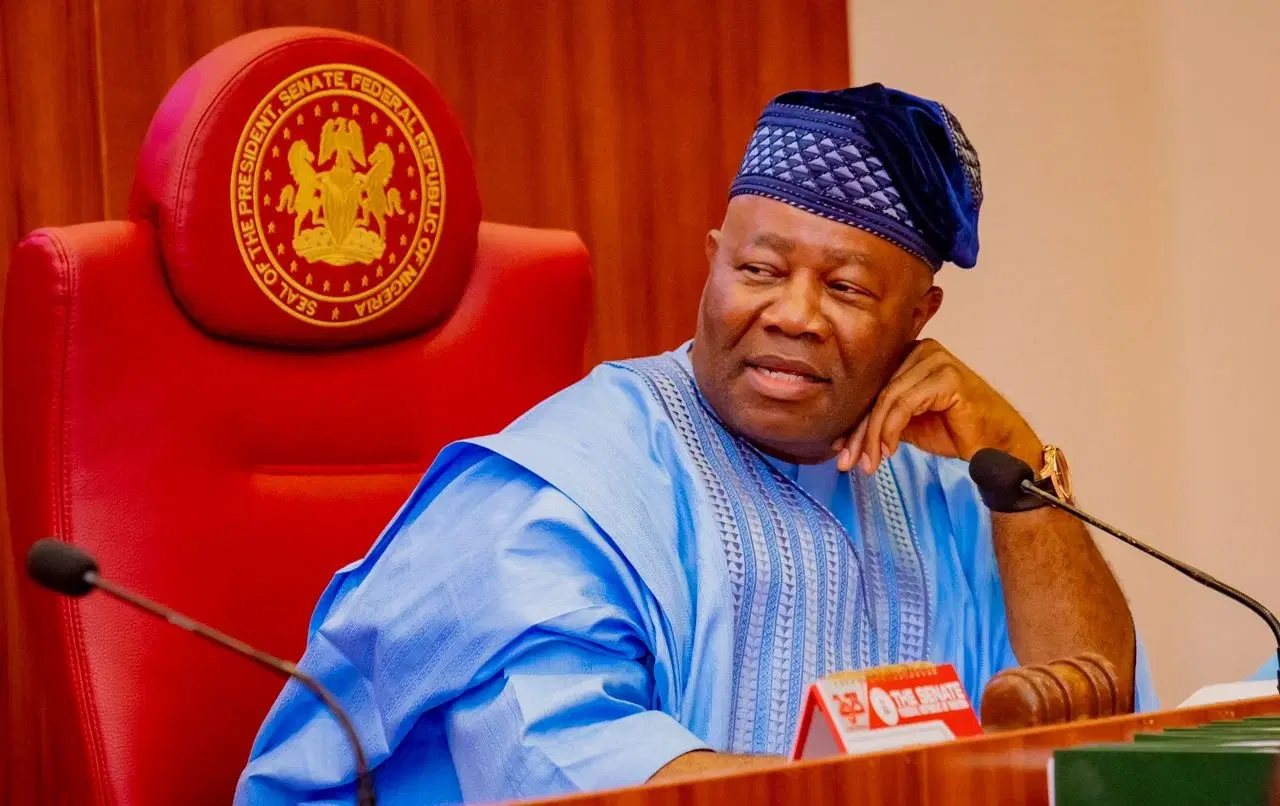
Senate President Godswill Akpabio, speaking at the Wednesday interfaith event, pledged the upper chamber’s full support for the president’s legislative agenda, reiterating that nothing sent from the executive had died at first reading and repeating his projection that Nigeria would be significantly more prosperous by 2031 under President Tinubu’s leadership.
The Senate is expected to resume plenary in March 2026. No date for a first reading of any state police constitutional amendment bill had been announced as of Saturday.