













|
Listen to article
|
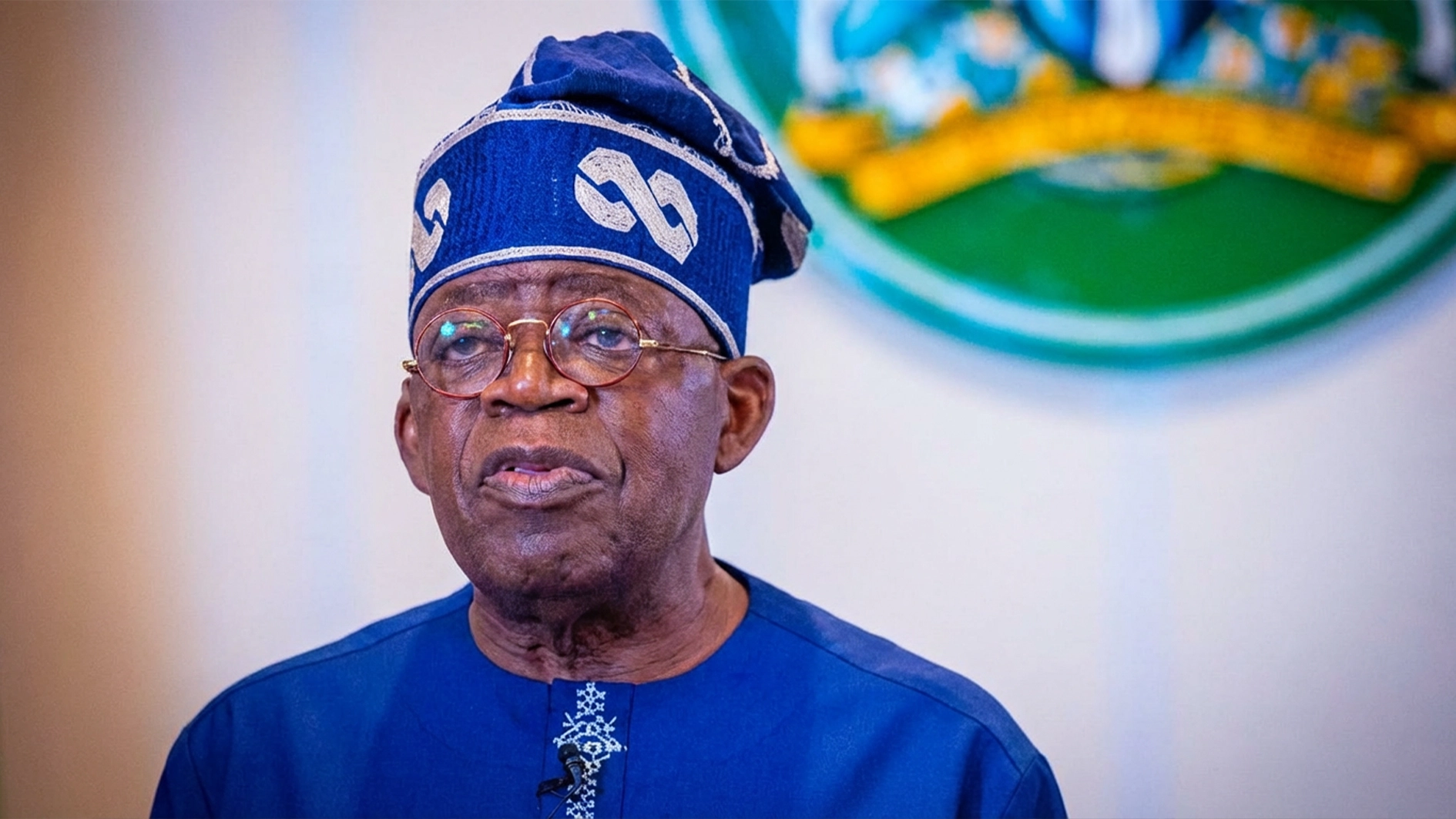
President Bola Tinubu formally called on the Nigerian Senate Wednesday night to initiate constitutional amendments enabling the creation of state police, framing the reform as an urgent structural response to what he described as an acute national security crisis, and escalating a legislative push he has maintained since taking office nearly three years ago, while the procedural groundwork for exactly such a change has already been laid in the National Assembly.
The appeal was made during an interfaith breaking of fast with senators at the Presidential Villa in Abuja, coming three days after the President made an identical commitment to state governors at a similar Ramadan gathering on Monday, where he declared that state police “will not be postponed.” The back-to-back addresses to two of the country’s most powerful institutional constituencies within the same week represented the most concentrated public pressure President Tinubu has applied to the state police question since assuming office.
“What I am asking for tonight is for you to start thinking how best to amend the Constitution to incorporate the State Police, for us to secure our country, take over our forests from marauders, free our children from fear,” the President told senators. He did not specify a legislative timeline, introduce a draft bill, or name the ministry or agency that would be tasked with designing the framework for state-level forces.
The significance of the request lies partly in what already exists on the legislative record. The 10th National Assembly’s Constitution Review Committee had, by November 2025, concluded consultations on a package of amendments that included state policing provisions, with bills subsequently transmitted to state Houses of Assembly for ratification. That process, the formal legislative channel for constitutional change, was advancing independently of Wednesday’s address. The specific reform would require amendments to Sections 197, 214, and 215 of the 1999 Constitution, which govern the structure and command of the Nigeria Police Force, and would involve transferring “Police” from the Exclusive Legislative List, where it currently sits under sole federal control, to the Concurrent Legislative List, allowing state governments to legislate on policing within their jurisdictions.
The constitutional amendment process itself is demanding. Any such change must clear a two-thirds majority in both the Senate and the House of Representatives, and subsequently be ratified by at least 24 of Nigeria’s 36 state Houses of Assembly before proceeding to the President for assent. Nigeria has attempted constitutional reform across multiple legislative cycles, in 2010, 2014, and 2022, with mixed outcomes, including amendments that passed the National Assembly but failed to secure the necessary threshold of state-level ratifications.
President Tinubu grounded his appeal in the deteriorating security picture across Nigeria’s north and middle belt, where banditry, terrorism, and insurgency have claimed thousands of lives and displaced hundreds of thousands of people in recent years.
Read Also: Tinubu Vows State Police, Says Economy Out Of Woods
He argued that decentralised policing would strengthen grassroots security, enable governors to respond more rapidly to localised threats, and improve intelligence gathering through community participation. Policing has remained on the Exclusive Legislative List since the 1999 Constitution came into force, placing the entire national force under federal command through the Inspector-General of Police, an arrangement widely criticised by state governments who argue it renders them operationally dependent and structurally slow to respond to crises within their own territories.
The reform does have organised opposition, however. Security analysts and governance experts have raised concerns about politicisation, abuse of power, and the financial capacity of poorer states to sustain independent police structures. Critics have argued that state police could be weaponised by governors against political opponents, a concern that has historically accompanied debates on decentralisation in Nigeria’s federalist context.
Beyond security, the President used the Iftar gathering to defend the economic reform agenda his administration has pursued since 2023, crediting the Senate for providing the legislative backing that made the changes possible.
“I have a lot of credit for bold reforms. Without your collaboration, without your inspiration, those reforms are not possible. We are reformists together,” he told senators, describing the scrapping of the petrol subsidy as ending “monumental corruption” and pointing to foreign exchange unification as a foundation for economic stability. He did not reference specific macroeconomic data in support of those claims.
Responding to critics who accused him of “killing the opposition” through a wave of defections to the ruling All Progressives Congress, the President was dismissive. “When they accused me of killing opposition, I didn’t have a gun. I can’t blame anybody from jumping out of a sinking ship,” he said, a pointed remark directed at the opposition parties that have shed senior members to the APC in recent months.
Read Also: Tinubu Mandates New Police Chief To End Banditry, Terrorism
Senate President Godswill Akpabio responded with an unqualified pledge of institutional loyalty. “We have nothing to give you but to assure you of our loyalty. Nothing you have sent to us has died at first reading, and it will not happen,” Senator Akpabio told the President.
He added that the chamber carefully scrutinises all executive proposals before passage, even when public reaction is initially unfavourable, and expressed optimism about Nigeria’s economic trajectory through the end of the Tinubu administration’s first term and beyond. Senator Akpabio also thanked President Tinubu for appointing former Senator Jimoh Ibrahim as an ambassador, describing the posting as a recognition of legislative experience.
Both the President and Senate President highlighted the rare convergence of Ramadan and Lent as an occasion for national reflection. “The season of reflection, sacrifice, compassion and national unity is reflected by you tonight, and I don’t take it lightly,” the President said. The gathering closed with prayers led by representatives of both faiths.
The Senate had not announced a sitting date to begin formal deliberations on state police amendments as of Wednesday evening. No bill has been formally introduced or assigned to committee as a direct result of the President’s remarks, and no timetable was provided by the presidency or the National Assembly for the next procedural step.