

















|
Listen to article
|
Nigeria’s National Assembly has entered a critical reconciliation phase over one of the most fiercely contested electoral reforms ahead of the 2027 general elections, with both chambers constituting joint conference committees to resolve a deepening divide over whether polling unit results must be transmitted to the electoral commission in real time, a dispute that has triggered street protests, labor union threats, and accusations that legislators are engineering future electoral fraud from within the law itself.
The House of Representatives passed a version of the Electoral Act Amendment Bill in December 2025 mandating direct, real-time electronic uploads from polling units to INEC’s IReV portal.
On February 4, 2026, the Senate removed the words “real-time” from Clause 60(3) while maintaining that electronic transmission remained mandatory in principle, a distinction critics dismissed as cosmetic. The decision triggered the #OccupyNASS protest in Abuja and warnings from the Nigeria Labour Congress of nationwide industrial action and possible election boycotts if the final legislation does not enshrine real-time uploads.
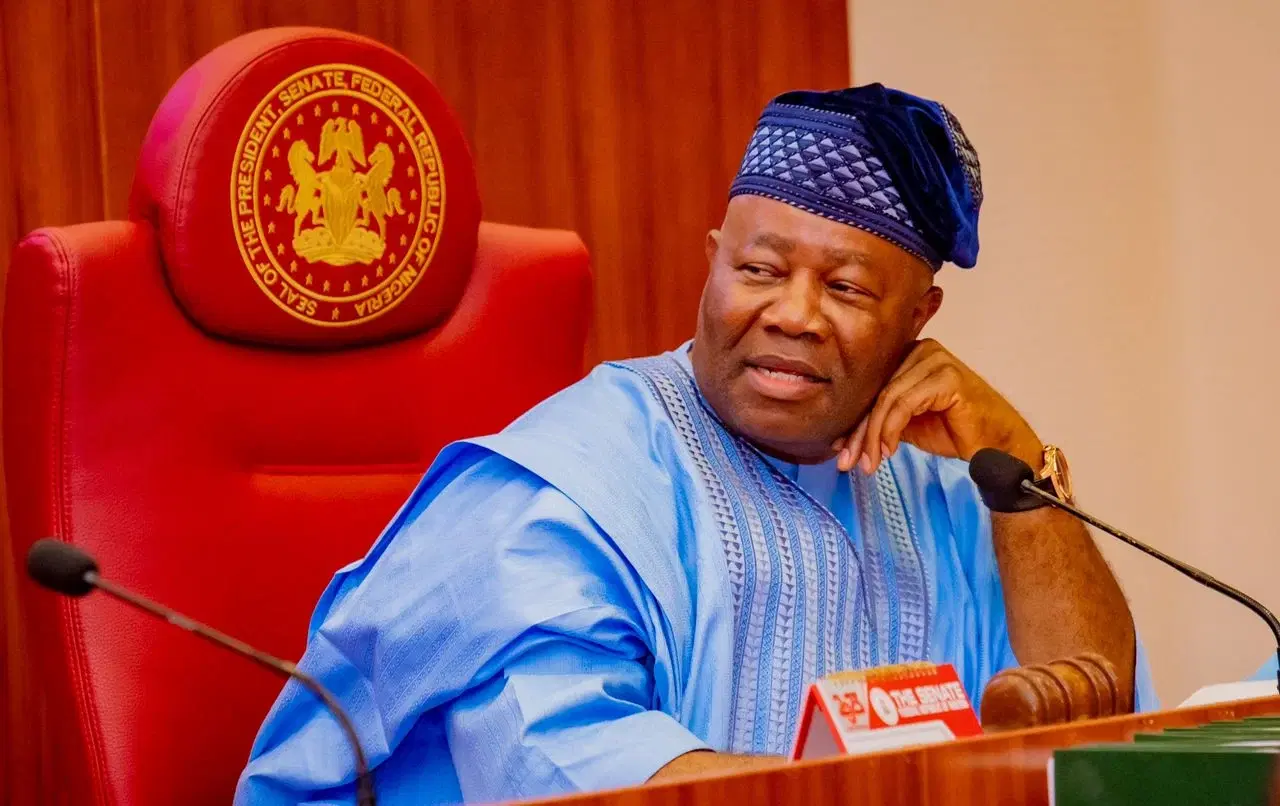
Faced with the scale of public outrage, the Senate subsequently reversed course during an emergency plenary session, adopting a motion moved by Chief Whip Senator Mohammed Monguno and seconded by Minority Leader Abba Moro, going back on its earlier decision and reinstating electronic transmission, while retaining Form EC8A as a fallback where network connectivity fails. Both chambers have now constituted 12-member conference committees to harmonize the competing versions before transmitting the final bill to President Bola Tinubu for assent. Correspondence from the Presidency has indicated strong executive interest in the bill’s expedited passage, with Senate President Godswill Akpabio saying it could be signed into law before the end of February 2026.
Into this charged atmosphere stepped former Resident Electoral Commissioner for Akwa Ibom, Mike Igini, who used a stakeholders’ forum to provide the most data-driven case yet for mandatory real-time transmission, citing decades of legislative turnover statistics he argued were direct evidence of systematic result manipulation at collation stages. The Sixth Senate from 2007 to 2011 returned only 23 of 109 members, an 79 percent turnover. The Tenth Senate from 2023 to 2027 has regressed to 77 percent turnover, with only 25 returning senators and 84 new entrants. For the House of Representatives, the figures were similarly damaging, ranging from 57 to 78 percent across electoral cycles.
Read Also: 2027 Presidential Election Holds On February 20 – INEC
“This chronic instability breeds institutional amnesia, dissipates scarce public resources on perpetual induction and retraining,” Igini said, arguing that the pattern reflected not electoral preference but manipulation, with results altered at collation stages after polling unit counts had already been verified. He dismissed network coverage as an excuse, citing a joint INEC-NCC survey showing over 97 percent network coverage nationwide ahead of the 2023 elections. “Publicly viewable results serve as deterrence and would render such tampering manifest and actionable,” he said.
Former Katsina REC Jibrin Zarewa supported that position, saying INEC had first tested real-time transmission in a 2017 Sokoto federal constituency by-election in Kwarri/Wamako and found it workable. “If it is made mandatory in the law, INEC is capable of executing it,” he said, adding that service providers could be compelled to strengthen signal infrastructure in weak coverage areas. Former Zamfara REC Asmau Maikudi similarly described e-transmission as feasible and consistent with global electoral best practices.
Former INEC Federal Commissioner Professor Lai Olurode offered a note of caution, recommending a hybrid rather than fully digital framework.
“Do a combination for now. You are not saying that our election should be 100% technology-dependent. Just as we are sceptical about human beings because of their attitude, you can’t be too sure of the attitude of your machine as well,” he said, warning that sole reliance on electronic systems could produce dangerous suspense if systems failed during a live election night.
Senate Leader Opeyemi Bamidele had defended the chamber’s initial removal of “real-time” language by citing NCC data showing Nigeria had achieved only approximately 70 percent broadband coverage as of 2025, with internet penetration at 44.53 percent of the population. He also referenced the Speedtest Global Index, which ranked Nigeria 85th of 105 countries in mobile network reliability and 129th of 150 countries in fixed broadband reliability, arguing that mandating real-time uploads against that infrastructure backdrop could produce avoidable crises.
Read Also: INEC Seeks N874bn To Conduct 2027 Elections
Civil society leaders rejected that argument. Jide Ojo of the Civil Society Legislative Advocacy Centre warned: “When you create uncertainty and lack of clarity in the law, you open opportunities for manipulation. Many Nigerians see manual transmission as one of the major ways elections are rigged. What the Senate has done is to give with one hand and take with the other.” Civitas Nigeria’s Rafsanjani added that virtually all communities now had access to at least one network provider. “To say there will be no network is simply an excuse to retain room for electoral fraud.”
Former Vice President Atiku Abubakar, now with the opposition ADC, also weighed in. “Nigerians were expecting real-time electronic transfer. But what we got is a mixture of electronic and manual transmission, which is going to cause more confusion or chaos,” he said following a meeting with former military leader Ibrahim Babangida in Minna.
A Senior Advocate of Nigeria who spoke anonymously warned that vague legal drafting would become the focal point of post-election litigation. “If the Electoral Act introduces ambiguity regarding the mode of result transmission, litigants may argue that such ambiguity undermines transparency and the constitutional right of citizens to participate in free and fair elections. Where the law is unclear, courts are often forced to interpret legislative intent. That is risky in an election cycle. Ideally, the National Assembly should eliminate uncertainty now rather than leave it to post-election tribunals.”
The bill’s urgency is heightened by elections already scheduled for 2026, including FCT Area Council elections and governorship polls in Ekiti and Osun states, all of which will be conducted under whatever legal framework emerges from the current conference process.