













|
Listen to article
|
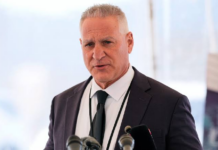
INEC has presented a budget proposal approaching one trillion naira to conduct the 2027 general elections, triggering debate in the National Assembly over funding mechanisms, budget autonomy, and the commission’s readiness to deliver credible polls. Independent National Electoral Commission Chairman Professor Joash Amupitan disclosed on Thursday that the commission requires a total of N873,778,401,602.08 to conduct the 2027 general elections, presenting the detailed breakdown before the National Assembly Joint Committee on Electoral Matters at the National Assembly complex in Abuja.
Amupitan said preparations for the 2027 elections have already commenced, stressing that the Electoral Act’s requirement for budget submission at least 360 days before polling day was designed to prevent avoidable funding crises. “Early appropriation is necessary to guarantee adequate planning and seamless execution of the elections,” he told lawmakers.
The proposed 2027 election budget is divided into five key areas: N379.748 billion for operational costs, N92.317 billion for administrative expenses, N209.206 billion for technology, N154.905 billion for capital expenditure, and N42.608 billion for miscellaneous items. The technology allocation alone exceeds the commission’s entire 2026 operational budget request, reflecting the scale of electronic infrastructure the commission says it requires.
Amupitan clarified that the election budget is entirely separate from INEC’s N171 billion operational proposal for the 2026 fiscal year, which covers routine activities including by-elections and off-cycle governorship polls across states.
The 2026 operational breakdown includes N109 billion for personnel costs, N18.7 billion for overheads, N42.63 billion for election-related activities, and N1.4 billion for capital expenditure. The commission submitted the proposal despite the Ministry of Finance issuing a budget ceiling of N140 billion, a gap of N31 billion that Amupitan said the commission could not responsibly close without compromising its obligations.
The INEC chairman used the session to challenge the envelope budgeting system imposed on the commission by the finance ministry, arguing it is fundamentally incompatible with the nature of electoral work, which frequently demands urgent, flexible, and unpredictable expenditure. He stressed that the commission’s constitutional mandate cannot be constrained by pre-set administrative ceilings designed for conventional government ministries.
Read Also: Transmission: Don’t Speak For INEC – Mark Blasts Akpabio
Senator Adams Oshiomhole, representing Edo North, backed the chairman’s position, arguing that no external agency should dictate the budgeting framework for a body with INEC’s unique and sensitive constitutional mandate. Representative Billy Osawaru went further, recommending that INEC’s budget be placed on first-line charge, a mechanism that would guarantee direct access to funds from the Federation Account without annual National Assembly appropriation battles.
One of the most contentious elements of the presentation involved INEC’s proposal to pay each National Youth Service Corps member and other ad-hoc election staff N127,000 for seven days of service, covering five days of training and two days of polling activity. The breakdown includes N50,000 for election duty, N5,000 for training, and feeding allowances of approximately N9,500. With around 450,000 corps members projected to be deployed nationwide, the proposal translates to roughly N32 billion in personnel costs for ad-hoc staff alone. The joint committee resolved that the final amount appropriated for corps members would be determined during the full budget approval process.
A separate budget line item allocating N630 million for annual medical check-ups of political office holders within the 2026 operational proposal drew sharp scrutiny from lawmakers. Representative Moses Fayinka of Mushin II Federal Constituency in Lagos questioned the allocation. Amupitan responded that the template was prepared by the Federal Ministry of Finance and likely covers remuneration-related medical benefits for the INEC chairman, Resident Electoral Commissioners, and National Commissioners. He warned that altering the template could affect the commission’s access to Federation Account funding.
Amupitan also revealed that the elevated capital component in the 2027 election budget reflects the consolidation of items that could not be accommodated in previous election budgets, describing the higher capital provision as a one-time correction of accumulated shortfalls rather than routine spending growth.
On the communications infrastructure gap, the INEC chairman identified the absence of a dedicated network as one of the commission’s most critical operational vulnerabilities. He said building independent infrastructure would be expensive but argued it was essential if INEC was to be fully accountable to Nigerians in the event of technical failures during results transmission.
Read Also: INEC Warns Elections Lack Credibility Without Security
Senate Committee on INEC Chairman Simon Lalong assured the commission of legislative support, while urging thorough scrutiny of the proposal before final approval. House Committee on Electoral Matters Chairman Bayo Balogun offered more measured backing, cautioning INEC against building public expectations it might not be equipped to deliver on. Balogun referenced the controversial INEC Result Viewing portal, which during the 2023 general elections generated public anticipation of real-time results upload that was not fully realized. “Meanwhile, the IREV was not even in the Electoral Act; it was only in INEC regulations. So, be careful how you make promises,” he warned.
“INEC is now the main institution between now and next year. It is going to get tougher. We will continue to give you all necessary support legislatively, but Nigerians are watching,” Lalong added.
The 2027 general elections are expected to include presidential, National Assembly, and governorship contests. Nigeria’s most recent general election in 2023, which cost approximately N355 billion, was marred by technical difficulties including failures in the Bimodal Voter Accreditation System and delayed results uploads.
The National Assembly committee did not indicate a timeline for reviewing and approving the proposed election and operational budgets.