















|
Listen to article
|
The United Kingdom and allies have uncovered the “brutal and barbaric circumstances” surrounding the death of Alexei Navalny in a Russian prison.
The opposition leader died on February 16, 2024, at age 47, in a Russian penal colony in Siberia. His death, which coincided with the 2024 Munich Security Conference, sparked outrage.
The UK said collaborative work has confirmed through laboratory testing that the deadly toxin found in the skin of Ecuador dart frogs (epibatidine) was found in samples from Navalny’s body.
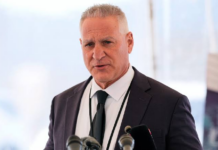
UK Foreign Secretary Yvette Cooper announced the findings Saturday at the 2026 Munich Security Conference, two years after Navalny’s death. His widow, Yulia Navalnaya, was at the conference.
“We know the Russian state now used this lethal toxin to target Navalny in fear of his opposition,” the Secretary said. The investigation involved Sweden, France, the Netherlands, and Germany.
Cooper declared that only Moscow had the means, motive, and opportunity to deploy the lethal toxin against Navalny during his imprisonment. “We hold it responsible for his death,” she stated.
Noting that the use of the poison violated the Chemical Weapons Convention, the UK insists Russia’s “irresponsible actions,” including its invasion of Ukraine, continue to threaten shared security.
In a joint statement, Britain, Sweden, France, Germany, and the Netherlands reiterated their confidence that the late Russian activist was poisoned with a lethal toxin.
“This is the conclusion of our Governments based on analyses of samples from Alexei Navalny,” they wrote. “These analyses have conclusively confirmed the presence of epibatidine.”
The allies recalled their August 2020 condemnation of “Russia’s use of novichok to poison Navalny,” and the use of novichok in Salisbury in 2018, which unalived a British woman, Dawn Sturgess.
The governments have now written to the Organisation for the Prohibition of Chemical Weapons to report the Russian “breach” of the Chemical Weapons Convention.
Read Also: US Says Russia, Ukraine Took ‘Big Step’ And Will Meet Again
Expressing concern that Russia did not destroy all of its chemical weapons, the allies vowed to, alongside partners, “use all policy levers at our disposal to continue to hold Russia to account.”
A Russian warship arrived off South Africa’s main naval base Friday to join Chinese and Iranian vessels in military exercises that risk further damaging Pretoria’s relations with Washington.
The exercises draw together several nations feuding with the US administration and come at a time of heightened tensions following Washington’s raid on Venezuela.
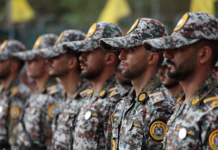
A Chinese destroyer and replenishment ship, and an Iranian forward base ship sailed into South African waters earlier this week ahead of the week-long manoeuvres due to kick off with an opening ceremony Saturday.
AFP journalists near the Simon’s Town base saw the Russian-flagged corvette vessel pull into False Bay.
Read Also: US Senate Rebukes President Trump Over Venezuela
China is the lead nation in the “Will for Peace 2026” drill involving navies from the 11-nation BRICS group of emerging nations which US President Donald Trump has labelled “anti-American”.
The South African navy said it would confirm details of the vessels present later Friday.
The United Arab Emirates was also expected to send ships, Deputy Defence Minister Bantu Holomisa told Newzroom Afrika television late Thursday.
Other BRICS nations Indonesia, Ethiopia and Brazil will send observers, he said. The remaining members of the grouping are India, Egypt and Saudi Arabia.
The drills will allow the navies “to exchange best practices and improve joint operational capabilities, which contributes to the safety of shipping routes and overall regional maritime stability,” South Africa’s defence force said.
Washington this week seized a Russian-flagged oil tanker it said was part of a shadow fleet that carried oil for countries such as Venezuela, Russia and Iran.
It has also threatened action against Iran should protesters be killed in mounting demonstrations sparked by anger over the rising cost of living.
Asked about the timing of the navy exercises, Holomisa said: “This exercise was planned long before these tensions we are witnessing today.”
“Let us not press panic buttons because the USA has got a problem with countries,” he said. “Those are not our enemies,” he said.
The joint drills were initially scheduled for November 2025 but were postponed due to a clash with the G20 summit in Johannesburg.
Washington boycotted the summit amid a row with Pretoria that includes anger over its ties with Russia and Iran.
“Washington has clearly been attempting to put Pretoria in its bad book since the beginning of the current Trump administration,” Priyal Singh, senior researcher at the Institute for Security Studies, told AFP.
“The optics surrounding the upcoming naval exercise will likely be used by policymakers in Washington as another prime example of why its bilateral relations with South Africa should be reviewed,” he said.