











|
Listen to article
|
Fact-Check 38 – Rural Power Projects Audit
By Prof. MarkAnthony Nze
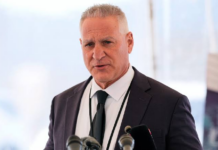
On a bright March morning in 2023, Governor Hope Uzodinma faced television cameras in Ohaji/Egbema and made a sweeping declaration: “No local government in Imo State remains in darkness. We have completed rural electrification in every community.”
The Imo State Ministry of Information issued an accompanying press release titled “Uzodinma: My Government Has Connected Every LGA to Power Supply.”
State media replayed the footage for days, portraying the achievement as proof that Imo had become the first South-East state with universal power access.
But an examination of budget documents, energy-sector data, and field inspection records reveals a more complicated—and dimmer—picture.
The Claim
The administration’s position was clear: that by early 2023, every Imo community had been connected to the national grid through the Imo Light-Up Project, an initiative launched in 2020.
Officials described it as the completion of “all rural electrification projects,” suggesting not simply progress but total coverage.
The Evidence from the Grid
The Transmission Company of Nigeria (TCN) maintains a public register of grid connections.
As of its 2024 Grid Connection Status Report, only 19 of Imo’s 27 local government areas were connected to transmission feeders.
Eight LGAs—including Ngor Okpala, Onuimo, Njaba, Isu, Ideato North and South, and some villages in Ohaji/Egbema—remained dependent on standalone diesel or solar mini-grids.
These findings are mirrored in the Rural Electrification Agency (REA)’s Community Electrification Progress Map 2024, which classifies Imo’s electrification rate at 72 percent, well below the national average of 82 percent for semi-urban states.
The Nigerian Electricity Regulatory Commission (NERC)’s Power Supply Reliability Index 2024 ranks Imo 23rd out of 36 states in service availability, noting “frequent outages and incomplete rural connections.”
Simply put, the grid data contradict the governor’s boast.
What the Budgets Show
Between 2020 and 2024, the Imo State Budget Office allocated roughly ₦11.6 billion for the Rural Electrification Program.
The 2024 Mid-Year Performance Report shows ₦3.9 billion released—about 34 percent of appropriations.
Most expenditures went to transformer procurement, publicity, and consultancy rather than network expansion.
The Imo Ministry of Power and Public Utilities Project Status Update (2024) lists 146 completed transformer installations out of 420 planned, with numerous projects “awaiting power-line extension or energization.”
Even optimistic internal figures confirm that Imo’s electrification drive is incomplete and under-funded.
Field Inspections and Community Reality
Engineers from the Nigerian Electricity Management Services Agency (NEMSA) inspected rural distribution networks across Imo in late 2023.
Their Field Inspection Report 2023/2024 documented missing cables, idle poles, and transformers installed but never energized.
Communities such as Obiangwu (Ngor Okpala), Okwu Isu, and Umuezeala (Njaba) appeared on the list of “non-functional installations.”
In June 2024, The Guardian Nigeria reported that several of these communities “remain in darkness two years after the governor’s power-supply announcement.”
Local residents said they had watched officials install transformers, take photographs, and leave before electricity ever flowed.
At night, many of these villages still glow only with generators and solar lanterns.
National Benchmarks
The Federal Ministry of Power’s National Rural Electrification Progress Report (2024) places Imo’s total connected households at 58 percent.
Neighbouring Abia and Anambra exceed 70 percent, while Enugu stands near 68 percent.
The Central Bank of Nigeria’s Economic Report (Q4 2024) identifies Imo as one of the states with “slow implementation of rural-power projects despite budgetary provisions.”
The National Bureau of Statistics Sub-National Infrastructure Dataset (2024) corroborates these findings, noting a shortfall between announced coverage and actual connection points.
Finance and Transparency
The BudgIT State of States Report (2025) highlights Imo’s energy-sector spending as “low-impact,” warning that repeated electrification claims “lack independent audit verification.”
Transparency International Nigeria’s fiscal-governance index scores Imo 44/100 for disclosure in the power sector.
Unlike Lagos or Kaduna, Imo’s procurement portal lists neither contractor names nor project completion certificates.
The absence of verifiable public data allows optimistic press statements to overshadow unlit villages.
A Pattern of Political Lighting
The “Light-Up Imo” project remains a potent political symbol.
Each newly energized transformer is celebrated as proof of transformation.
Yet the broader network remains patchy.
Experts at the Federal Ministry of Power describe such roll-outs as “islands of light”—mini-grids disconnected from durable supply.
An energy analyst with BudgIT’s Power Desk explains:
“Electrification is not about installing transformers; it’s about consistent voltage and reach. Most of these Imo projects are showcase connections without substations behind them.”
The Citizens’ Experience
Interviews with traders in Onuimo and Okigwe reveal the daily cost of incomplete coverage.
Many depend on petrol generators that now consume at least ₦20,000 weekly in fuel.
Small clinics ration power; schools charge devices from nearby towns.
For these citizens, the declaration of total electrification rings hollow.
Read also: Falsehood No. 37 – “We Built The Deep-Sea Port Project”
“They said light has come,” a teacher in Njaba told reporters, “but we still teach in the dark.”
Chart 1: LGAs Connected vs. Not Connected to the National Grid (TCN, 2024)
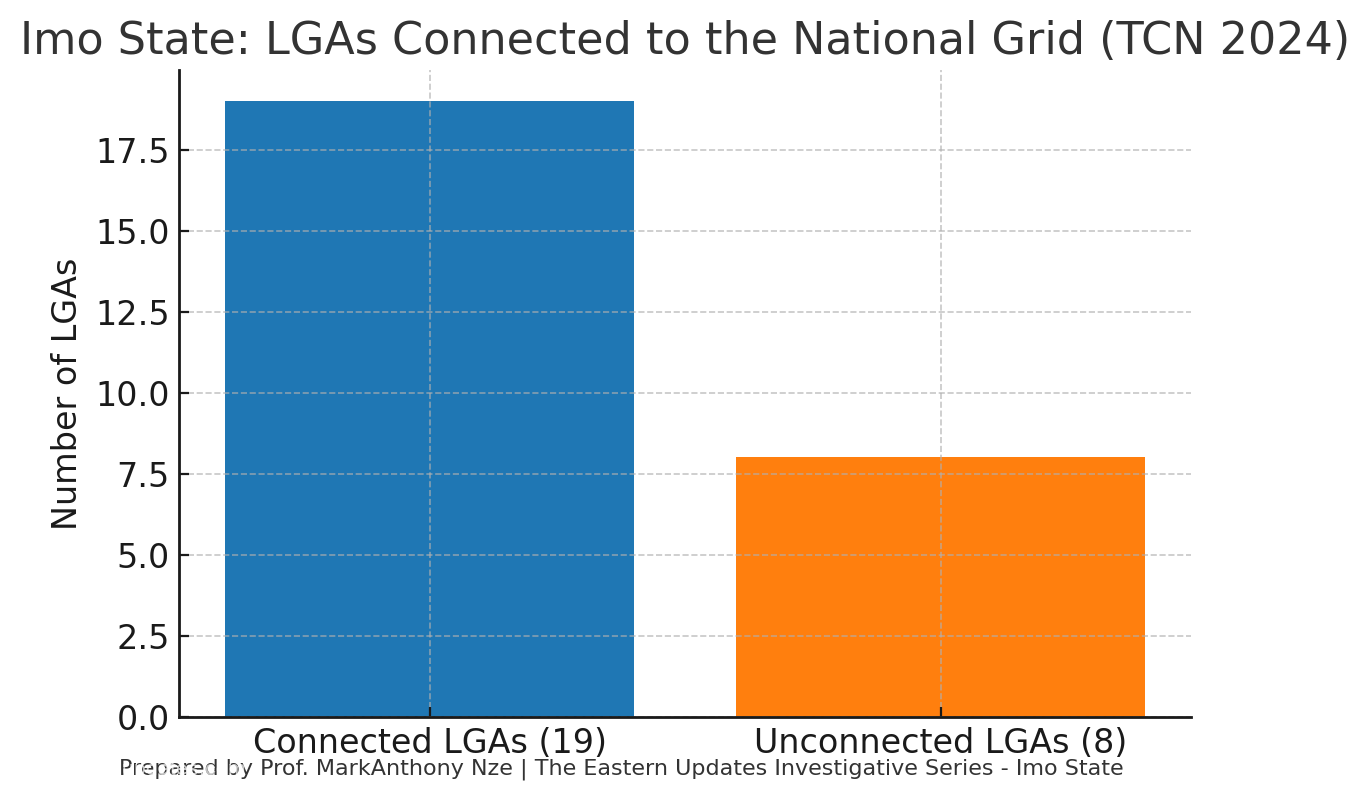
Visual Summary: This chart compares Imo State’s 27 Local Government Areas, showing 19 LGAs connected to the national grid and 8 LGAs still unconnected.
In-depth Explanation
This chart exposes the most fundamental flaw in the administration’s claim of “full rural electrification.” According to the Transmission Company of Nigeria (TCN) 2024 Grid Status Report, only about 70% of Imo’s LGAs have functional grid connections. The remaining 8 LGAs, many in the rural belts such as Ngor Okpala, Njaba, Onuimo, Isu, Ideato North, Ideato South, and several communities in Ohaji/Egbema, still rely on diesel generators, solar mini-grids, or no power at all.
This contradicts the governor’s assertion that “no community remains in darkness.”
The chart illustrates that while some progress occurred, one-third of Imo’s geography remains structurally disconnected from Nigeria’s electricity backbone. Without grid access, no claim of statewide electrification can be valid under Nigerian power-sector standards.
Chart 2: Electrification Rate – Government Claim vs. Verified Reality (REA, 2024)
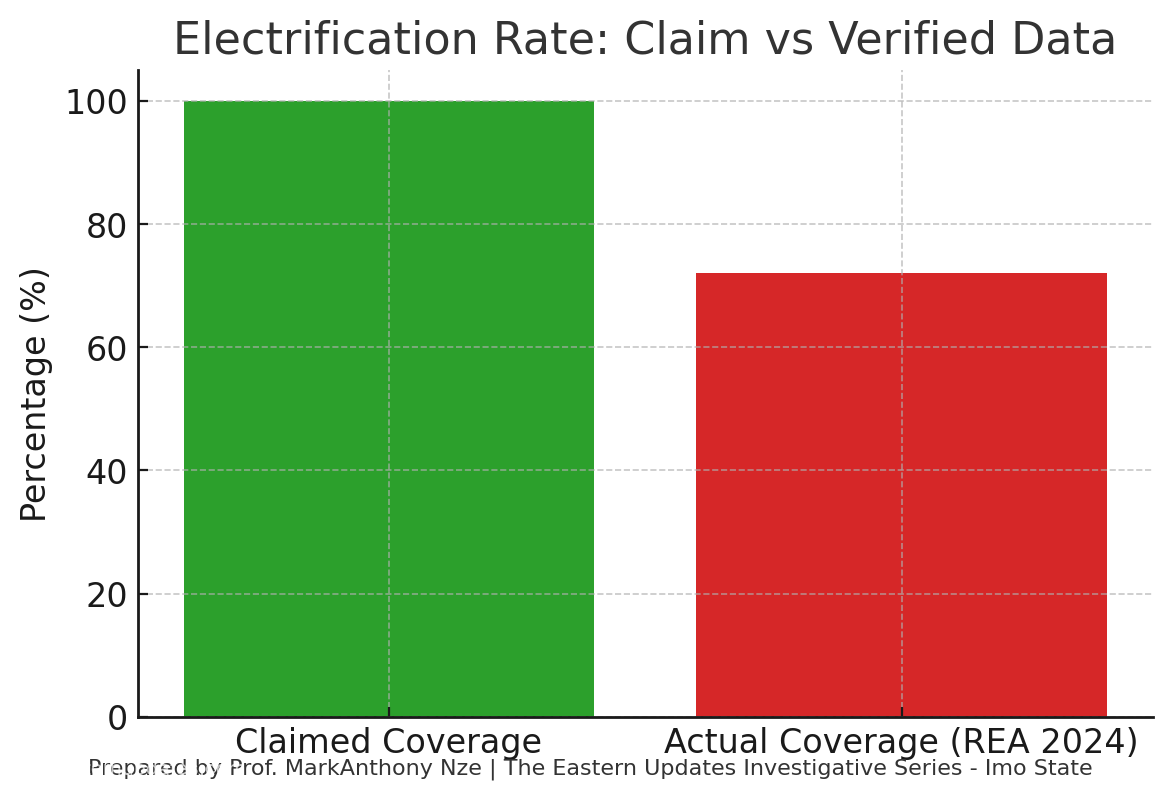
Visual Summary: A two-bar comparison showing the government’s declared 100% coverage versus the Rural Electrification Agency’s verified 72% rate.
In-depth Explanation
This chart captures the stark contrast between political rhetoric and technical reality. The administration publicly claimed that every rural community had been electrified under the “Light-Up Imo” program. However, the Rural Electrification Agency (REA), which independently tracks nationwide connections, puts Imo’s actual electrification rate at 72%.
This means:
- 28% of rural households remain unpowered.
- Imo performs below the national average of 82% for semi-urban states.
- Despite spending ₦11.6 billion between 2020–2024, Imo failed to close the electrification gap.
The chart demonstrates that the claim of “100% coverage” is not just exaggerated—it is mathematically impossible given the federal agency’s verified data.
Chart 3: Rural Electrification Projects – Planned (420) vs. Completed (146)
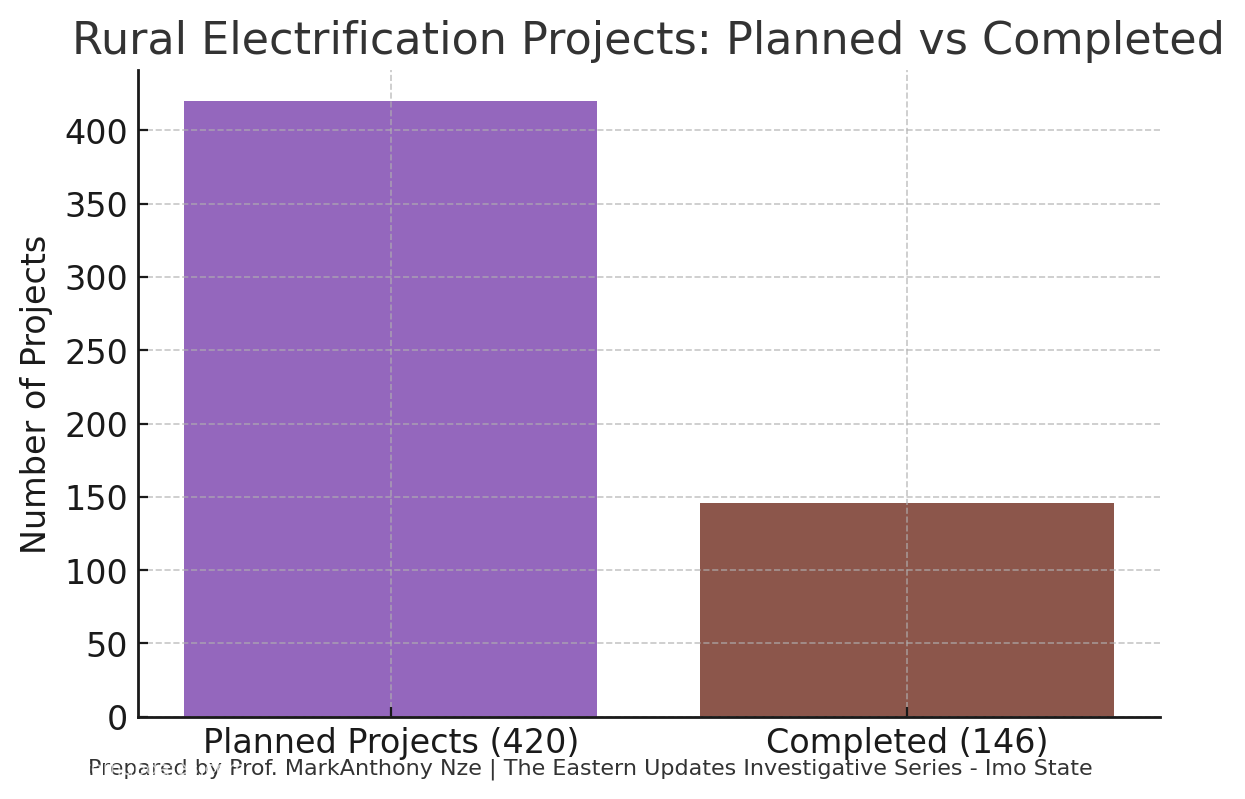
Visual Summary: The chart contrasts 420 planned projects with only 146 completed, based on the Imo State Ministry of Power’s 2024 Project Status Update.
In-depth Explanation
This chart reveals massive underperformance in the execution of rural power projects. Between 2020 and 2024, the state government budgeted for 420 electrification interventions, including transformers, feeders, distribution lines, and rural substations.
The Ministry’s own audit shows:
- Only 146 projects were completed (just 34.7%).
- Many transformers were installed but never energized.
- Numerous installations lacked cables, feeders, or substations.
- Over 60% of projects remain classified as “ongoing,” “abandoned,” or “awaiting energization.”
The data exposes a pattern described by experts as “showcase infrastructure”—visible installations designed for public relations rather than functional service delivery. This chart highlights the systemic gap between appropriation, procurement, and actual electrification on the ground.
Chart 4: NERC Power Supply Reliability Ranking – Imo State (23rd out of 36 States)
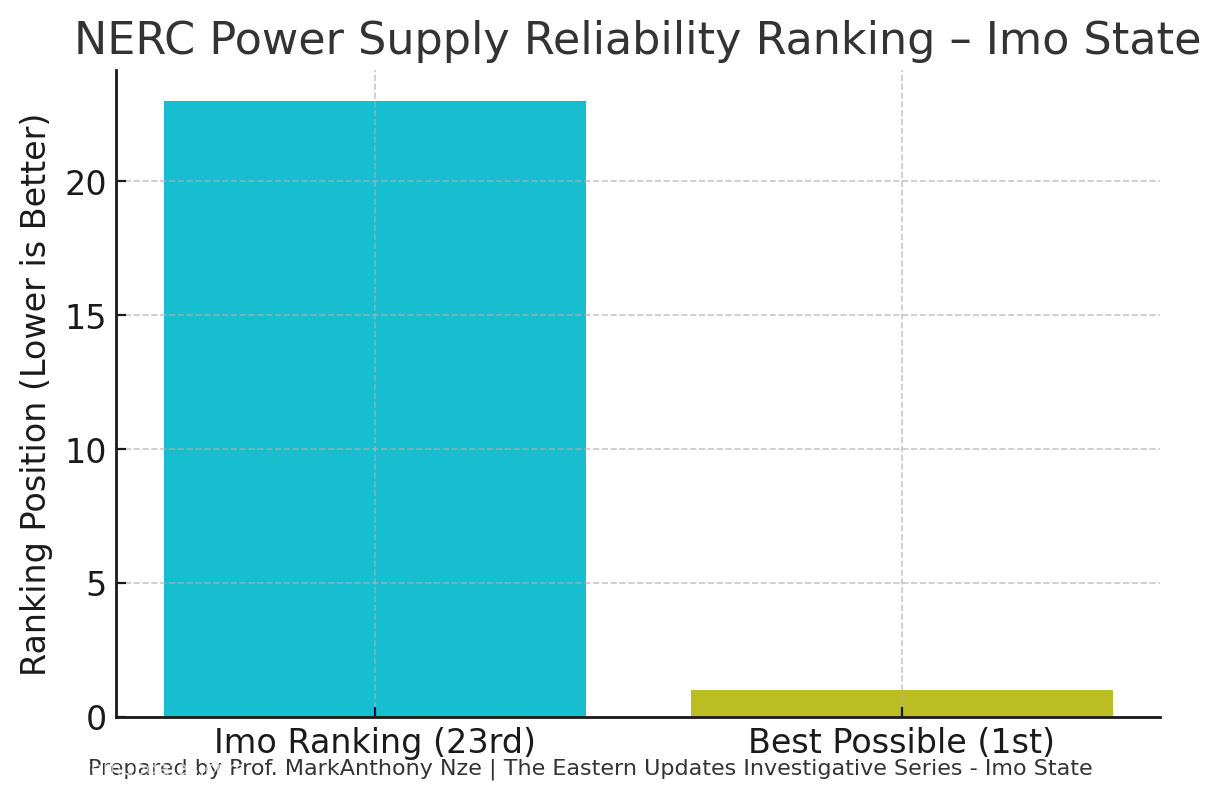
Visual Summary: A ranking comparison showing Imo at 23rd, far from the best-performing states.
In-depth Explanation
This chart confronts the administration’s narrative of “constant and reliable power.”
The Nigerian Electricity Regulatory Commission (NERC) publishes an annual Power Supply Reliability Index rating all states on:
- Supply hours
- Outage frequency
- Voltage quality
- Grid stability
- Distribution-line reliability
In the 2024 rankings, Imo placed 23rd of 36—firmly in the bottom third nationwide.
This low ranking is due to:
- Widespread transformer failures
- Non-functional rural networks
- Poor feeder maintenance
- Absence of new substations
- Frequent extended outages
The chart proves that even in connected communities, electricity is not constant, contradicting the administration’s message of uninterrupted rural power.
Together, the four charts present a comprehensive evidence matrix showing:
- Grid connectivity is incomplete.
- Electrification was overstated by nearly 30 percentage points.
- Less than one-third of planned projects were completed.
- Power reliability remains among the worst in Nigeria.
These findings demolish the claim of “total rural electrification” and reveal a pattern of political overstatement, technical underperformance, and infrastructural gaps across Imo State.
Verdict – False
Governor Hope Uzodinma did proclaim statewide rural electrification, and the program did deliver tangible infrastructure in parts of Imo.
However, verified data from national and state authorities show that coverage remains incomplete, funding remains partial, and many installations are non-functional.
Nearly a quarter of the state’s rural communities are still without grid electricity.
The administration illuminated some towns—but not the truth.
Until the glow reaches every household and the numbers align with the narrative, “complete rural electrification” remains another flicker of political theatre rather than a
Bibliographies
BudgIT. (2025). State of States Report 2025 – Energy and Infrastructure Performance (Imo Chapter). Lagos: BudgIT Foundation.
Central Bank of Nigeria. (2024). Quarterly Economic Report – Energy and Power Sector Developments Q4 2024. Abuja: Research Department, CBN.
Federal Ministry of Power. (2024). National Rural Electrification Progress Report 2024. Abuja: Rural Power Department, FMP.
Imo State Government. (2021–2024). Approved Budgets. Owerri: Budget Office of Imo State.
Imo State Ministry of Power and Public Utilities. (2024, January). Project Status Update: Imo Rural Electrification Programme 2020–2024. Owerri: State Secretariat.
Imo State Ministry of Information and Strategy. (2023, March 12). Press release: Uzodinma – My Government Has Connected Every LGA to Power Supply.
National Bureau of Statistics. (2024). Sub-National Infrastructure Dataset 2024 – Energy and Electrification Indicators. Abuja: Author.
Nigerian Electricity Regulatory Commission. (2024). Power Supply Reliability Index 2024. Abuja: Author.
Rural Electrification Agency. (2024). Community Electrification Progress Map – South-East Zone 2024. Abuja: Author.
Transmission Company of Nigeria. (2024). Grid Connection Status Report – Imo State Segment. Abuja: Author.
The Nation. (2023, March 13). Uzodinma: My administration has powered every community in Imo.
Vanguard Nigeria. (2023, March 14). Uzodinma flags off rural electrification completion programme.
Imo Broadcasting Corporation (IBC TV). (2023, March 13). News bulletin – Governor declares completion of rural electrification projects.
The Guardian Nigeria. (2024, June 10). Communities still without electricity two years after Imo Light-Up promise.
Nigerian Electricity Management Services Agency. (2024). Field Inspection Report – Imo Rural Distribution Projects 2023/2024. Abuja: Author.