






|
Listen to article
|
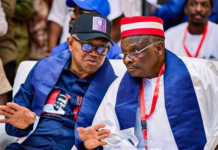
Former Kano State Governor and leader of the NNPP, Rabiu Musa Kwankwaso, has said that anyone claiming to be the emir of Kano apart from Muhammadu Sanusi II is fake and not recognized by the people or the government.
Kwankwaso made the comment during the 4th convocation of Skyline University.
He said any attempt to install another emir, whether from Abuja or anywhere else, has any legitimacy.
He recalled that Kano had faced similar situations before.
According to him, “This is not the first time Kano has witnessed an emir tussle. When I was a student at the technical school in Kofar Nassarawa, people used to greet and hail the so-called second emir as he entered the city through Kofar Nassarawa to the school. He was not the legitimate emir, but people treated him as if he were.”
Kwankwaso also commended Skyline University for appointing Emir Sanusi II as its chancellor.
He said the emir has shown strong commitment to education.
He added that; “Education is the number one priority for the Kwankwassiya movement and the NNPP, and Emir Sanusi has shown great dedication.”
The emirship dispute currently involves Muhammadu Sanusi II and Aminu Ado Bayero. In 2019, former Governor Abdullahi Umar Ganduje created four new emirates, reducing Sanusi’s powers.
Governor Abba Kabir Yusuf later reversed the law and returned Sanusi to the throne, but court cases are still ongoing and the final decision has not been made.
Gov. Abba Yusuf of Kano State on Friday announced that his administration is finalising the state’s first‑ever proposed budget of N1 trillion for the 2026 financial year.
This is contained in a statement issued by his spokesperson Sunusi Dawakin-Tofa in Kano on Friday.
The Governor disclosed the figure while opening the Second Special Executive Council Meeting, which was convened to deliberate on the 2026 budget proposals ahead of their formal presentation to the Kano State House of Assembly next week.
He said the historic budget reflected the administration’s drive to consolidate ongoing infrastructure, urban renewal and socio‑economic development across the state.
According to Yusuf, the increase is due to a substantial rise in internally generated revenue and the blocking of leakages within the revenue system.