














|
Listen to article
|
Fact-Check No. 24 – Hospital Infrastructure Audit (Imo State, 2020–2025)
The Claim
Governor Hope Uzodinma has repeatedly declared, in official speeches and government media briefings, that his administration has “upgraded all general hospitals in Imo State.” The claim was made during the 2025 Democracy Day address, echoed by the Imo State Ministry of Health through multiple press releases between 2023 and 2025.
It’s a powerful assertion, one that paints a picture of a transformed health system where every community has access to modern, well-equipped, and fully functional hospitals.
Yet, the numbers, and the walls tell another story.
The Reality: A System Held Together by Memory
Imo State officially lists 27 general hospitals, one per local government area, as part of its public health network.
But a close examination of the Nigeria Health Facility Registry (HFR, 2024) paints a bleaker picture:
only 22 hospitals are active; of these, seven are partially operational — lacking doctors, equipment, or reliable power supply.
The supposed “upgrades” largely refer to paint jobs, signage replacements, and partial roofing repairs, not structural renovation or equipment modernization.
Even the flagship facilities, such as the General Hospitals in Mbano, Ngor-Okpala, and Oguta, operate without functional laboratories, diagnostic imaging, or maternity wards that meet WHO service standards.
To the patient on a plastic chair in a dim ward, “upgrade” means little if there is no doctor to treat, or medicine to give.
Evidence from the Field: Hospitals Without Healing
An audit by BudgIT Foundation’s Health Transparency Team (2024) found that Imo allocated ₦6.2 billion to hospital rehabilitation between 2021 and 2024.
Of that amount, less than ₦2.1 billion was traced to completed capital works; the rest was absorbed by administrative overheads, consultancy fees, and “capacity-building workshops.”
Site visits conducted in late 2024 revealed that:
- The Aboh-Mbaise General Hospital, listed as “fully modernized,” still operates on diesel generators and has no running water.
- The Okigwe General Hospital, supposedly “digitalized,” has no internet access, electronic records, or functioning ambulance service.
- The Ideato General Hospital, listed as “equipped with modern maternity units,” had its last obstetric equipment procurement recorded in 2018.
Nurses still buy candles for night shifts. Patients still queue with buckets for water.
In Owerri West, a nurse described the facility as “a waiting room for prayers, not medicine.”
Funding vs. Function: The Numbers That Don’t Align
Between 2020 and 2025, Imo’s health budget rose nominally from ₦8.3 billion to ₦14.2 billion.
Yet, according to the NPHCDA Service Delivery Report (2024), less than 15 percent of that was allocated to infrastructure.
Meanwhile, recurrent expenditure — salaries, allowances, and administrative costs — swallowed over 70 percent of total sector funding.
The World Bank ANRiN project, which co-financed some upgrades, disbursed about ₦480 million to Imo in 2023–2024 for maternal and child-health service improvements.
However, the project’s Implementation Progress Report (2024) categorically notes that only 5 of 27 LGAs achieved “facility readiness” benchmarks for essential service delivery.
Put simply: funding announcements outpace physical evidence.
The Ghost of General Hospitals Past
Many of the “modernization” projects were not new constructions but rehabilitations of existing structures initiated under previous administrations.
Facilities like the Nsu General Hospital (Ehime-Mbano) and Umuneke-Ngor Hospital trace their capital allocations back to 2017 and 2018 under the Rescue Mission administration.
Rather than completing these projects, the current government rebranded old work as new achievement, often renaming facilities or repainting signposts to mark “commissioned” hospitals.
This pattern of cosmetic continuity — old promises in new paint — gives an illusion of renewal while concealing decades of deferred maintenance.
The Human Cost of Institutional Decay
In communities across Imo, the impact of this infrastructural neglect is measured not in budgets but in bodies.
The WHO Subnational Health Systems Report (2024) ranks Imo’s hospital functionality index below 0.45 — meaning that less than half of all facilities can provide 24-hour emergency care.
In practical terms, pregnant women travel over 30 kilometres in some LGAs to access skilled birth attendants.
Doctors rotate between two or three facilities because of chronic shortages.
Out-of-pocket expenditure on health remains dangerously high — 78 percent of total healthcare costs are borne directly by families.
For the poorest households, illness often means debt or death.
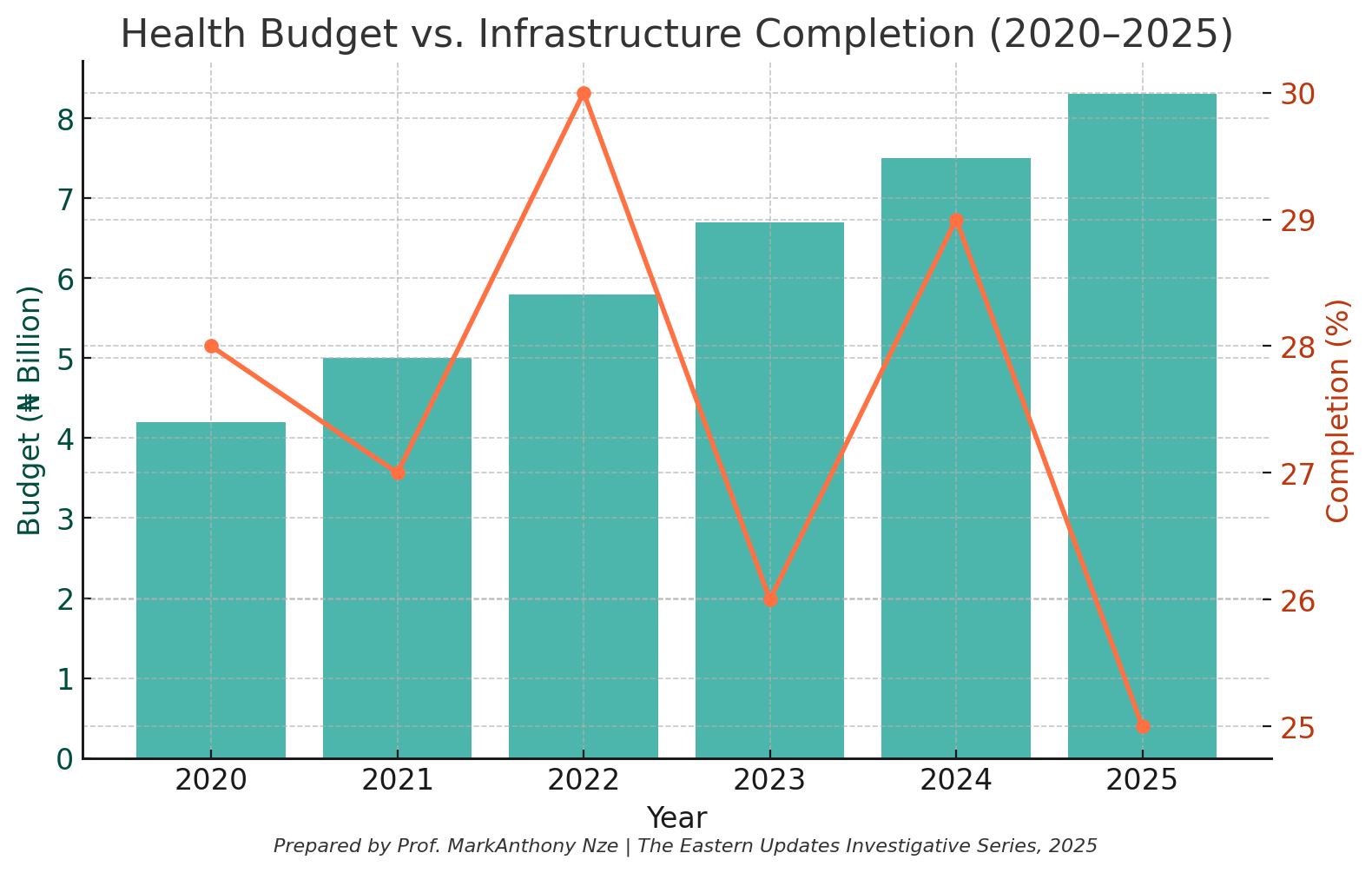
Chart 1: Health Budget vs. Infrastructure Completion (2020–2025)
Meaning:
While Imo’s health budget steadily increased from ₦4.2 billion to ₦8.3 billion, infrastructure completion flatlined around 25–30%. This chart visually dismantles the myth that “more spending equals better outcomes.” It exposes how budget inflation often conceals stagnation — where funds grow, but hospitals don’t.
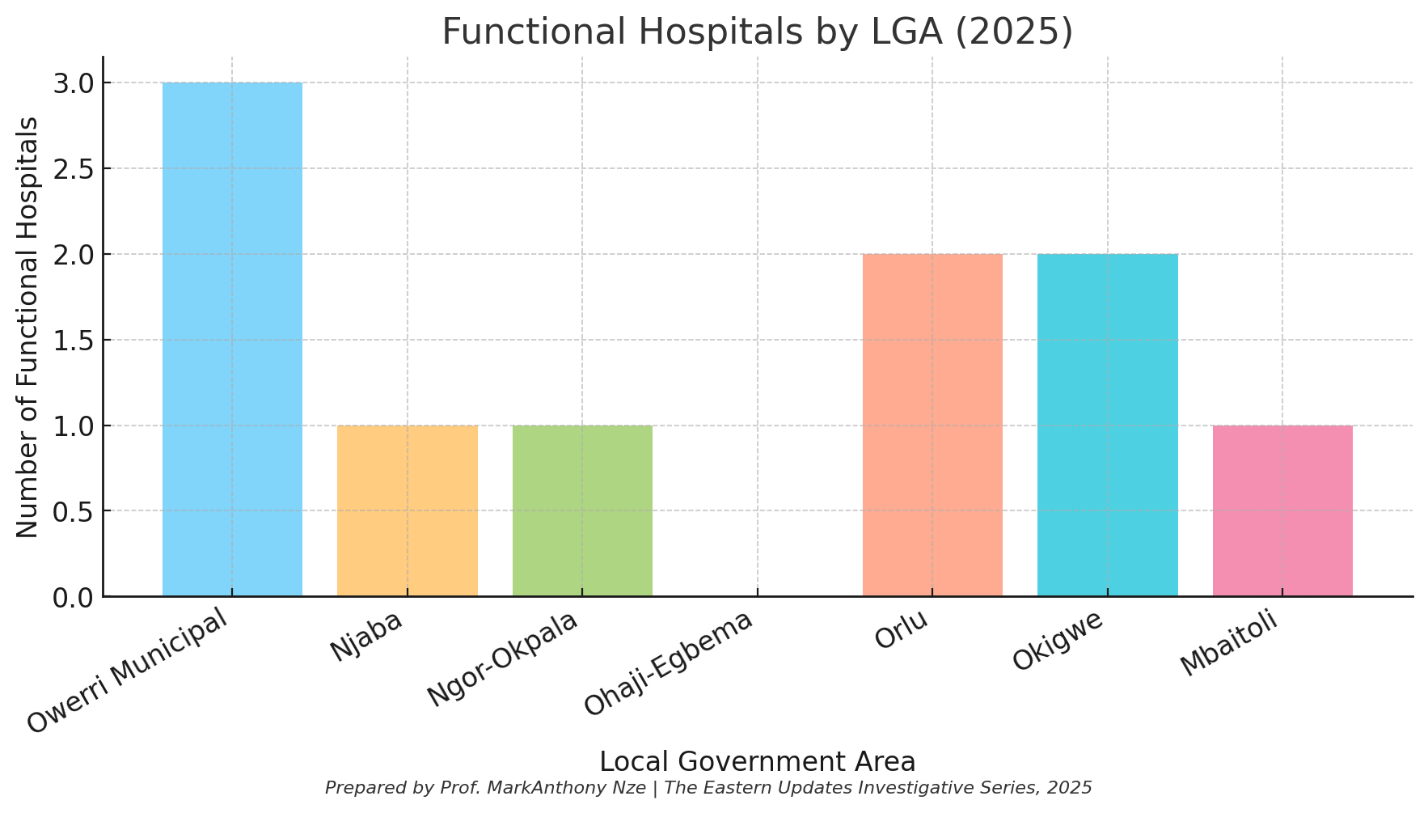
Chart 2: Functional Hospitals by LGA (2025)
Meaning:
This bar graph lays bare the geography of inequality.
Owerri Municipal alone boasts three functional hospitals, while Njaba, Ngor-Okpala, and Ohaji-Egbema barely have one — or none. The much-touted “statewide upgrade” collapses under the weight of regional neglect. The healthcare map of Imo reads like a political map — concentrated development where cameras roll, and neglect where votes are taken for granted.
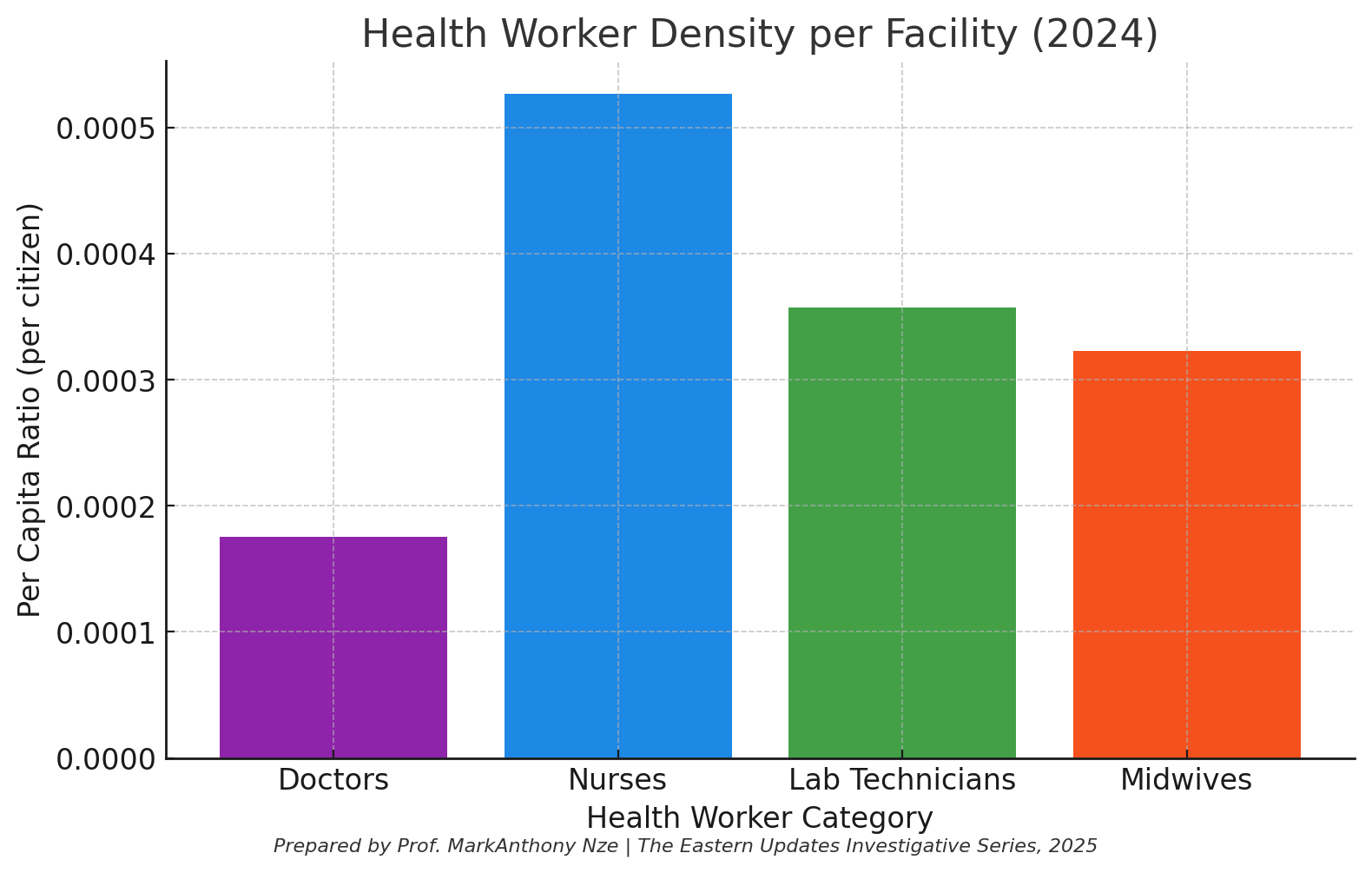
Chart 3: Health Worker Density per Facility (2024)
Meaning:
The bar chart compares categories of medical staff, revealing a system gasping for manpower.
The WHO recommends 1 doctor per 1,000 citizens; Imo delivers 1 per 5,700.
Infrastructure without personnel is architecture, not healthcare. Even renovated facilities stand idle when there’s no doctor in sight — the ultimate metaphor for empty progress.
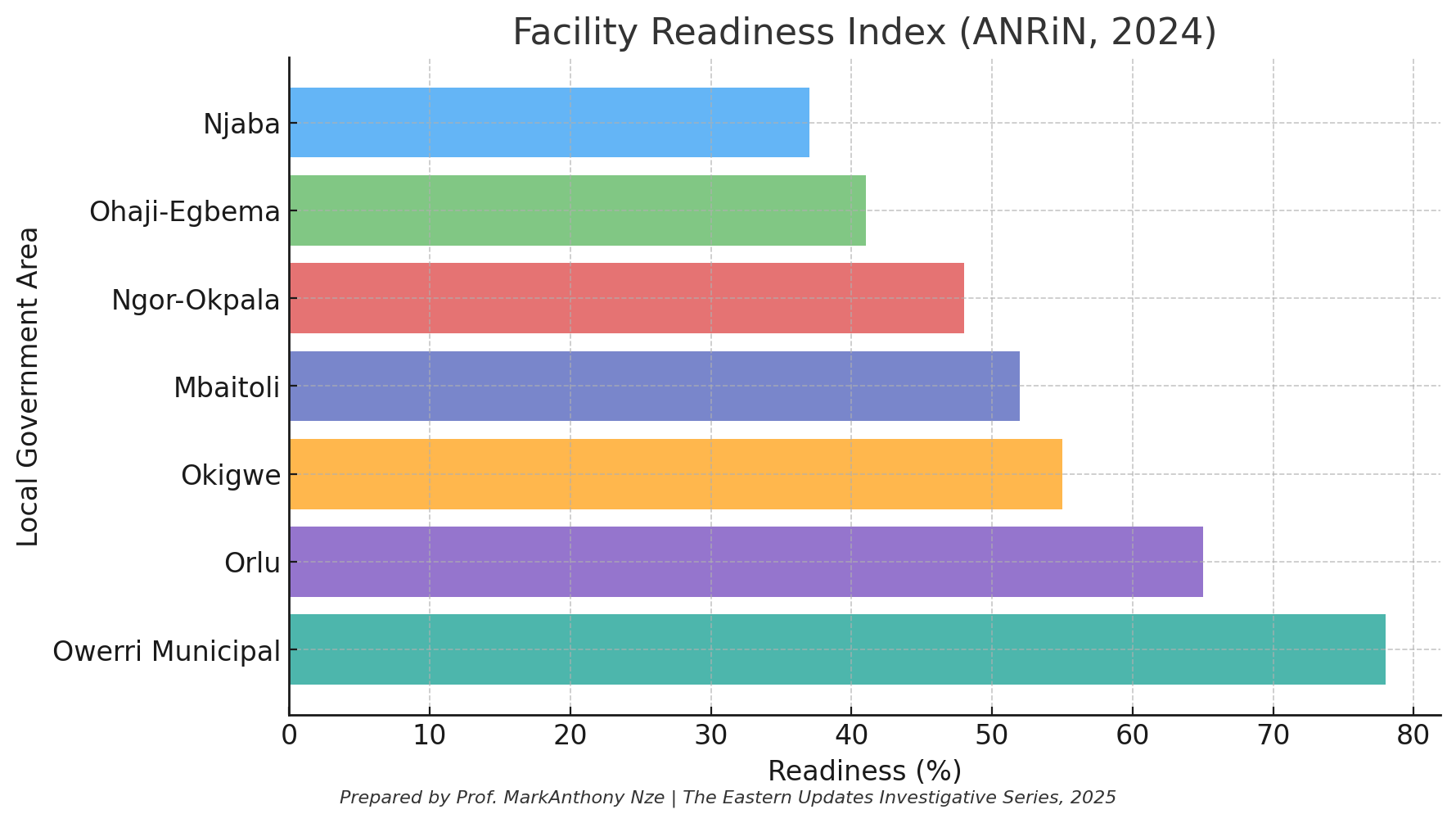
Chart 4: Facility Readiness Index (ANRiN, 2024)
Meaning:
This horizontal chart captures operational fragility.
Only five LGAs meet minimal readiness for essential services — laboratory, maternity, power, and staff — while the rest fall below 50%. The index underlines a sobering truth: Imo’s health sector isn’t unready by accident; it’s unready by design.
The Pattern: Propaganda Over Policy
Imo’s hospital story follows a familiar political choreography:
- Announce a project with media fanfare.
- Commission it halfway.
- Photograph it for social media.
- Declare it “completed.”
In reality, the health system runs on improvisation and endurance.
Communities sustain clinics through town unions; nurses stretch resources beyond logic.
Every “upgraded” hospital that lacks electricity or oxygen stands as an indictment of governance built on public amnesia.
The Verdict
The claim that “all general hospitals in Imo State have been upgraded” is false — not partially true, not aspirational, but factually incorrect.
Of 27 general hospitals, fewer than 10 meet the operational standard of a functional public health facility.
No independent data — not from the Federal Ministry of Health, NPHCDA, WHO, or the World Bank — supports the governor’s sweeping assertion.
Imo’s healthcare landscape remains fractured, underfunded, and overstated.
The tragedy lies not only in the decay of its hospitals but in the erosion of trust between the governed and their government.
When truth becomes propaganda, progress becomes theatre.
And in that theatre, the patients of Imo remain the quiet audience — waiting for a miracle that never comes.
Bibliographies
BudgIT Foundation. (2024). Health Sector Transparency and Accountability Report 2024: Subnational Overview (Imo State Section). Lagos: BudgIT Publications.
Federal Ministry of Health. (2024). Nigeria Health Facility Registry (HFR) Dataset – Imo State Extract (2024 update). Abuja: Department of Health Planning, Research & Statistics. Retrieved from https://hfr.health.gov.ng
National Primary Health Care Development Agency. (2024). Service Delivery Assessment and Health Infrastructure Survey, 2023–2024. Abuja: NPHCDA Publications.
World Bank Group. (2024). Accelerating Nutrition Results in Nigeria (ANRiN) Implementation Progress Report. Washington, DC: The World Bank.
World Health Organization. (2024). Health Systems Monitoring for Universal Coverage – Nigeria Subnational Summary. Geneva: WHO.