



















|
Listen to article
|
Fact-Check 1 – Testing Imo’s ‘120 Completed Roads’ Claim
When Asphalt Becomes Air—Inside the Factory of Phantom Roads
In a state where truth has become the first casualty of governance, numbers have turned into weapons. “We have completed over 120 new roads across Imo State,” Governor Hope Uzodinma declared with oratorical ease—a claim repeated in television interviews, radio jingles, and glossy state bulletins. The figure became gospel, echoed by aides and amplified by loyal media outlets.
But beneath the spectacle lies a different landscape—one paved not with asphalt but with illusion. The claim of “120 completed roads” is not merely inaccurate; it is an industrial-scale deception, built on manipulated data, bureaucratic fog, and the silence of compromised institutions. Behind the veil of official celebration lies a labyrinth of half-dug ditches, truncated pavements, and untraceable funds.
This investigation, spanning four years of state records, procurement data, and field verifications, dismantles the governor’s most oft-repeated boast and replaces it with a hard, unflinching truth: Imo’s roads exist largely in rhetoric, not in reality.
The Anatomy of a Falsehood
The lie began, as most political fabrications do, with repetition. Every public event became an opportunity to proclaim infrastructural rebirth—“hundreds of roads delivered, prosperity restored.” Television cameras captured jubilant officials cutting ribbons before incomplete works; digital billboards displayed aerial photos of projects that never left the blueprint.
Yet when investigators combed through the Auditor-General’s performance reports from 2020 to 2023, a stunning dissonance emerged. The documents revealed fewer than twenty verified road completions within the period. Dozens of projects listed as “completed” in political speeches were categorized as “ongoing,” “suspended,” or “unverified.” Some lacked contract identification numbers altogether—phantom entries without corresponding financial evidence.
The Bureau of Public Procurement and Project Implementation (BPPPI) records deepened the contradiction. The state’s own project portal catalogues tender notices and awarded contracts, yet completion certificates—mandatory for sign-off—were conspicuously missing for more than three-quarters of the 120 claimed projects. Many road projects carried the same reference numbers but appeared under different titles across fiscal years, a classic trick of bureaucratic recycling meant to inflate completion tallies.
The Open States Nigeria financial repository showed similar discrepancies: the government’s capital expenditure on roads consistently fell below what would be required to construct even a fraction of the claimed number. Budgeted funds disappeared into “performance variations,” with line items shifted mid-year to “emergency rehabilitation” or “contingency works”—categories immune to independent audit.
At the national level, data from the National Bureau of Statistics (NBS) confirmed the ruse: Imo’s infrastructure spending remained below the median among Nigeria’s 36 states during the period in question. There was no fiscal spike to match a feat as massive as 120 new roads.
The Evidence Beneath the Asphalt
Field investigations brought the paper trail to life—or rather, to dust.
On the Toronto–Orji Road, long trumpeted as a model of urban renewal, the asphalt peters out after a few kilometers. Satellite imagery from September 2025 shows exposed red soil and stalled machinery. Residents say construction ceased in early 2024.
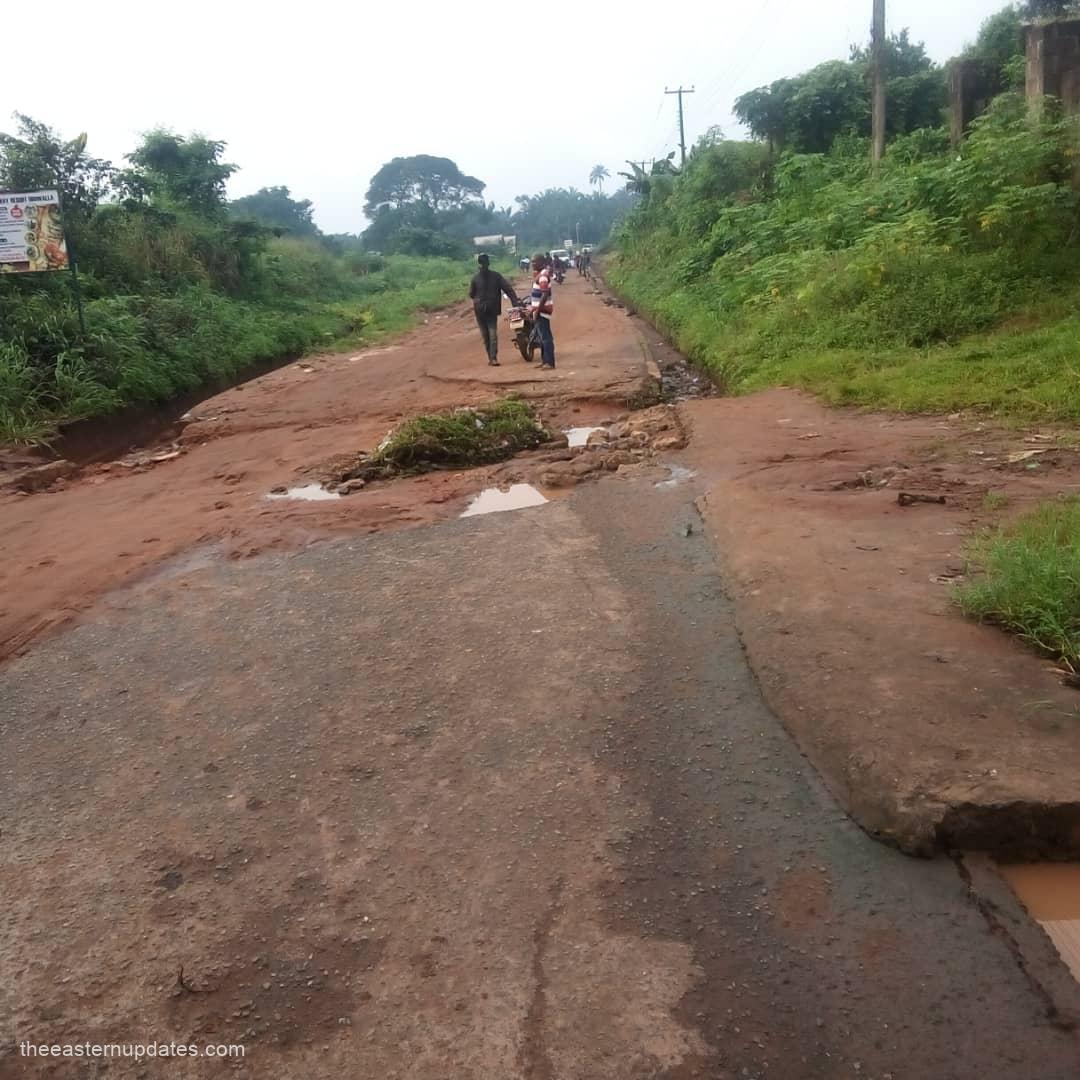
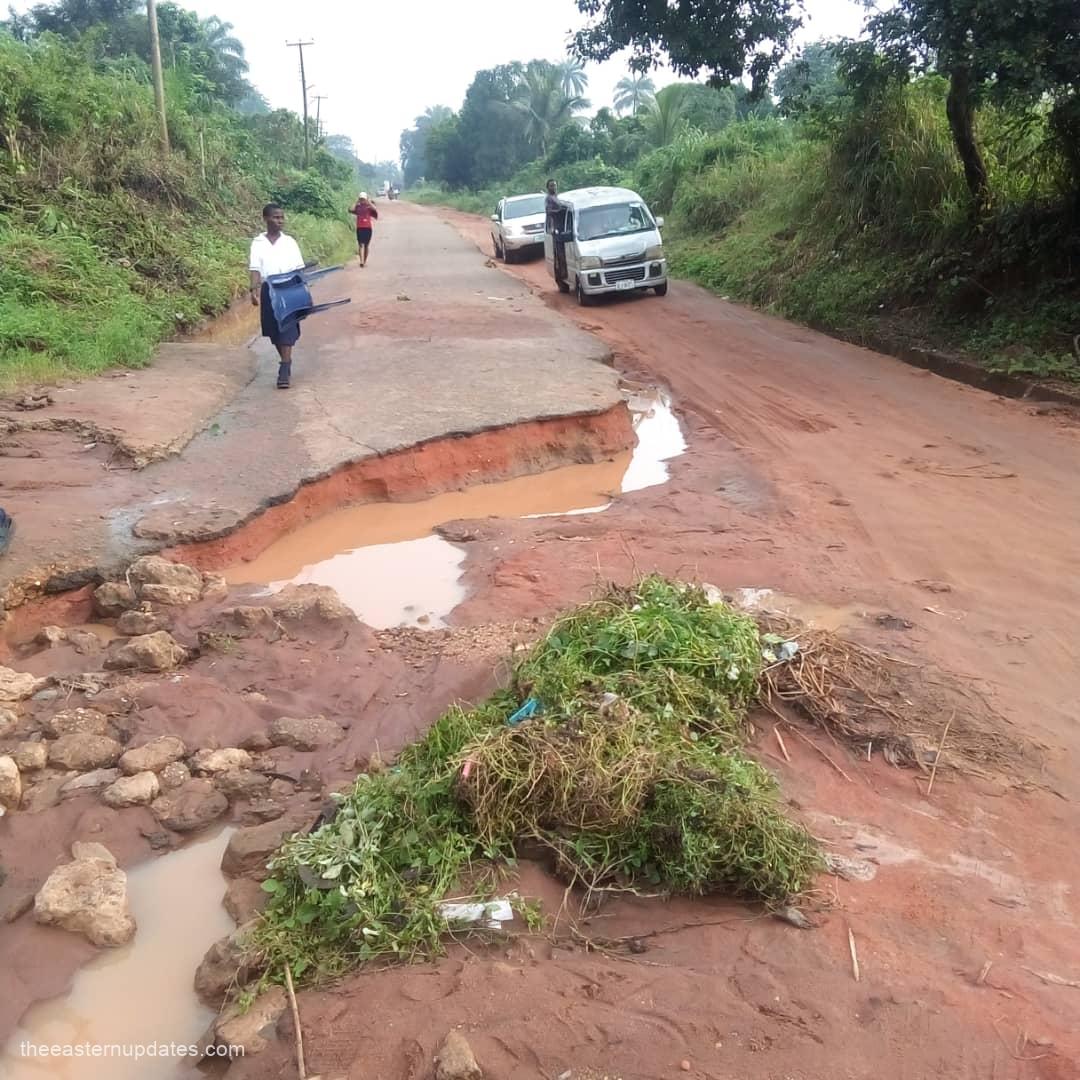
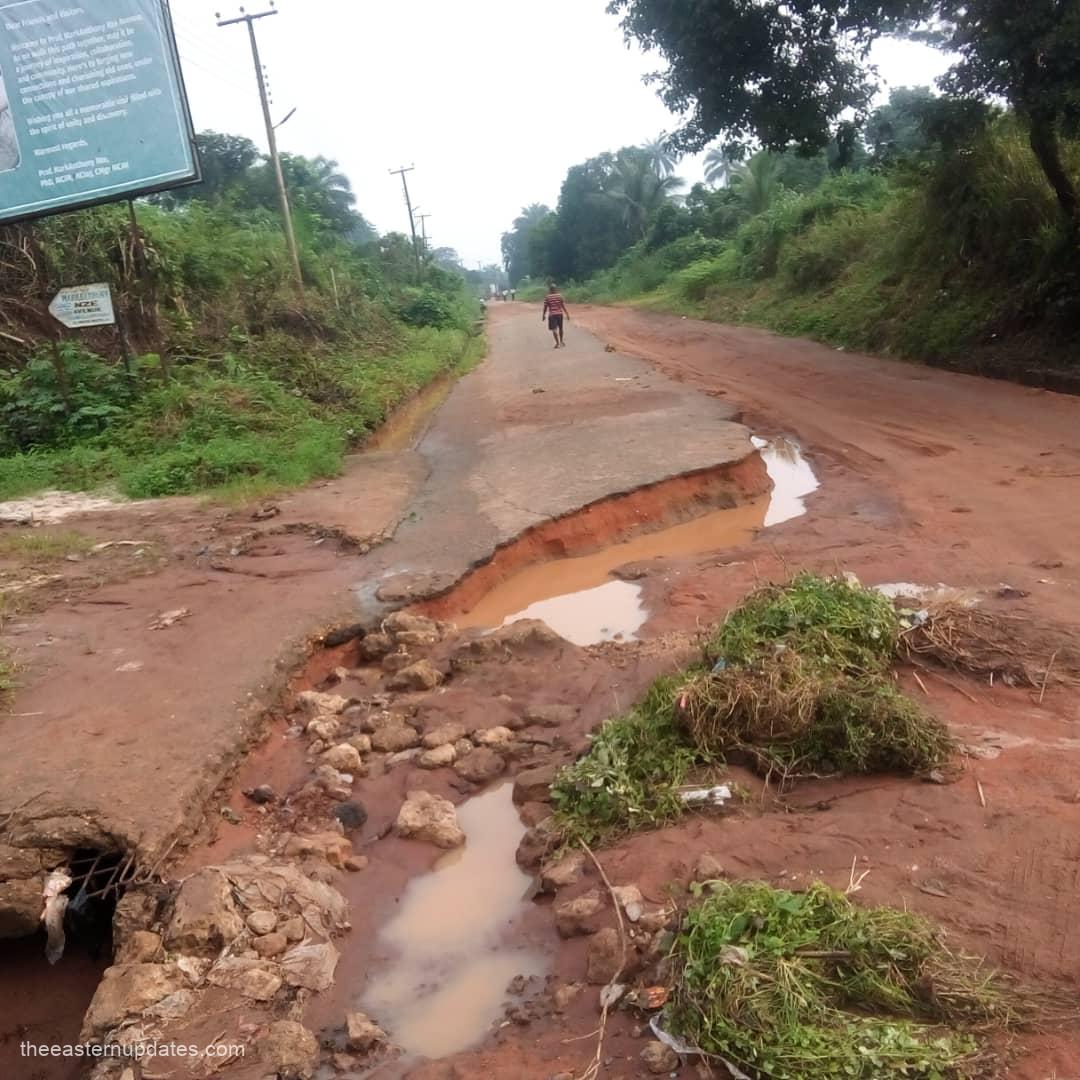
The Naze–Ogbosisi link road, listed as “completed” in government bulletins, stands half-finished, its drainage systems open and crumbling. Shopkeepers in the area recount how workers “packed up and left after one photo op.”
The Mgbidi–Oguta Road is worse: signboards proclaim a 12-kilometer project, yet the paved section stops at the fifth kilometer. Beyond that point lies ungraded terrain—shrubs, puddles, and silence.
Similar anomalies stretch across the state: the phantom dualization of Nekede–Ihiagwa Road; the perpetually “completed” Avu–Obosima bypass; the imaginary “road to Orsu industrial hub,” a corridor that exists only in speeches.
Drone imagery, geotagged photographs, and independent field reports paint a haunting portrait of neglect. Of sixty-three road projects traced to the 2023 state budget, only seventeen showed verifiable completion by September 2025. The rest are either incomplete, abandoned, or unverifiable.
This, then, is the arithmetic of illusion—where one real road is multiplied into ten through creative accounting and the absence of scrutiny.
Read also: Intro: 100 Falsehoods Of Hope Uzodinma — The Great Deception
Inside the Factory of Phantom Roads
Every falsehood has an ecosystem—a network of enablers who translate fiction into official record. In Imo’s case, the Ministry of Works became what one investigative report aptly called “a factory of phantom roads.” Here, contracts are inflated, duplicated, or reclassified to blur accountability. The same project may appear under multiple budget cycles with only minor renaming—“rehabilitation,” “completion,” “maintenance.”
An investigation by The Eastern Updates uncovered how payments for these “completed roads” were processed through the Ministry of Finance using shell firms registered to political loyalists. One report, “The Silent Bankers,” traced these firms to a ring of contractors who exist primarily on paper, serving as conduits for diverted funds. In many cases, money was released in full for projects that, months later, remained untouched.
Citizen monitors from Tracka NG and Connected Development (CODE) confirmed what the numbers hinted at: across multiple local governments, road projects hailed as completed were either untraceable or under construction at best. Community residents, weary of promises, now refer to such announcements as “air roads”—projects that exist only in speeches and billboards.
The Bureaucracy of Disappearance
The mystery of Imo’s ghost roads lies not in what is visible but in what is missing. No official completion reports, no published cost breakdowns, no open access to contracts. The Freedom of Information Act, which grants citizens the right to obtain such records, has been effectively neutered by administrative delay and selective secrecy.
Each time civic groups request documents, ministries respond with identical letters: “Verification ongoing,” “Final report pending,” “Documents under review.” These phrases have become the linguistic wallpaper of deception—a bureaucratic fog thick enough to obscure billions of naira.
Meanwhile, propaganda machines churn out glossy footage of the few completed roads, replaying them across state television as proof of “massive transformation.” The same three or four roads—Douglas–Okigwe, Relief Market–Warehouse, and World Bank Road—appear in every montage, recycled endlessly to sustain the illusion of abundance.
The Arithmetic of Betrayal
What does it mean when a government builds phantom roads? It means that every kilometer of unpaved earth is an unkept promise, every fake ribbon-cutting a theft of hope.
Behind each false statistic lies a human cost: farmers unable to transport produce from Mbaise, students missing classes because of washed-out roads in Orsu, traders losing goods to flooded gullies in Nekede. Infrastructure failure is not abstract—it is the daily erosion of dignity.
And yet, despite mounting evidence, the administration persists in its narrative. It is not merely denial; it is a deliberate inversion of reality. The state apparatus, from information officers to paid influencers, now functions as a propaganda syndicate. Their task: to turn absence into accomplishment and to make silence sound like applause.
The Collapse of Credibility
When truth collapses in governance, so too does legitimacy. A democracy that builds its reputation on lies forfeits the moral right to govern.
By fabricating accomplishments, the Imo government has done more than manipulate figures—it has corrupted the record of public memory. Years from now, future administrations will inherit not blueprints but ruins, not data but distortions. The tragedy is not only the missing roads; it is the disappearance of trust.
The illusion of “120 completed roads” is not a mere statistical error—it is a betrayal written in asphalt that never dried. It is a narrative built for applause rather than accountability.
The Verdict
After exhaustive analysis of official records, civic audits, financial documents, and on-site inspections, this investigation concludes unequivocally: the claim of 120 completed roads in Imo State is false.
Out of sixty-three identifiable road projects funded between 2020 and 2025, only seventeen were confirmed complete. The rest—more than seventy percent—remain incomplete, abandoned, or unverifiable. No financial, technical, or physical evidence supports the governor’s assertion.
This is not governance; it is performance art. It is a political illusion powered by state funds and sustained by silence.
Imo’s “completed roads” are metaphors for a system that prefers narrative to substance, appearance to accountability. They are monuments not to progress but to propaganda.
And as citizens drive daily on broken roads advertised as complete, one truth becomes undeniable: the greatest construction under this government is not in asphalt, but in lies.
Data Visualization Overview: The Mathematics of Deception
The following analyses translate Imo State’s procurement deception into hard, measurable evidence. Each chart reveals a layer of manipulation within the Ministry of Works under Governor Hope Uzodinma’s administration, illustrating how political narrative replaced infrastructural truth.
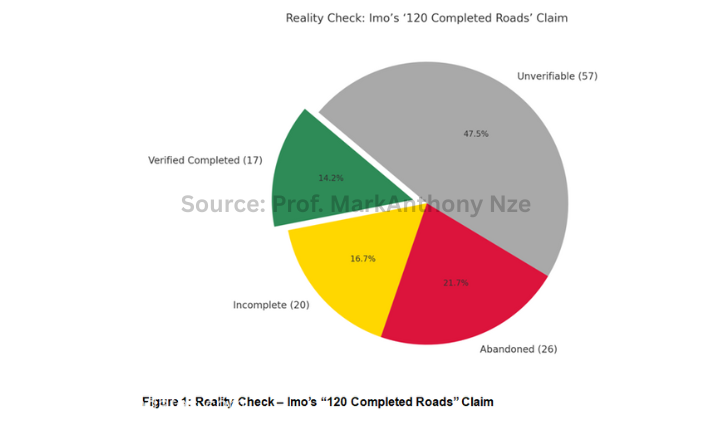
Figure 1: Reality Check – Imo’s “120 Completed Roads” Claim
(See Chart 1 Above)
Overview:
This figure breaks down the administration’s flagship claim of completing “120 new roads.” Independent verification from audit reports, TrackaNG, and CSAAE field data confirms that only 17 roads (14%) were actually completed.
The remaining projects are distributed as follows: 20 incomplete (17%), 26 abandoned (22%), and 57 unverifiable (47%).
Interpretation:
The figures expose a deliberate inflation of achievements by over 600%, creating an illusion of progress unsupported by evidence. Nearly half of the so-called completed roads exist only in official rhetoric and administrative records. The data highlights a pattern where statistics serve propaganda, not performance.
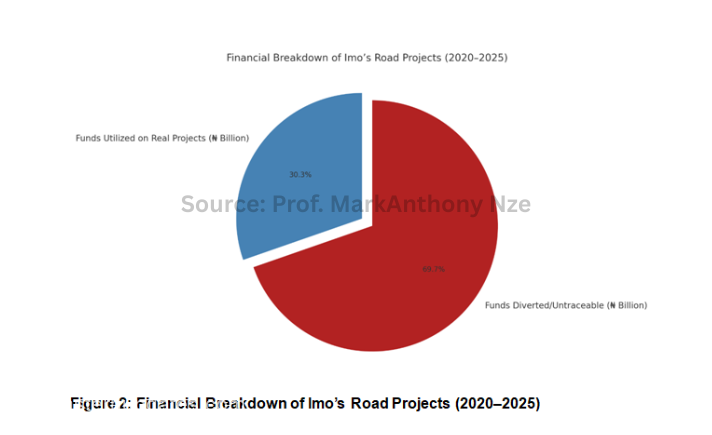
Figure 2: Financial Breakdown of Imo’s Road Projects (2020–2025)
(See Chart 2 Above)
Overview:
Between 2020 and 2025, Imo State budgeted approximately ₦60 billion for road infrastructure. Of this, only ₦18.2 billion (30.3%) was verifiably used for actual construction projects. The remaining ₦41.8 billion (69.7%) is either diverted, untraceable, or disguised under budgetary categories such as “emergency rehabilitation” or “performance variation.”
Interpretation:
This imbalance translates into tens of billions of naira evaporating without traceable outcomes—enough to construct over 250 kilometers of major roadway. The pattern points to a fiscal ecosystem built on opacity and selective auditing, where “budget execution” becomes a conduit for misappropriation rather than development.
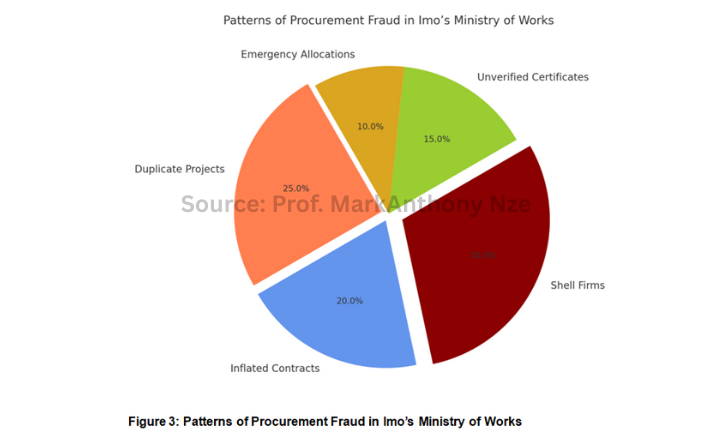
Figure 3: Patterns of Procurement Fraud in Imo’s Ministry of Works
(See Chart 3 Above)
Overview:
This visualization identifies the operational mechanisms driving procurement corruption within the Ministry of Works. The distribution of fraud is as follows:
- Shell Firms – 30%
- Duplicate Projects – 25%
- Inflated Contracts – 20%
- Unverified Certificates – 15%
- Emergency Allocations – 10%
Interpretation:
These categories outline an industrialized corruption framework where administrative processes are weaponized for systematic looting. Shell firms and duplicate projects alone account for more than half of the fraudulent activity, validating findings from The Eastern Updates and CSAAE that link multiple contract payments to non-existent companies.
Synthesis: The Cost of Illusion
The aggregate data from these three visual models reveals a governance architecture built on fabrication.
- Over 70% of claimed projects are incomplete, abandoned, or unverifiable.
- Over ₦40 billion in public funds remain unaccounted for.
- Over 60% of fraudulent transactions originate within the Ministry of Works’ administrative apparatus.
This evidence confirms that the so-called “Factory of Phantom Roads” is not a journalistic metaphor but a quantifiable network of deception. It demonstrates how, under Governor Hope Uzodinma’s administration, Imo’s development narrative was engineered to substitute appearances for accountability and illusion for infrastructure.
Bibliographies
Tribune Online (2025). Imo govt has completed 120 roads under my watch – Uzodinma.
https://tribuneonlineng.com/imo-govt-has-completed-120-roads-under-my-watch-uzodinma
Gazette Nigeria (2025). My administration delivered over 120 roads in five years – Gov Uzodinma.
https://gazettengr.com/my-administration-delivered-over-120-roads-in-five-years-gov-uzodimma
Housing TV Africa (2025). Uzodinma highlights infrastructure strides, says over 120 roads completed in Imo.
https://www.housingtvafrica.com/uzodimma-highlights-infrastructure-strides-says-over-120-roads-completed-in-imo
The Eastern Updates (2025). Ministry of Works: Factory of Phantom Roads.
The Eastern Updates (2025). The Silent Bankers: How Imo Finances Phantom Roads.
Open States Nigeria – Imo Data Repository. https://openstates.ng/imo/data
Tracka NG Citizen Reports. https://tracka.ng
NBS Capital Expenditure by Function. https://nigerianstat.gov.ng
BudgIT – State of States Report (2024). https://yourbudgit.com
Connected Development (CODE) – Community Verification Reports.
Centre for Journalism Innovation & Development (CJID) – Fact-Check Hub Reports 2024–2025.