
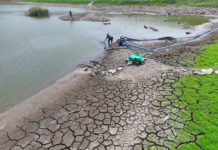


















The United Nations’ food agency has warned that an exceptionally strong El Niño is disrupting harvests and supply chains in ways that lift food and fuel prices, and that the war in Iran is compounding the damage through higher fuel and fertilizer costs for farmers.
Maximo Torero, chief economist of the Food and Agriculture Organization, said both drought and heavy rain can cut harvests and the production of crops grown for animal feed. Floods are especially destructive, he said, because they ruin stored food and damage the roads and transport links that carry produce to market. Prices can start climbing well before harvests are finished, he added, because buyers and traders react to expected shortages. “Markets react to expectations of future shortages and uncertainty itself can generate volatility,” he said.
The burden falls hardest on poor households, Torero said. Families on low incomes spend a large share of their money on food, so even moderate increases leave them little room to adjust. The result can be smaller meals, poorer diets and, eventually, hunger and malnutrition, he said.
The headline claim that prices have already risen further is not backed by figures in the material The Eastern Updates reviewed. Torero said in August that food prices had been relatively benign so far this year, that he expected them to start rising by the end of 2026 and to rise further in 2027, and that commodity costs take roughly three to six months to reach final food prices. The current warning is consistent with that timeline, but no new price index reading accompanied it.
The temperature record explains why the agency is worried. The EU’s Copernicus climate monitor reported that October 2026 was the warmest October on record, with a global average surface air temperature of 15.35 degrees Celsius, which is 0.9 degrees above the 1991-2020 average and 1.75 degrees above pre-industrial levels. Sea surface temperatures outside the polar regions averaged 20.95 degrees, also an October record. The Niño 3.4 region of the tropical Pacific reached a monthly average of 29.94 degrees, a record that exceeds the peaks of the 1982-83, 1997-98 and 2015-16 El Niño events, according to Copernicus data. Samantha Burgess, the monitor’s strategic lead for climate at the European Centre for Medium-Range Weather Forecasts, said an exceptionally strong El Niño is adding heat to a climate already warmed by human activity.
Read Also: WHO: Six Climate-Health Steps Could Save 1.6 Million Lives
Copernicus puts the chance that 2026 ends as the second-warmest year on record at 80 percent, with the annual average estimated at 1.56 to 1.61 degrees above pre-industrial levels. It gives a 20 percent chance that 2026 equals or beats 2024, the warmest year to date. One summary of the data labels that 20 a percentage change, which is a mislabel; it is a probability. Experts say the event could help make 2027 the hottest year recorded, and an analysis of Copernicus data counted 33 countries that broke October heat records.
The effects are already visible on several continents. Peru has declared a state of emergency across much of the country because of what authorities called imminent danger from El Niño-linked flooding. Officials said more than nine million people, nearly a third of the population, face a high risk of floods and landslides, and rain has already inundated parts of the northern Tumbes and Piura regions. Bolivia moved first: President Rodrigo Paz signed a nationwide emergency decree on Saturday, warning of “very severe impacts in terms of drought and floods.” A government report says drought affects 78,000 families across six of Bolivia’s nine departments and has killed more than 75,000 cattle. The World Meteorological Organization puts the likelihood that El Niño continues through February 2027 at nearly 100 percent.
Read Also: UN: Even Fully Kept Pledges Leave Earth Heading For 2.6C
In Asia, the picture is split. Sri Lanka’s state electricity company withdrew a proposed tariff increase after El Niño-linked rain improved hydropower reservoir levels, but officials expect severe drought in the first half of 2027 that would force a shift toward costlier, more polluting thermal generation. About 70 percent of the country’s electricity demand is met by renewables, mainly hydro and solar. The Philippines has set aside more than $980 million for an El Niño response plan. Agriculture accounts for about 8 percent of its output and employs one in four Filipinos, and the agriculture department says unmilled rice production fell 18 percent in the three months to September because of El Niño and the Iran war. The state weather service expects below-normal rainfall in November.
Scientists also said this week they are watching an unprecedented early disruption of the polar vortex, which raises the risk of cold snaps and is likely linked to El Niño. November disruptions have occurred only three times since records began in the 1950s.
For Nigerian consumers, the fuel link is direct. Dangote’s gantry price rose to ₦1,350 a litre on September 12, its fourth increase in 22 days, and some Lagos stations sold above ₦1,390, as Brent crude held above $100 a barrel on Middle East supply disruptions. Before the conflict escalated in February, crude was below $69 and petrol sold for about ₦830 in parts of the country.
In September, the FAO said it had received only one-fifth of the $202 million it requested to prepare for an El Niño-linked food crisis in 22 high-risk countries.