















|
Listen to article
|
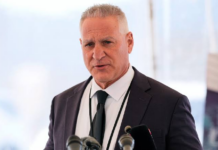
Yakubu Gowon has lived long enough to watch Nigeria survive a civil war, endure coup after coup and outlast every prediction of its own collapse. At 91, he is not predicting collapse now — but he is warning that the country’s political class is testing the limits of what any nation can absorb.
The former military head of state delivered that warning Tuesday in Abuja at the launch of his autobiography, a 859-page account of a life spent in uniform and in the service of a country he has never stopped defending — sometimes against its own leaders.
Vice President Kashim Shettima represented President Bola Tinubu at the event.
Gowon’s central indictment was blunt: Nigerian politicians have normalized a brand of desperation that treats elections as wars by another name, and that pathology has not spared even the internal processes of political parties themselves. Intraparty elections — the smallest democratic exercises a political organization conducts — are being manipulated with the same recklessness applied to general contests. That failure, he said, is not new. It has followed Nigeria from the colonial period into the present and shows no sign of exhausting itself.
Read also: You Were Used To Execute Unjust War – Ohaneze Blasts Gowon
“We all must rise to contain the desperation frequently accepted by the political class who engage in what they love to call do or die politicking,” he said, “and their inability to conduct free, fair and transparent elections, even in matters as minor as intraparty elections, which has continued to plague our nation from colonial times.”
He has earned the standing to say it. Gowon governed Nigeria from 1966 to 1975, presiding over the most catastrophic internal crisis in the country’s history — the thirty-month civil war that began in 1967 and killed hundreds of thousands. He steered the country through it, then oversaw reconstruction before being removed in a bloodless coup by Murtala Muhammed in July 1975, toppled while attending an Organisation of African Unity summit in Kampala. He spent years afterward in exile in Britain. He came back.
That arc — war, ouster, exile, return — gives his confidence in Nigeria’s survival a texture that goes beyond sentiment. When he said the country did not fall on his watch and would not fall now, he was speaking as someone who has held the wreckage and seen it hold together anyway.
But confidence in survival is not the same as satisfaction with the present. Gowon reserved a separate critique for what he called Nigeria’s habitual genius for complication — a national tendency to manufacture complex remedies for problems that are, at their root, straightforward, and then to compound those remedies with further layers of ambiguity until the original problem is buried under the accumulated confusion.
Read also: Biafra Civil War Was Not My Choice – Gowon Laments
The result, he said, is tension. Unnecessary, self-generated, recurring tension.
His book, titled My Life of Duty and Allegiance, runs to 36 chapters and tracks his full biography — from childhood in Plateau State and military training at Sandhurst through the civil war, the years of exile and the long decades of public life that followed his removal from power. Six decades separate the man who first assumed the head of state title from the man who launched the memoir Tuesday. The country he governed then and the country he addressed Tuesday are, in important respects, still wrestling with the same arguments.
Gowon told his audience that reflection on his years of service had not produced bitterness or resignation. It had produced, he said, renewed conviction — a belief that Nigeria retains the capacity to become what its size and resources and population have always suggested it could be. The civil war proved something to him that decades of political dysfunction have not undone: that Nigeria, when pressed to the point of breaking, does not break.
He directed a pointed message at those who have reached the opposite conclusion.
“We must not give room to the naysayers who see no good in our nation and would rather label it as a failed nation,” he said.
What Gowon did not offer was a mechanism — a formula, a reform agenda, a set of institutional prescriptions. What he offered instead was the older and perhaps more durable thing: a witness account from someone who governed at the worst possible moment and emerged still believing the project is worth saving.
At 91, with a civil war behind him and a coup on his record and a country that has confounded every clean narrative ever written about it, Yakubu Gowon is still showing up — still saying Nigeria will not fall. The political class he spent Tuesday warning would do well to consider what he has seen that they have not.