



















|
Listen to article
|
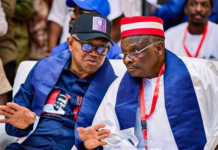
Nigeria’s Trade Union Congress has proposed a production subsidy model for Dangote Refinery and other domestic refineries as a way to bring petrol prices down without reviving the consumption subsidy the federal government has categorically refused to restore — a creative workaround that the TUC argues could be funded from the windfall oil revenues Nigeria is currently earning above its budget projections.
TUC President Festus Osifo laid out the proposal on Channels Television’s Politics Today on Friday, framing it as a pragmatic response to a government that has made its position on subsidy restoration immovable while ordinary Nigerians absorb fuel prices that have surged from around ₦800 per liter to approximately ₦1,300 since the US-Israeli war on Iran began driving global oil prices sharply higher.
The arithmetic behind the proposal is straightforward. Nigeria is currently earning significantly more per barrel of crude than its budget anticipated. “Today we make at least $35 or so dollars per barrel beyond what we budgeted,” Osifo said.
Read more: Colombia’s Border Under ELN Control Amid Failed Peace Talks
His argument is that a portion of that excess — he suggested half as an illustrative figure — could be directed toward subsidizing the crude oil supplied to Dangote Refinery and the country’s modular refineries, enabling them to produce petrol at lower cost and pass those savings to consumers at the pump.
Read also: UK Confirms Alexei Navalny Poisoned With Dart Frog Toxin
“So we were advocating that this extra $35, for example, that you are making per barrel, why don’t you take half of it and use it to subsidise the crude that you are giving to Dangote Refinery and the modular refineries so that they will be able to produce cheaper PMS?” Osifo said.
The distinction the TUC is drawing is deliberate and politically significant. A consumption subsidy — the mechanism President Bola Tinubu controversially removed on his first day in office in May 2023 — involves the government paying the difference between the market price of fuel and an artificially suppressed pump price, a system that Nigeria ran for decades at enormous fiscal cost and which critics argued was riddled with corruption, fuel smuggling and market distortions that primarily benefited middlemen rather than ordinary citizens.
The federal government has said repeatedly and unequivocally that it will not bring that system back.
A production subsidy operates differently. Rather than controlling the price consumers see at the filling station, it reduces the input cost for domestic refineries — making it cheaper for them to produce fuel in the first place, with the expectation that competition and market dynamics then translate those lower production costs into more affordable pump prices. It is a supply-side intervention rather than a demand-side price fix, and Osifo’s framing is designed precisely to appeal to a government that has declared its commitment to market principles.
Finance Minister Taiwo Oyedele has been explicit about the government’s philosophy. “We will not bring back fuel subsidy because it creates distortions for the economy, and we won’t introduce price control because we believe in the market,” he said recently, while arguing that the Iran war presented new investment opportunities for Nigeria as the world diversified its energy sources. The government’s position is that the market should determine fuel prices, and that Nigeria’s role is to position itself as a beneficiary of the global energy disruption rather than to shield its citizens from its consequences through fiscal intervention.
Osifo’s counterargument is that the windfall revenue the government is currently receiving from elevated oil prices — the same disruption the minister described as an opportunity — creates a fiscal space that did not previously exist and that should be deployed to cushion the impact on Nigerian workers and households. “They must think out of the box and quickly do things to assist its citizens,” he said.
The Dangote Refinery, which began ramping up production last year and recently started supplying jet fuel directly to Ethiopian Airlines in a sign of its growing operational capacity, represents Nigeria’s best domestic instrument for reducing dependence on imported refined products. Its ability to produce at competitive prices depends significantly on the terms under which it receives crude from the Nigerian National Petroleum Company.
A production subsidy framework targeting that crude supply cost is therefore not purely theoretical — it has a specific, operational mechanism through which it could be applied.