













|
Listen to article
|
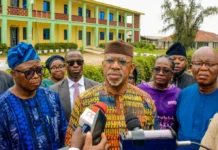
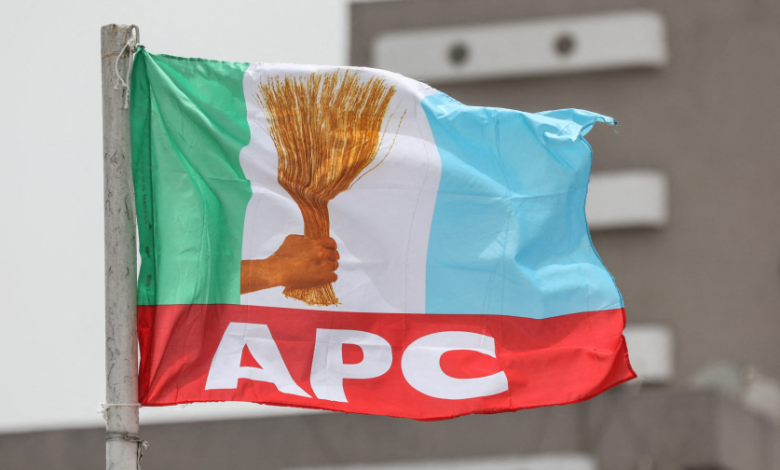
The Progressive Governors Forum, PGF, has been factionalised. The rival factions emerged after its chairman, Governor Hope Uzodimma, was reportedly removed on Thursday.
While Uzodimma insisted that he remains PGF chairman, Ogun State Governor Dapo Abiodun and Kwara State Governor AbdulRahman AbdulRazaq are leading a separate faction.
Another bloc within the forum has reportedly aligned behind Abiodun and AbdulRazaq.
Read Also: FG Ramps Up Effort To Reverse Nigeria’s US Designation
The development, which comes amid growing political realignments within the ruling party, marks a significant crack within the ranks of APC governors ahead of the 2027 general elections.
According to reports by Arise TV, details surrounding the disagreement remain unclear, but sources within the party said tensions had been building over internal leadership control and strategic positioning ahead of the next election season.
The Eastern Updates reports that, as of the time of filing this report, none of the factions had officially released a detailed statement on the cause of the division.
Nigeria is pushing Washington to remove it from a list of the world’s worst violators of religious freedom, with the country’s foreign minister confirming that the designation formed a central part of discussions held with the US Chargé d’Affaires in Abuja this week.
Minister of Foreign Affairs Ambassador Bianca Odumegwu-Ojukwu disclosed the engagement on her X account, saying that US Chargé d’Affaires David Heffern’s courtesy visit covered a broad range of bilateral concerns — security and defense cooperation, border and migration challenges, counter-terrorism initiatives, intelligence sharing and visa matters — with Nigeria’s Country of Particular Concern designation threading through as a key agenda item.
“We also discussed our collaborations within the Joint Working Group, measures to promote stability within the region as well as Nigeria’s CPC designation by the United States,” Odumegwu-Ojukwu wrote, describing the engagement as “very constructive.” She said the federal government would continue to “engage on the necessary measures and collaborations needed to reverse this designation” and deepen bilateral relations between the two countries.
The CPC label was applied to Nigeria by the Trump administration in 2025, following what Washington described as the government’s failure to adequately combat severe and systematic violations of religious freedom. The designation was driven primarily by the documented persecution of Christian communities across northern and central Nigeria, and by what American officials characterized as insufficient government action against violence carried out by Boko Haram and Fulani militia groups in the North East and Middle Belt regions — areas where attacks on farming communities, churches and villages have displaced millions and claimed thousands of lives over more than a decade.
Being listed as a Country of Particular Concern by the US State Department is not a designation countries absorb quietly. It places Nigeria alongside nations Washington regards as among the world’s most serious offenders on religious liberty — a grouping that has historically included China, Iran, North Korea, Pakistan and Saudi Arabia. The consequences extend beyond reputation: CPC status can trigger restrictions on foreign assistance, affect bilateral diplomatic leverage and signal to American faith communities and lawmakers that the designated government is not a reliable partner on human rights.
Read also: No Nigerian Was Killed In South Africa Protest – FG Reports
Nigeria has consistently rejected the characterization. Abuja has argued that the label fails to account for the complexity of a country of more than 220 million people, roughly split between Christians and Muslims, where the federal government is simultaneously fighting a jihadist insurgency in the Northeast, attempting to contain armed banditry in the Northwest and managing farmer-herder conflicts in the Middle Belt that have ethno-religious dimensions the government says it cannot reduce to simple religious persecution.
The US Commission on International Religious Freedom, the independent advisory body whose annual recommendations inform CPC designations, has flagged Nigeria repeatedly in recent years. Its reports have documented the murders of Christian clergy, the burning of churches, the abduction of Christian students — most notoriously the 2014 Chibok schoolgirl kidnappings by Boko Haram — and the broader pattern of impunity surrounding violence against vulnerable communities. Nigerian officials have disputed portions of those findings while acknowledging that security failures in affected regions are real and ongoing.
The Joint Working Group through which both governments are attempting to address the underlying concerns represents a structured bilateral mechanism designed to show measurable progress — the kind that might give the State Department grounds to reconsider the designation at its next review cycle. Odumegwu-Ojukwu’s framing of the discussions as focused on security cooperation, counter-terrorism and regional stabilization suggests Nigeria is making the case that its partnership value to Washington on practical security matters should be weighed alongside the religious freedom concerns driving the listing.