















|
Listen to article
|
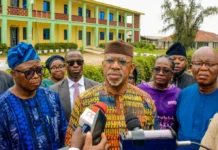
A former Rivers State Commissioner for Works, Alabo Dakorinama George Kelly, has been endorsed by the Minister of the Federal Capital Territory (FCT), Nyesom Wike, as his preferred candidate for the Rivers State governorship.
George is expected to contest the seat under the platform of the All Progressives Congress (APC), signaling a crucial political move ahead of the 2027 general elections.
Sources told The Eastern Updates that Wike settled for George after a closed-door meeting with key political stakeholders in Port Harcourt on Monday. The meeting reportedly reviewed the political situation in the state and strategies for consolidating influence ahead of the next election cycle.
At the meeting were ex-militant leaders, including Asari Dokubo and Ateke Tom.
Our source said their attendance underscored the high-level consultations that preceded the endorsement.
George, a seasoned political figure in Rivers State, previously served as Commissioner for Works and is considered a loyalist within Wike’s political structure.
The source who witnessed the meeting said the development was part of efforts to maintain Wike’s political dominance in the state despite his current role at the federal level.
This comes against the backdrop of a protracted political crisis in Rivers State, driven by a bitter power struggle between Governor Siminalayi Fubara and his estranged political godfather, Nyesom Wike.
Since assuming office, Fubara has gradually distanced himself from Wike’s influence, leading to deep divisions within the state’s political structure, including the State House of Assembly and local government leadership.
The rift has triggered a series of political confrontations, alignments, and realignments, with both camps battling for control of the party machinery and governance structures in the state.
Efforts by President Bola Tinubu to broker peace between the two camps have so far yielded limited results, as tensions continue to simmer.
According to the source, “Wike’s endorsement of George is a strategic move to reassert control and shape the political future of Rivers State ahead of 2027,” he said.
As of press time, there has been no official confirmation on the latest endorsement.
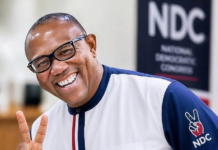
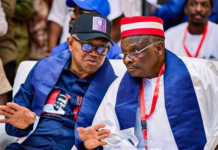
Peter Obi has changed parties again, and this time he brought Rabiu Kwankwaso with him. The two opposition heavyweights formally joined the Nigeria Democratic Congress on Sunday in Abuja, collecting membership cards amid supporter chants and the kind of choreographed optimism that has accompanied each of Obi’s previous political relocations — from APGA to PDP to Labour to ADC, and now to a party most Nigerians were not closely watching until Sunday afternoon changed that.
Obi’s explanation was consistent with what he has said at each previous departure: the crisis follows him rather than originates with him. He accused the federal government of deliberately seeding instability inside opposition platforms, engineering litigation and internal conflict to keep credible challengers perpetually distracted. “The government of today has ensured that they put up crisis upon crisis, which led to several lawsuits in our party that made us abandon those parties,” he told those gathered at Sunday’s reception. He described the ADC, which he had joined only last December, as a repeat of the Labour Party experience — same dysfunction, different letterhead.
Read also: Peter Obi, Kwankwaso Defection Still Under Probability – NDC
What drew him to the NDC, he said, was a simple promise: no court cases. National leader and former Bayelsa governor Seriake Dickson had apparently guaranteed as much. Obi treated that guarantee as the primary selling point, pleading openly with members not to litigate internal disputes. “We want to build a party. Please don’t come here with cases. Let there be peace,” he urged. The appeal was equal parts political manifesto and desperate prayer.
Kwankwaso brought ideological alignment and organizational muscle. He said he and Obi had met Dickson and found shared positions on education, youth empowerment and security. He also noted that the NDC’s membership registration closes May 6, and used the occasion to rally his Kwankwasiyya movement and former NNPP members to register immediately. The political infrastructure Kwankwaso commands in the Northwest gives the new arrangement something Obi’s previous platforms often lacked — a northern anchor with demonstrable grassroots depth.
Dickson received them with the enthusiasm of a party leader who understands exactly what two nationally recognized names do for an organization’s visibility. “Both of you are personifications of the crowd,” he said, gesturing at the supporters who had shown up despite the visit being unannounced publicly. He described Obi and Kwankwaso as “part of the biggest brands in our political history” and promised the party would provide the stable platform they had been denied elsewhere.