












|
Listen to article
|
President Bola Tinubu has approved a minor reshuffle of the Federal Executive Council, removing the Minister of Finance and Coordinating Minister of the Economy, Wale Edun, and the Minister of Housing and Urban Development, Ahmed Dangiwa.
This was disclosed in a statement on Tuesday by the Special Adviser on Media and Publicity to the Secretary to the Government of the Federation, Yomi Odunuga, citing a memo signed by SGF George Akume.
According to the memo, Taiwo Oyedele has been appointed as the new Minister of Finance and Coordinating Minister of the Economy, while Dr. Muttaqha Darma is the Minister-designate for Housing and Urban Development.
Read Also: Jonathan Hits Back At Atiku: ‘I Did My Best As President’
The outgoing ministers have been directed to complete handover processes to their successors on or before April 23, 2026.
Explaining the decision, Akume said the changes are aimed at improving coordination and strengthening delivery in key sectors under the Renewed Hope Agenda.
“These changes are aimed at strengthening cohesion, synergy in governance as well as achieving more impactful delivery on the economy to Nigerians, through the Renewed Hope Agenda,” Akume stated.
He added that President Tinubu acted in line with Sections 147 and 148 of the 1999 Constitution (as amended).
The President also appreciated the outgoing ministers for their service and wished them well in their future endeavours.
Goodluck Jonathan does not appear to be a man who enjoys being described as inexperienced, particularly by someone who has spent three decades trying and failing to become president.
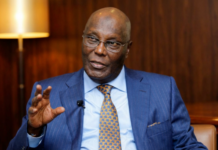
The former Nigerian president pushed back Monday at an Abuja awards ceremony, responding without naming Atiku Abubakar directly but with enough precision that nobody in the room could have misidentified the target. Atiku had said on Arise TV that Jonathan was “a decent young man, but also inexperienced,” and that this inexperience had contributed to his inability to manage the country’s challenges during his 2010-2015 tenure.
Jonathan’s reply arrived wrapped in mathematics. “I became president in 2010 at the age of 53. I left in 2015 at the age of 58, and they say I was too young. Must it have been 100 years before I ran the affairs of the state?” He acknowledged mistakes — everyone makes them, he said, even those who promote themselves to deity — but rejected the framing that youth or inexperience was his defining characteristic in office. “I did my best,” he said.
Read also: Iran Warns U.S. Against Ground Invasion As Talks Open
Speaking at the Association of Retired Career Ambassadors of Nigeria awards ceremony, he pointed to Nigeria’s election to the United Nations Security Council during his tenure as evidence of diplomatic competence that “naive” leadership could not have navigated. “I knew what I did for us to appear in the UN Security Council two times,” he told the assembled diplomats. The implication was clear: the record speaks, if one chooses to read it honestly.
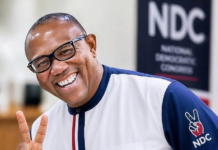
The exchange is part of the early choreography of the 2027 presidential contest, in which Atiku — now running on the African Democratic Congress platform — is competing against Peter Obi of the Labour Party, former Transport Minister Rotimi Amaechi and former Kano governor Rabiu Kwankwaso for position and narrative. In the Arise TV interview, Atiku had also played down Kwankwaso and Tambuwal’s northern influence, confined Obi’s support base to the South-East and limited Amaechi’s reach to the South-South — a comprehensive attempt to shrink every rival’s geography before the contest has formally begun.
Jonathan used the diplomatic setting to pivot from personal defence to regional diagnosis, delivering an analysis of ECOWAS at 50 that was simultaneously a tribute to the bloc’s founders and a frank assessment of its unresolved tensions. Political instability, he argued, remains the ceiling through which West African economic ambitions cannot break. “We cannot progress economically if we are very unstable societies politically,” he said.
He identified the bloc’s core structural problem as a sovereignty dilemma — that enforcing democratic norms among member states requires interfering in their internal affairs, which member states resist in the name of sovereignty. “That means that ECOWAS must interfere with the internal affairs of the states, and the issue of sovereignty becomes a problem.” The observation has particular resonance at a moment when Mali, Burkina Faso and Niger have withdrawn from ECOWAS entirely, and when the bloc’s ability to enforce democratic standards has been tested repeatedly and found wanting.