
















|
Listen to article
|
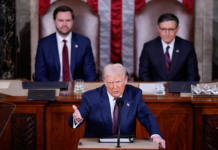
Joe Rogan stood at Donald Trump’s side as the president signed an executive order on Saturday aimed at stripping away regulatory barriers to psychedelic drug research, offering potential new treatment pathways for veterans and others struggling with stubborn mental illness.
The order targets drugs such as psilocybin — the active compound in so-called magic mushrooms — and ibogaine, substances that have shown early clinical promise but remain tightly restricted under federal law. Kennedy and senior health officials flanked the president at the signing ceremony.
Trump said the directive would “clear away unnecessary bureaucratic hurdles, improve data sharing among the FDA and the Department of Veterans Affairs and facilitate fast rescheduling of any psychedelic drugs that become FDA approved.”
Read also: Lebanon Sheds Pawn Role As Ceasefire Holds, Leader Says
The order stops well short of legalizing therapeutic use. It accelerates the research pipeline and streamlines information-sharing between agencies, but law enforcement schedules for the drugs are unchanged until or unless the FDA formally determines medical benefit — a process that could take years.
That distinction matters. Most major psychedelics, including LSD and psilocybin, are currently classed as Schedule I substances: high abuse potential, no accepted medical application. The designation doesn’t just restrict recreational use. It imposes layers of research bureaucracy that scientists say have made systematic clinical study nearly impossible.
Veterans are at the centre of the push to change that. In 2023 alone, 6,398 US veterans died by suicide, according to the Department of Veterans Affairs — a figure that has driven years of pressure on Washington to consider alternatives to conventional psychiatric treatment. Many veterans and other patients argue that standard antidepressant regimens not only fail to work but alter their personalities in ways that damage relationships with the people closest to them.
Read more: Lebanon Sheds Pawn Role As Ceasefire Holds, Leader Says
Rogan, who has long advocated publicly for psychedelic-assisted therapy, has helped bring that argument to a mass audience. His presence at the White House ceremony reflected the unusual political coalition that has gathered around the issue, one that cuts across party lines and has found unusual traction in an administration otherwise hostile to regulatory loosening in the pharmaceutical sector.
Trump singled out ibogaine, a plant-derived psychoactive compound originating in West African ceremonial traditions, claiming patients who used it had seen “an 80 to 90 percent reduction in symptoms of depression and anxiety within one month.” He then asked, to laughter in the room, whether he could have some.
The claim reflects both the promise and the complexity surrounding these substances. The full scope of their therapeutic benefits remains scientifically unsettled, not because researchers doubt the signals but because the research has been too restricted to produce the large-scale trials needed to establish efficacy. Ibogaine, in particular, carries documented cardiac risks that have made clinicians cautious and complicated the path toward approval.
What Saturday’s order does is lower the barriers to getting those answers more quickly. By improving data-sharing mechanisms between the FDA and the VA and creating faster pathways for rescheduling drugs that clear the approval threshold, the administration is signalling that the federal government will no longer treat psychedelics research as categorically suspect.
Whether that translates into new treatments in clinics is a longer question. FDA approval for any of these compounds would require extensive clinical data, and even an accelerated timeline likely spans years rather than months. For veterans currently in crisis, the order offers a promise rather than a prescription.