


















|
Listen to article
|
The campaign for a new Anioma State has exposed a fracture inside the Igbo political establishment, with federal lawmakers divided over where the proposed state’s capital should sit and whether the creation serves the South-East’s long-standing demand for equity or sidesteps it entirely.
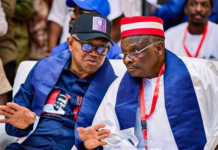
The disagreement has crystallised around two prominent figures pulling in opposite directions. Senator Ned Nwoko, the driving legislative force behind the Anioma proposal, has been working within the framework endorsed publicly by Senate President Godswill Akpabio — a state carved from Delta’s Anioma region with Asaba as its capital, leaving Warri as capital of a restructured Delta State. Representative Ikenga Ugochinyere is pushing a fundamentally different arrangement: a new state called Anim, delineated from territory within Anambra and Imo, with its capital firmly inside the existing South-East geopolitical zone.
The stakes behind the disagreement are not merely geographical. They go to the core question of what creating a new state in this region is actually meant to achieve.
Nigeria’s six geopolitical zones are not equally endowed with states. The North-West has seven. Four other zones have six each. The South-East has five — a disparity that Igbo political leaders have argued for decades translates into structural disadvantage across federal appointments, resource allocation and legislative representation. Closing that gap is the stated objective around which support for a new state has been built.
Nwoko made that argument explicitly in April when he led a delegation of Anioma traditional rulers to meet Deputy Speaker Benjamin Kalu, who chairs the House Committee on Constitution Review. “It is within this context that the Anioma proposal has gained traction,” he said. “The Anioma people of Delta North share cultural and linguistic ties with the Igbo of the South-East, fuelling arguments that the new state could help address the imbalance.”
Read also: Anioma State Historical Must, Not Political Ploy – Elders
Ugochinyere’s objection cuts at precisely that logic. Creating a sixth state for the South-South zone — where Delta currently sits — rather than for the South-East does nothing to address the South-East’s five-state disadvantage, regardless of the cultural ties between Anioma communities and their Igbo neighbours across the Niger. “Our agenda is for an additional state for the South-East region,” Ugochinyere told Sunday PUNCH. “Ethnic expansion is good, but the state capital and location must be in the South-East.”
His alternative — the Anim State proposal, drawn from Anambra and Imo — would place the new state fully within the South-East zone, directly adding to that zone’s count rather than increasing the South-South’s. “If Anioma will agree to join us across the Niger and unite under Anim State, we will be happy,” he said.
The disagreement reflects a tension that has run through Igbo political discourse on the state creation question for years: whether cultural and ethnic affinity across the Niger is sufficient basis for a new state to count as addressing the South-East’s structural shortfall, or whether only a state geographically and administratively inside the zone satisfies that demand.
Read also: Anioma Leaders Reject Proposal For Inclusion In South-East
Akpabio’s March declaration naming Asaba as the proposed Anioma capital gave Nwoko’s position significant institutional momentum. The Senate President’s public commitment at a South-South APC zonal congress — “Anioma state will be created, with Asaba as its capital. The Senate fully supports the initiative” — was the clearest signal yet that the legislative leadership was aligned with the Delta-based configuration rather than the South-East-based alternative.
Whether that alignment holds as the House Committee on Constitution Review deepens its work, and whether lawmakers from the South-East extract conditions that protect their region’s core interest in the outcome, will shape both the content and the political durability of any state creation that eventually emerges from the National Assembly.
The constitutional process requires significant legislative support, gubernatorial backing and ultimately a referendum in affected areas — thresholds that give every competing camp leverage to insist on terms before lending their votes to a final bill. The divisions surfacing now are not merely preliminary noise. They are the opening positions in a negotiation whose outcome will redraw Nigeria’s federal map and determine whether the South-East finally gets the equity its leaders have demanded, or receives something that looks like progress without delivering it.