
















|
Listen to article
|
Nigeria’s federal government and the apex Igbo socio-cultural organisation have jointly moved to abolish the installation of Igbo traditional rulers outside Igboland, following violent protests in South Africa that torched foreign-owned vehicles and forced the Nigerian Embassy in Pretoria to issue a formal apology.
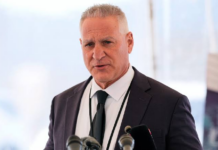
The decision was announced Thursday at a meeting of Ohanaeze Ndigbo’s Imeobi — its highest decision-making body — in Enugu, where Minister of State for Foreign Affairs Bianca Odumegwu-Ojukwu delivered the government’s position and Ohanaeze President-General Senator Azuta Mbata declared the Eze Ndigbo title proscribed everywhere outside Igbo land.
“The position of Eze Ndigbo anywhere outside Igbo land is hereby alienated and proscribed,” Mbata said. “Anybody who is being awarded that type of title anywhere outside of Igbo land is on his own. It’s unknown to the Igbo people.”
The declaration came weeks after the coronation of Solomon Ogbonna Eziko as Eze Ndigbo na East London — Igbo King in East London — in South Africa’s Eastern Cape on March 14 triggered protests from local residents, traditional leaders and political parties. The unrest resulted in violence, the burning of foreign-owned vehicles and looting, forcing Nigeria’s diplomatic mission in South Africa into damage control mode. The Nigerian High Commission distanced itself from the coronation, describing it as a cultural event that had been misinterpreted rather than a formally recognised monarchical installation. The Embassy in Pretoria issued an official apology and urged Nigerians in South Africa to keep a low profile and avoid further confrontations.
Read also: Miracle How Buhari’s Death Ended Herdsmen Crisis – Ohanaeze
Odumegwu-Ojukwu described the broader pattern of Eze Ndigbo installations abroad as embarrassing to both the Nigerian government and the Igbo people. She noted that a similar crisis had erupted in Ghana in July 2025, when Ghanaian protesters demanded Nigerians leave the country over the same issue — a crisis severe enough that she personally led a delegation to Accra to defuse the tension.
“People could still express themselves culturally without upsetting the host country and others,” the minister said, drawing a clear distinction between diaspora cultural expression and the installation of parallel traditional authority structures in foreign nations.
The South East Council of Traditional Rulers joined Ohanaeze in adopting the abolition, giving the decision the weight of both the sociopolitical leadership and the traditional institution from which the Eze title derives its claimed legitimacy. Mbata said Ohanaeze would write to state governors and embassies worldwide to communicate the formal position, and that sanctions for violations would be determined in consultation with Igbo kings and implemented at the village level through hometown unions and town associations.
“We will determine in consultation with the kings of Igbo land what the punishment will be for anybody who goes against this position,” Mbata said. “That punishment will be implemented at the village level. Your hometown, your town union will be under an injunction to implement that punishment.”
Read also: Ohanaeze Dismisses Alleged Call To Arms, Demands Probe
The Eze Ndigbo controversy touches a fault line in how Nigerian diaspora communities balance cultural identity with the legal and social frameworks of their host countries. Igbo associations abroad have long used cultural ceremonies — including chieftaincy and honorary title conferrals — to maintain community cohesion and preserve heritage. But the installation of figures styled as traditional rulers has repeatedly created confusion in host communities about whether Nigeria is establishing parallel governance structures, particularly in countries with their own strong traditions of chieftaincy and territorial authority.
South Africa’s sensitivity to the issue is sharpened by its own complex history of traditional leadership, land rights and the role of chiefs in community governance. What Nigerian Igbo communities may regard as a purely ceremonial cultural activity can read very differently to South African residents and traditional leaders who see chieftaincy as carrying real territorial and political weight.
Odumegwu-Ojukwu said the Ministry of Foreign Affairs would disseminate Ohanaeze’s communique through Nigeria’s missions and high commissions globally, ensuring that Nigerian diplomatic posts in every country are equipped to respond to questions about the now-proscribed practice.
The Nigerian Embassy’s diplomatic exposure from the South Africa incident appears to have been the immediate catalyst for a decision that Ohanaeze and the federal government had been moving toward since at least the Ghana crisis of 2025. Whether the proscription — and the village-level sanctions promised for violators — proves enforceable across a diaspora spread across dozens of countries and accountable primarily to community structures rather than formal authority, remains the practical question the announcement leaves open.