















Britain, France, Germany and Italy expressed “deep concern” on Sunday over Israeli plans to extend the application of the death penalty in a bill due to be voted into law next week.
Their statement came the same day the Council of Europe rights body also issued a statement against the draft law.
“We… express our deep concern about a bill that would significantly expand the possibilities to impose the death penalty in Israel and that could be voted into law next week,” said a joint statement by the countries’ foreign ministers.
“We are particularly worried about the de facto discriminatory character of the bill.
“The adoption of this bill would risk undermining Israel’s commitments with regards to democratic principles.”
The far-right government is due to put its bill to a second and third reading in the Knesset — the Israeli parliament — on Monday. If it passes, it will almost certainly face a legal challenge and go before the Supreme Court.
Also Sunday, Council of Europe chief Alain Berset issued an appeal to Israel over the draft law.
“The Council of Europe opposes the death penalty in all places and in all circumstances,” he said.
“The texts currently under examination in the Knesset would represent a grave step backwards from Israel’s long-standing de facto moratorium,” he added, calling on the authorities to abandon the planned law.
While the death penalty exists for a small number of crimes in Israel, it has become a de facto abolitionist country: the last person to be executed was the Nazi Holocaust perpetrator Adolf Eichmann in 1962.
The amendment, called for by Israel’s far-right National Security Minister Itamar Ben Gvir, would introduce mandatory death sentences for certain offences.
In February, a dozen UN rights experts argued that this would introduce two tracks for the death penalty in Israel.
“By removing judicial and prosecutorial discretion, they prevent a court from considering the individual circumstances, including mitigating factors, and from imposing a proportionate sentence that fits the crime,” they said.
In the occupied West Bank, their statement said “the death penalty would be imposed by military courts under military law for terrorist acts causing the death of a person, even if not intended”.
In Israel and occupied East Jerusalem, meanwhile, capital punishment would continue to be applied only under Israeli criminal law and only for the “intentional killing of Israeli citizens or residents”.
The independent experts are mandated by the UN Human Rights Council but do not speak on behalf of the United Nations.
US-Israeli strikes hit two Iranian nuclear facilities on Friday, as America’s top diplomat left a meeting with his G7 counterparts to declare that Washington expects its military operation to prove victorious within a couple of weeks.
Iran threatened retaliation against industrial sites in the region, with no clear end to the conflict in sight and oil and stock markets still in turmoil over the fallout from the fighting, including the closure of the Strait of Hormuz.
“When we are done with them here in the next couple weeks, they will be weaker than they’ve been in recent history,” Rubio told reporters in Paris after G7 talks.
Read Also: ‘I’m Not Desperate For Iran Deal’ – President Trump Insists
Rubio also said that he had won support from his G7 colleagues to oppose Iran’s attempts to impose a toll on ships crossing the Strait of Hormuz, a key sea lane for oil and gas shipments from the Gulf.
“Not only is this illegal, it’s unacceptable, it’s dangerous to the world, and it’s important that the world have a plan to confront it,” Rubio said.
In a joint statement, the G7 foreign ministers “reiterated the absolute necessity to permanently restore safe and toll-free freedom of navigation in the Strait of Hormuz” and called for “an immediate cessation of attacks against civilians and civilian infrastructure”.
Iran had sent “messages” to the American side but had not responded to a US-proposed peace plan, Rubio said.
Iranian media reported a US-Israeli attack on the Khondab heavy water complex in central Iran, citing a local official, while the country’s atomic energy agency said a uranium processing plant 600 kilometres away in Ardakan was also hit.
Israel’s army confirmed that it struck the two facilities, while the Iranian sources said there was no release of radioactive material at either site.
Two steel plants, Khuzestan in southwest Iran and Mobarakeh in the country’s centre, were also hit, drawing threats of retaliation.
Iran “will exact (a) HEAVY price for Israeli crimes,” Tehran’s foreign minister Abbas Araghchi wrote on X, adding that the attack “contradicts (Donald Trump’s) extended deadline for diplomacy”.
Trump has insisted the Islamic republic wants to “make a deal” and extended a deadline for Tehran to open the Strait of Hormuz or face the destruction of its energy assets from Friday to April 6.
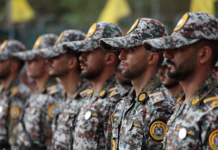
Meanwhile Iran’s Revolutionary Guards warned that they would strike industrial sites in the region in response to the attacks.
The Guards warned civilians working in such plants to “leave their workplaces immediately”, having earlier issued similar warnings to those living near American military bases and hotels hosting US troops.
Iran has reportedly replied to a 15-point US plan with its own demands, including war reparations and recognition of its sovereignty over Hormuz.