















|
Listen to article
|
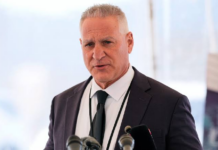
Nigeria’s former army chief deflected responsibility Friday for the government’s long-running failure to publicly name the financiers of terrorism in the country, saying the relevant agencies know who the sponsors are and that the decision to act — or not — sits with the government, not the military.
Lieutenant General Tukur Buratai, who served as Chief of Army Staff from 2015 to 2021 and oversaw the military’s most intensive period of operations against Boko Haram in the Northeast, made the remarks during an appearance on Channels Television’s Politics Today programme.
His comments come days after suicide bombers killed at least 23 people and wounded more than 100 others in coordinated attacks across Maiduguri, the capital of Borno State — one of the deadliest strikes on the city in years.
“You cannot say I should be responsible for naming the financiers of terror,” Buratai said. “Those agencies know why the names are not released. Action should be taken; these individuals are still within society today, and they are known.”
The statement amounts to a public acknowledgement that Nigeria’s security establishment has, for years, possessed intelligence on individuals financing the insurgency that has killed tens of thousands of people and displaced nearly two million in the country’s Northeast — and that this intelligence has not translated into arrests, prosecutions or even public disclosure. Buratai offered no explanation for why it had not, directing the question instead at unspecified government agencies and away from the institution he led for six years.
The identity of terrorism financiers has been one of the most sensitive and persistently unresolved questions surrounding Nigeria’s insurgency. Various government bodies, including the Office of the National Security Adviser and the Nigerian Financial Intelligence Unit, have at different times signalled awareness of financial networks sustaining Boko Haram and its splinter faction, the Islamic State West Africa Province.
Prosecutions have been rare. Public naming has been virtually nonexistent. Buratai’s remarks on Friday suggest the gap between what is known and what is acted upon is not a matter of intelligence failure but of political will.
He was equally direct in separating the army’s institutional responsibility from decisions that he said belonged to civilian government. The rehabilitation programme for repentant Boko Haram fighters — a policy that has drawn sustained criticism from communities in the Northeast who argue that former militants are being reintegrated into societies they terrorised — was, Buratai said, never the army’s idea in the design that was ultimately implemented.
Read also: Terror Financiers Still Within Society – Former COAS Buratai
“The initial concept that we had was that we gave them a timeline to surrender in 2016, and if they surrendered, we gave them a free passage and handed them over to appropriate agencies to rehabilitate them,” he said.
The implication was clear: what happened to those fighters after the army’s involvement ended was somebody else’s decision and somebody else’s responsibility.
The rehabilitation programme, formally known as Operation Safe Corridor, has been a source of controversy since its inception. Survivors of Boko Haram attacks and communities that lost family members to the insurgency have questioned the logic of reintegrating fighters without full accountability for crimes committed. Local officials in Borno and neighbouring states have raised concerns about the adequacy of the deradicalisation process and the capacity of communities to absorb former militants safely. Buratai’s comments suggest the army’s own original conception of the programme was more limited than what eventually emerged.
Read more: Insurgency Is Not Only The Military’s War – Buratai
On the broader security landscape, the former army chief did not mince words about the scale of the challenge facing the country. He called for a significant expansion of the security forces, arguing that the number of personnel currently deployed is insufficient for the size of the territory they are expected to cover and the range of threats they face. He also emphasised intelligence — describing improved information-gathering and analysis as the foundation without which any increase in personnel or equipment would have limited effect.
Both recommendations are familiar in Nigerian security discourse, and both face the same structural obstacle: a federal budget in which security spending already consumes a substantial share of available resources, in a country where public debt servicing and a weakened naira leave limited fiscal room for the kind of sustained investment Buratai is calling for.
His appearance on Channels Television came at a moment of acute public anxiety about security in the Northeast. The Maiduguri bombings on Monday shattered a period of relative calm in a city that had come to represent, however imperfectly, the military’s ability to protect urban centres even as rural areas and military outposts continued to absorb attacks.
The fact that three bombers were able to strike the Monday Market, the University Teaching Hospital entrance and the Post Office business hub in near-simultaneous explosions has prompted uncomfortable questions about intelligence failures and the adequacy of current force deployments.
Buratai, who served during some of the most operationally intensive years of the counter-insurgency campaign, carries both the credit for the military’s advances against Boko Haram in that period and a share of responsibility for the conditions that allowed the insurgency to persist and evolve into the multi-faction threat it represents today. His Friday remarks suggest he remains willing to accept the former while carefully distributing the latter among the agencies and governments he says are better placed to answer for it.