
















|
Listen to article
|
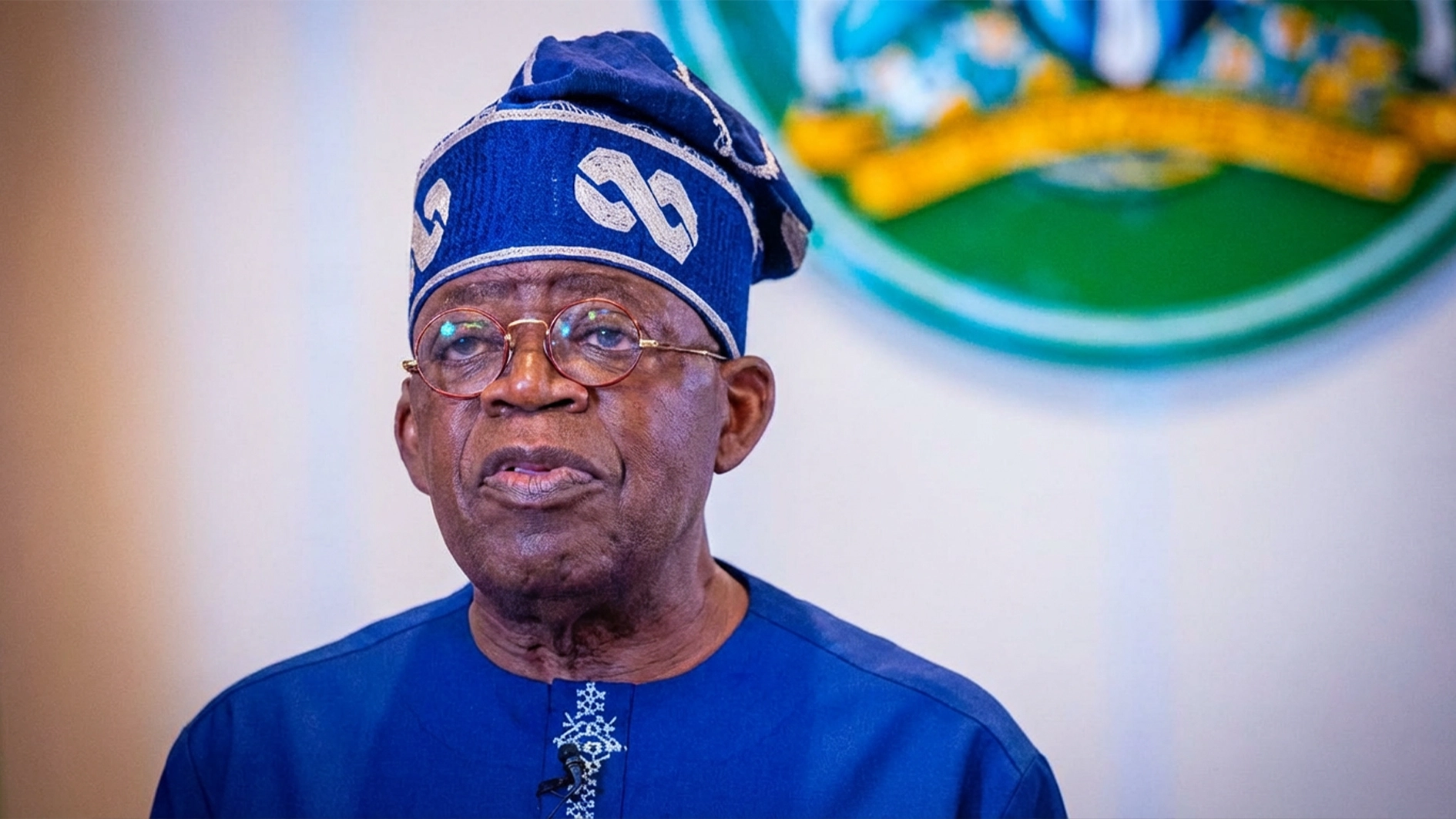
President Bola Tinubu presented a memorandum to the Federal Executive Council on Wednesday proposing the establishment of a Grid Asset Management Company, to be known as GAMCO — to take over responsibility for managing, maintaining, and upgrading Nigeria’s national electricity transmission grid, in what the administration described as the most direct intervention yet in the segment of the power sector.
Minister of Information and National Orientation Mohammed Idris briefed journalists at the State House, Abuja, after the FEC meeting, which was presided over by Tinubu. He said the proposal originated with the president personally.
“The proposal was contained in a memorandum presented to the council by President Tinubu himself for deliberation,” Idris said, adding that the council approved the establishment of a seven-member inter-ministerial committee to develop GAMCO’s operational framework. “The President has seen that where the problem is mainly in our quest to solve the power problem is largely in the transmission section,” he said.
The GAMCO committee will be chaired by the Minister of Power and include the Minister of State for Gas, the Minister of Works, the Minister of Finance, the Minister of Science and Technology, the Chairman of the Nigerian Revenue Service, and the Attorney-General of the Federation, with power to co-opt additional stakeholders as necessary. The committee is tasked with examining all regulatory, legal, and investment issues associated with establishing the new entity, including the interests of existing investors and operators.
“All the enabling parameters will be looked at, the laws will be examined, and those who are practising in that sector and those who have invested in that sector will also have their level of investment considered,” Idris said. Recommendations requiring legislative action will be transmitted to the National Assembly.
Read Also: Tinubu Orders Suspension Of New FAAN Cashless Policy
The Transmission Company of Nigeria — the single, government-owned entity currently responsible for operating the 330kV and 132kV high-voltage network that carries electricity from generation plants to distribution companies — has long been identified as the critical failure point in Nigeria’s electricity value chain. Installed transmission capacity stands at approximately 8,100 megawatts, while the national grid has rarely been able to wheel more than 4,500 megawatts consistently due to ageing infrastructure, inadequate substation capacity, and chronic underinvestment. Nigeria’s distribution companies, themselves financially distressed, frequently cite transmission constraints as the proximate reason they cannot receive and distribute more electricity even when generation capacity is available. The asymmetry between available generation — some estimates put stranded generating capacity at more than 4,000 megawatts — and what the grid can actually carry has made transmission reform the central unresolved problem in Nigerian power sector policy for more than a decade.
The Tinubu administration’s reforms have attracted over $2 billion in new investments into the power sector since 2023. The FEC approved €161.3 million in December 2024 for Phase One of the Siemens Energy AG Presidential Power Initiative, covering substation upgrades at Abeokuta, Ayede, Offa, Onitsha, and Sokoto. GAMCO, if legislated and operationalised, would represent a structural complement to those capital investments: a dedicated management entity whose mandate is grid performance rather than the broader telecommunications and corporate obligations that have divided TCN’s attention.
Wednesday’s FEC meeting approved several other items that Idris disclosed at the briefing. FEC approved ₦9.99 billion for the procurement of antiretroviral drugs to sustain Nigeria’s HIV treatment programme under a contract awarded to Fixing HealthCare, which will work with international partners to strengthen local pharmaceutical manufacturing capacity. The council also approved upgrade and training support for radiotherapy services in six cancer treatment centres, one in each geopolitical zone.
Read Also: Tinubu Hails UK-Backed Lebara’s Entry Into Nigeria Telecoms
In education, FEC approved a six-year moratorium on the establishment of new tertiary institutions including universities, polytechnics, and colleges of education. Minister of Education Olatunji Alausa said the decision was taken to focus government attention on improving quality in existing institutions rather than expanding their number, noting that Nigeria already had sufficient tertiary facilities and that the priority was financial sustainability and academic standard.
On civil service conditions of service, FEC approved an enhanced exit benefit package for retiring federal civil servants in treasury-funded ministries, departments, and agencies under the Contributory Pension Scheme. Eligible retirees will be able to receive up to 100 per cent of their total annual emoluments as an additional gratuity on retirement. The measure was described by Idris as aimed at improving morale, retaining talent, and rewarding long-serving officers whose accumulated service has not been adequately compensated under existing pension arrangements.
The Minister of Works, Senator David Umahi, separately announced FEC approval for several road and bridge projects across the country, including the Carter Bridge demolition and reconstruction project in Lagos.
No timeline was announced for the inter-ministerial committee’s report on GAMCO’s legal and operational framework, nor was any estimate given for the new entity’s capitalisation requirements or the anticipated timeline for its establishment following the National Assembly’s legislative process.