










|
Listen to article
|
Residents of Nigeria’s Federal Capital Territory went to the polls on Saturday to elect chairmen and councillors across all six area councils in Abuja, in an election conducted under heavy security, a controversial movement restriction imposed by the FCT minister, and persistently low voter participation, patterns that have defined every council election in the capital since at least 2019 and that election observers said showed no clear sign of improvement.
Polls opened at 8:30 a.m. across 2,822 polling units in the six area councils of Abaji, Abuja Municipal Area Council, Bwari, Gwagwalada, Kuje, and Kwali. A total of 637 candidates from 17 political parties contested 68 positions, six chairmanship seats and 62 councillorships across 62 wards. The Independent National Electoral Commission deployed 4,345 Bimodal Voter Accreditation System machines to verify voters and accredit ballots, with results to be transmitted electronically to INEC’s Result Viewing Portal, the same framework used in all federal elections since 2022.
The exercise carried institutional weight beyond its local significance. Saturday’s polls were the first electoral test of INEC’s new leadership under Professor Joash Amupitan, appointed chairman by President Bola Tinubu in October 2025, and analysts said the commission’s performance in the capital would set expectations for its management of the far larger and more consequential 2027 general elections.
The stakes for the ruling All Progressives Congress were equally specific: having split the six councils evenly with the Peoples Democratic Party in 2022, the party entered the day with public declarations from senior officials that a clean sweep was both achievable and politically necessary as a statement of national strength ahead of 2027.
That ambition was prosecuted openly and, critics said, improperly. FCT Minister Nyesom Wike, a former governor of Rivers State appointed to administer Abuja by President Tinubu in 2023, declared publicly in the weeks before the election that he would support only those who backed the president’s agenda and would work against candidates who did not. At a campaign event in Abuja, Wike stated that he would block candidates who do not back the president, describing the council elections as a loyalty test for the ruling party and framing his own role in the outcome as a direct expression of that test. He went further, directly facilitating the withdrawal of at least one opposition candidate in favour of their APC opponent. Zadna Dantani, the PDP chairmanship candidate for AMAC, announced his withdrawal from the race on Thursday, citing Wike’s intervention in support of the APC incumbent Christopher Zakka Maikalangu.
Read Also: Tinubu Calls For Orderly Conduct As FCT, Rivers, Kano Vote
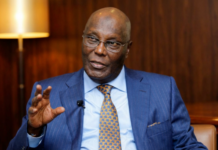
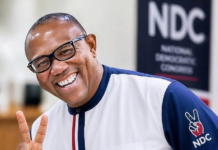
The PDP’s national leadership publicly disowned the withdrawal. The party’s National Working Committee said through spokesperson Ini Ememobong that the withdrawal of PDP candidates was carried out without the party’s consent and that the national leadership had not authorised any such move. The episode inflamed an already tense pre-election atmosphere and gave the ADC, which had entered the race with support from former presidential candidates Atiku Abubakar and Peter Obi, a line of attack it used extensively in the final days of campaigning.
Wike’s movement restriction, imposed from 8 p.m. on Friday through 6 p.m. on Saturday, drew a formal legal and political challenge before polls opened. FCT Senator Ireti Kingibe described the measure as “authoritarian, ill-considered, and unacceptable in a democratic society,” questioning whether a ministerially appointed official held the constitutional authority to restrict movement across the entire territory for an electoral exercise.
The Inter-Party Advisory Council called on all actors to refrain from conduct that would “overheat the polity,” with its national chairman warning that “election is not war.” Civil society observation platform BallotEyes, operating under the Brain Builders Youth Development Initiative, raised security concerns ahead of polls and identified several councils it said remained vulnerable to electoral violence based on field observation.
On election day itself, Wike visited multiple polling units across the territory. At one unit he asked INEC ad hoc staff about turnout, and was told participation was running at approximately ten percent.
“Very low, sir. We have just ten percent of the electorate that came out to vote,” the presiding officer told him. Wike, noting that other units appeared calmer and that violence had not been reported in the areas he visited, said the exercise appeared to be proceeding peacefully where he had observed it.
The low turnout was anticipated. In the 2022 elections, average participation across the six councils was approximately nine percent, with AMAC recording just 5.3 percent and individual wards in Gwarinpa, one of the capital’s largest residential developments — recording turnouts as low as 1.2 percent. In 2019, only 19.7 percent of registered voters in Bwari and 11.5 percent in AMAC turned out. Nigeria’s national voter participation rate has fallen from 69.1 percent in 2003 to 26.7 percent at the 2023 general elections, and FCT area council polls consistently perform among the worst in the country.
Several structural factors account for this. Abuja is governed through a layered and often opaque structure in which the president, the FCT minister, and the area council chairmen each exercise authority over different domains. Residents frequently do not perceive council elections as directly consequential to their daily lives. Additionally, a large proportion of the capital’s adult population originally registered to vote in other states and has not transferred their voter cards, legally disqualifying them from participating in any FCT poll regardless of willingness. Field reports from polling units across AMAC described units opening late due to ad hoc staff getting lost navigating new polling unit addresses, and some voters finding their names absent from registers because densely populated units had been subdivided before the election and their voter records transferred to new locations without adequate public notice.
Read Also: Court Orders FCT Workers Back To Work, Warns Of Prison
Competition was sharpest in AMAC, the most populous council with 1,401 polling units and 841,587 registered voters, where 14 candidates contested the chairmanship. AMAC incumbent Christopher Zakka Maikalangu, who defected from the PDP to the APC in April 2025 to secure the ruling party’s ticket, ran on a continuity platform backed by Wike’s visible endorsement. His most credible opposition came from APGA’s Eze Onyebuchi Chukwu, a Nollywood actor with significant name recognition and strong support among AMAC’s large Igbo-speaking population, and from the ADC’s Dr Moses Paul.
In Bwari, the APC’s internal crisis produced an unusual legal dimension. Two APC candidates, Joshua Ishaku and Haruna Audi, both campaigned for the council’s chairmanship, each claiming to be the rightful product of the party’s primary election. The dispute required intervention by the Supreme Court, which issued an order as recently as February 16 directing INEC to publish a specific candidate name for the Bwari chairmanship ballot. Gwagwalada presented a different competitive threat, with the All Progressives Grand Alliance, a party that has previously captured that council, fielding a candidate with existing grassroots structures in the area. In Kuje, neither the APC nor PDP fielded an incumbent, making the seat genuinely open for the first time in recent memory.
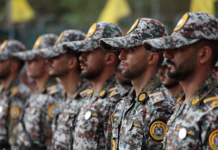
Approximately 25,000 police personnel were deployed across the territory, alongside 4,000 Nigeria Security and Civil Defence Corps officers and units from the army, DSS, and Immigration Service. Over 83 domestic and five foreign observers were accredited. The Labour Party, which had mounted a national visibility campaign in recent years, was absent from the ballot entirely, disqualified by INEC due to unresolved internal leadership disputes.
Vote counting was expected to begin at 2:30 p.m. Collation of results across the six councils and formal declarations by returning officers were expected to continue into Sunday morning.