











|
Listen to article
|
A United Nations-mandated fact-finding mission has concluded that Sudan’s paramilitary Rapid Support Forces carried out acts bearing the defining characteristics of genocide during their October seizure of el-Fasher, the last army stronghold in the country’s western Darfur region, findings that represent the most serious international legal assessment yet of the nearly three-year conflict.
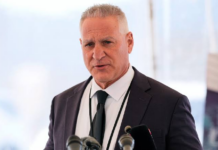
The crimes committed in and around el-Fasher “were not random excesses of war,” said Mohamad Chande Othman, chair of the Independent International Fact-Finding Mission for Sudan and a former chief justice of Tanzania. “They formed part of a planned and organised operation that bears the defining characteristics of genocide.” The report, released Thursday, drew on interviews with 320 witnesses and victims conducted across Sudan, Chad, and South Sudan. Investigators authenticated, verified, and corroborated 25 videos. What they documented in the days following the RSF’s takeover on October 26 was, in their own description, “three days of absolute horror.”
UN officials said more than 6,000 people were killed between October 25 and October 27. Only 40 percent of the city’s 260,000 residents managed to flee the assault alive. The fate of the rest remains unknown.
The Genocide Convention of 1948 sets out five criteria for the crime. The fact-finding mission found at least three were met: killing members of a protected ethnic group; causing serious bodily and mental harm; and deliberately inflicting conditions of life calculated to bring about the group’s physical destruction in whole or in part. The Zaghawa and Fur communities, both non-Arab ethnic groups with deep roots in North Darfur, were the primary targets, the report concluded.
The path to the assault was laid over eighteen months. The mission described an extended siege that progressively cut civilians off from food, water, medical supplies, and humanitarian assistance, systematically weakening the targeted population through starvation, deprivation, and trauma, leaving many physically unable to flee when the final offensive came. Ahead of the main assault, RSF forces attacked the Abu Shouk displacement camp just outside the city and killed at least 300 people in two days.
Read Also: UK Sanctions Six Over Sudan War Atrocities
Survivors described what followed in terms the investigators found consistent across hundreds of testimonies. “Witnesses heard the Rapid Support Forces saying, ‘Is there anyone Zaghawa among you? If we find Zaghawa, we will kill them all,'” the report stated. Bodies of men, women, and children filled the roads. Displacement camps, communal kitchens, and medical centres were struck by drones and heavy weapons. Rape began immediately after the takeover, with women and girls between the ages of seven and seventy subjected to sexual violence, including gang rape at locations where mass killings had already taken place, among them el-Fasher University and a local hospital. The report described the university as having been turned, in the words of one investigator, into a killing ground.
Targeting was not random. The mission found it was linked to ethnicity, gender, and perceived political affiliation. Women identified as Arab were frequently spared while Zaghawa and Fur women faced systematic assault.
The report named RSF commander Lieutenant General Mohamed Hamdan Dagalo, widely known as Hemedti, and RSF spokesperson Lieutenant Colonel Al-Fatih Al-Qurashi, citing their public endorsement and celebration of the el-Fasher operation. The mission noted that Dagalo had acknowledged some “violations” and described el-Fasher as a “catastrophe,” while justifying the assault as militarily necessary and issuing instructions that fighters not harm civilians. Investigators said the RSF did not respond to requests for information about what steps, if any, had been taken to act on those instructions. The RSF has since denied the massacre accounts, calling the videos “propaganda” and “fake,” while rejecting accusations of systemic abuse as of late 2025.
Read Also: Sudanese Army Captures Key City In War Against Rebels
The RSF was formed from the Janjaweed militias that carried out the Darfur genocide in the early 2000s under former president Omar al-Bashir, who was himself indicted by the International Criminal Court for genocide. The current conflict erupted in April 2023 from a power struggle between Dagalo and army chief Abdel Fattah al-Burhan. Tens of thousands have been killed since then, 13 million displaced, and Sudan is now effectively divided between an internationally recognised government and an RSF rival administration centred on Nyala in Darfur.
The mission cautioned that its findings did not mark an endpoint. Without accountability and prevention, investigators said, the risk of “more genocidal acts remains serious and ongoing.” Violence is already surging in the neighbouring Kordofan region, where bombardments, blockades, and forced displacement have accelerated in recent months.
The report called on states to fully enforce the existing arms embargo on Darfur and extend it nationally, halt weapons transfers to parties implicated in serious violations, impose targeted sanctions, cooperate with the International Criminal Court, and consider establishing a dedicated judicial mechanism. Investigators said they were engaging with several states over credible information suggesting their involvement in supplying the RSF, and would report on that matter in the future. The United Arab Emirates has been widely reported as the RSF’s primary external backer and has consistently denied the allegation.
British Foreign Secretary Yvette Cooper, whose government had backed the Human Rights Council mandate for the investigation, said she would present the report’s conclusions to the UN Security Council on Thursday. She called for international criminal accountability, an end to arms flows, and cited the systematic sexual violence as requiring specific attention. “The world is still failing the people of Sudan,” she said. “Today, in the Security Council, the UK as President will make sure the world does not look away.”
The Security Council session, convened Thursday, was focused on pushing for a humanitarian truce — an objective that has remained out of reach despite sustained international pressure and enormous civilian suffering. Neither warring party has shown willingness to halt operations. The fact-finding mission’s mandate remains active, and the mission said further reports on arms embargo violations and external actors are forthcoming.