















|
Listen to article
|
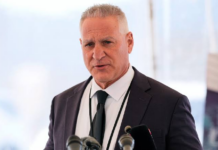
Lawmaker representing the South East Senatorial district of Rivers State, Senator Mpigi Barinada is dead.
The Chairman of the House of Representatives Committee on Works, Akin Alabi, confirmed the sad development in a tribute post on his official X handle on Thursday.
He wrote, “Good night my dear friend. Rest in Peace, Senator Mpigi Barinada. Sen Mpigi represented Rivers South East in the Senate”.
The Rivers Senator was the Chairman, Senate Committee on Works.
Details on the circumstances surrounding his unfortunate death could not be ascertained of press time.
The Nigerian Senate criticized the federal government’s envelope budgeting framework Wednesday, warning that the fiscal model is structurally incapable of meeting the operational demands of security agencies despite President Bola Tinubu’s declaration of a national emergency on insecurity.
The assessment emerged during budget defence sessions where lawmakers pressed officials from multiple security institutions on funding gaps, delayed releases, and stalled capital projects that senators said have directly undermined counterinsurgency operations across the country’s six geopolitical zones.
Senator Yahaya Abdullahi, who chairs the Senate Committee on National Security and Intelligence, told officials from the Office of the National Security Adviser during a Wednesday session that the envelope budgeting template, which imposes fixed expenditure ceilings on ministries, departments, and agencies, has proved too rigid for a sector that requires flexibility and rapid response to evolving threats.
“The envelope budgeting system is not sufficient to address the magnitude of security threats confronting the nation,” Abdullahi said. “If we are serious about winning the fight against insecurity, then our funding structure must reflect that seriousness. Security agencies cannot operate optimally under financial constraints and delayed releases.”
Nigeria allocates approximately 5.4 trillion naira to defence and security in the 2026 budget, the largest sectoral allocation for the third consecutive year, reflecting what Tinubu has repeatedly described as the government’s highest priority. Despite those headline figures, lawmakers across multiple budget defence hearings have questioned whether bureaucratic constraints and irregular fund releases undermine the intended impact of security spending. Abdullahi said inadequate and delayed releases of funds, particularly capital allocations in the 2024 and 2025 budgets, have significantly weakened security operations nationwide. Several projects designed to strengthen intelligence gathering, surveillance infrastructure, logistics, and operational mobility were either not executed or only partially implemented, he said, warning that failure to fully implement capital votes has a ripple effect across the entire security architecture.
Read Also: US Aircraft, Troops Reportedly Land In Maiduguri
Mohammed Sanusi, Permanent Secretary for Special Services at the Office of the National Security Adviser, corroborated the committee’s concerns during the session. “The envelope budgeting framework has posed significant challenges to our operations,” Sanusi stated, according to remarks provided to the committee. “Irregular overhead releases and the failure to fully implement capital appropriations have affected our ability to effectively coordinate and support security agencies.”
Sanusi stressed that security management requires a dynamic funding mechanism capable of responding to sudden spikes in violence, emerging threats, and intelligence-driven operations that cannot be delayed by bureaucratic bottlenecks. The ONSA plays a coordinating role for multiple security and intelligence outfits, he noted, and its effectiveness is directly tied to the predictability and sufficiency of funding flows. The Senate’s criticism unfolded against a backdrop of mounting security pressures nationwide. Nigeria continues to grapple with insurgency in the Northeast, banditry and mass kidnappings in the Northwest and North-Central regions, separatist tensions in the Southeast, and oil theft and piracy in the Niger Delta. Despite significant annual allocations to defence and security, lawmakers and analysts have questioned whether the structure of releases and spending patterns aligns with operational realities on the ground.
Under the envelope budgeting system, ministries, departments, and agencies operate within predetermined spending ceilings based on projected revenues and fiscal constraints. The model is intended to promote discipline and macroeconomic stability, but critics argue it can stifle agencies that require flexibility, particularly in emergency-driven sectors such as security.
Senators at the session showed that the declaration of a national emergency on security ought to trigger exceptional funding measures rather than routine fiscal controls. They warned that a mismatch between threats on the ground and resources in the treasury could erode public confidence and embolden criminal networks. The Senate’s concerns about envelope budgeting extended beyond the ONSA session. During a separate budget defence hearing with the Accountant-General of the Federation last week, the Senate Committee on Finance suspended consideration of the office’s 2026 budget proposal, citing poor implementation of the 2025 budget and more than 2.2 trillion naira owed to contractors. Lawmakers called for an urgent review of the envelope budgeting framework and recommended adopting a performance-based budgeting system to enhance accountability and efficiency.