





Five Republican members of the U.S. House of Representatives have introduced legislation alleging that Chinese nationals operating illegal mining sites in Nigeria are financing armed groups by paying them for protection, a claim embedded in a broader bill focused on religious violence and insecurity in the country.
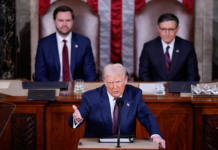
The proposal, titled the Nigeria Religious Freedom and Accountability Act of 2026, was sponsored by lawmakers Riley Moore of West Virginia, Chris Smith of New Jersey, Bill Huizenga of Michigan, Brian Mast of Florida and Mario Diaz-Balart of Florida. It is aimed at expanding U.S. oversight of Nigeria’s security crisis and strengthening reporting obligations on the U.S. government’s response to religious persecution and mass violence. Smith, who chairs the House Foreign Affairs Subcommittee on Africa, said the bill was expected to advance quickly through the House and attract bipartisan backing.
At the centre of the legislation is a directive requiring the U.S. Secretary of State to submit a comprehensive report to Congress detailing American diplomatic, security and policy efforts to address large-scale violence in Nigeria. The bill frames the crisis as one of sustained religious persecution and mass atrocities, citing attacks on civilians, forced displacement, kidnappings, sexual violence and the destruction of communities since 2009.
In the text of the bill reviewed by local media, the sponsors attribute these abuses to groups including Boko Haram, the Islamic State West Africa Province (ISWAP), Fulani militant factions and other extremist organisations operating in different parts of the country. It estimates that tens of thousands of Christians have been killed during the conflict period, alongside widespread attacks on churches and religious infrastructure. The document argues that the scale and pattern of violence meet the legal threshold for designation of certain groups as foreign terrorist organisations under U.S. law.
Read Also: Bandits Abduct Catholic Priest, 10 Others, Kill Three
Beyond the religious violence framework, the bill introduces allegations linking illegal mining operations to militant financing. It states that Chinese nationals involved in unlicensed mining activities in Nigeria have paid protection money to armed groups, including Fulani militias, in exchange for access to mining sites and operational security. The legislation calls on the U.S. State Department to work with Nigerian authorities to counter what it describes as “hostile foreign exploitation” linked to these activities.
Neither the Chinese government nor the Chinese embassy in Nigeria has publicly responded to the claims contained in the proposed legislation.
Allegations of financial links between illegal mining and armed groups in Nigeria have surfaced previously in investigative reporting and research publications. SBM Intelligence, a Lagos-based security and strategic research firm, has documented cases in which foreign mining operators allegedly paid armed groups to secure access to mineral-rich مناطق in northern and central Nigeria. In findings shared with international media outlets, the firm described militant leaders asserting control over territories where mining operations were active and demanding payments from operators working in those areas.
Separate reporting by Nigerian investigative outlets has also described arrangements between armed groups and mining operators in parts of Niger State, including allegations that intermediaries negotiated access to sites through family members of militant leaders. Nigerian authorities have not publicly confirmed the specific claims involving Chinese nationals, and no court proceedings related to the allegations have been announced.
The new bill is part of a broader series of legislative efforts in Washington focused on Nigeria. Moore and Smith are also backing a separate proposal that seeks terrorist designations for specific Nigerian political figures and armed herder groups, a move that has drawn criticism from Nigerian officials and civil society groups who argue it risks oversimplifying a complex security crisis rooted in criminality, banditry, insurgency and local conflicts over land and resources.
U.S.-Nigeria relations have become increasingly strained over differing interpretations of the violence. Some U.S. lawmakers and advocacy groups have described the conflict as a campaign of targeted religious persecution, particularly against Christian communities in parts of northern and central Nigeria. Nigerian authorities have consistently rejected that characterisation, maintaining that terrorism and criminal violence affect communities across religious and ethnic lines.
Read Also: Police Station, Church Burned, Residents Abducted By Bandits
Tensions escalated further late last year after the United States redesignated Nigeria as a “Country of Particular Concern” under U.S. religious freedom legislation, a status that allows for sanctions and other punitive measures. U.S. officials cited concerns about religious freedom and civilian protection. The Nigerian government disputed the designation, saying it did not reflect the complexity of the security situation on the ground.
Diplomatic friction deepened in December 2025 when U.S. forces carried out airstrikes targeting Islamic State-linked camps in northwestern Nigeria. Former President Donald Trump said at the time that the strikes were aimed at extremist positions, while Nigerian authorities stated that the operations were conducted with Abuja’s consent as part of a bilateral security partnership. Debris from the strikes was later reported in several states, including Sokoto, Kwara and Niger, prompting public debate within Nigeria over the scope and accuracy of the operation.
The Nigerian military has said the cooperation with the United States remains limited to training, intelligence sharing and tactical support, and that U.S. personnel deployed to the country are not involved in direct combat operations. Defence officials have also emphasised that any foreign military presence operates under Nigerian sovereignty and at the invitation of the government.
The Nigeria Religious Freedom and Accountability Act of 2026 does not authorise military action. Instead, it focuses on reporting requirements, diplomatic engagement, and policy coordination between Washington and Abuja. If passed, it would require periodic briefings to Congress on U.S. efforts to address violence, accountability mechanisms for perpetrators, and strategies to counter financing networks linked to armed groups.
The bill has been formally introduced in the House and referred to the relevant foreign affairs committees for review. No timeline has yet been announced for committee hearings or a floor vote.