














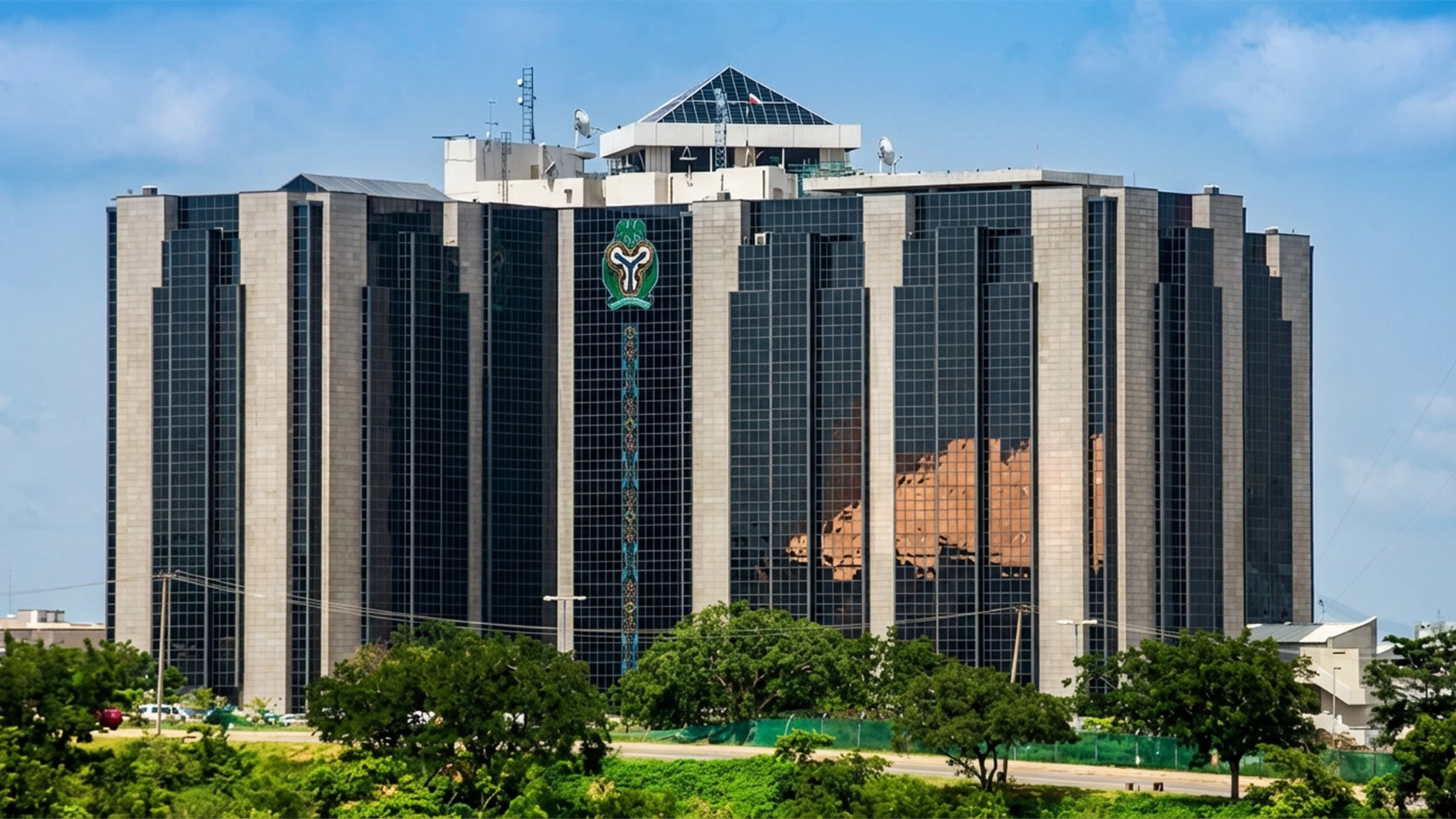
Nigeria’s central bank has cautioned that persistent surplus liquidity in the banking system and anticipated election-related expenditure could reverse recent macroeconomic improvements, even as policymakers rallied behind ambitious plans to transform the country into a trillion-dollar economy.
Central Bank of Nigeria Governor Yemi Cardoso delivered the warning Tuesday at the close of the National Economic Council conference in Abuja, where federal and state officials had spent two days mapping strategies to accelerate growth and deepen economic reforms. While acknowledging that exchange rate conditions have stabilized and monetary tightening measures have begun producing results, Cardoso said the nation’s economic recovery remains fragile and susceptible to policy missteps.
The apex bank identified a substantial liquidity overhang as a continuing burden on the financial system, raising concerns about renewed inflationary pressure and potential currency instability. Cardoso noted that election cycles historically inject significant volumes of cash into the economy, often undermining monetary policy effectiveness and erasing reform achievements.
“Nigeria’s macroeconomic environment remains exposed to deep-seated structural and policy risks that monetary tightening alone cannot resolve,” Cardoso told conference participants.
He revealed that past intervention programs totaling approximately 10.93 trillion naira, while providing short-term economic relief, had contributed to structural imbalances within the financial sector that continue complicating liquidity management. The central bank governor emphasized that safeguarding price stability would require disciplined liquidity control and coordinated fiscal governance, particularly as the country approaches electoral periods that typically see expansionary government spending. The warnings came as the two-day National Economic Council conference concluded with a unified commitment to delivery-focused reforms and coordinated policy implementation aimed at building what officials termed a one-trillion-dollar economy.
More than 350 participants attended the Presidential Villa gathering, including representatives from federal and state governments, development partners, private sector organizations, and civil society groups. Discussions centered on aligning subnational strategies with the administration’s long-term economic transformation objectives.
Read Also: CBN Staff Accepts Disappearance Of $6.2M Under Emefiele
President Bola Tinubu, in remarks delivered by Senate President Godswill Akpabio, stressed that economic reform must extend beyond discussion to produce measurable outcomes affecting citizens through employment generation, business expansion, improved healthcare delivery, institutional strengthening, and broadened opportunities across all states. Akpabio, who formally closed the conference on the president’s behalf, described the Renewed Hope Agenda as a national commitment rather than mere rhetoric. He underscored that policy decisions must translate into visible improvements in living standards. “Reform is not an event; it is a process that requires courage, patience and consistency,” Akpabio said, quoting Tinubu. He added that enhanced coordination and accountability mechanisms would prove essential to converting policy frameworks into tangible citizen benefits.
The senate president commended Vice President Kashim Shettima for providing steady leadership as National Economic Council chairman and guiding discussions with clarity. He also acknowledged contributions from governors, ministers, legislators, development institutions, and private sector representatives.
A central theme emerging from the conference was consensus around accelerating policies and partnerships capable of propelling Nigeria’s gross domestic product to the trillion-dollar threshold within the medium term. Delegates emphasized that realizing this ambition would depend on disciplined fiscal management, macroeconomic stability, expanded domestic production capacity, and technology-driven productivity improvements.
The trillion-dollar economy target has become a focal point of the Tinubu administration’s economic vision, though analysts have noted that achieving such growth would require addressing persistent structural challenges including infrastructure deficits, regulatory bottlenecks, and limited productive capacity.
Read Also: IMF Advises CBN, Others On Interest Rate Cut
Nigeria’s economy, Africa’s largest by GDP, has struggled with volatility in recent years due to oil price fluctuations, foreign exchange shortages, elevated inflation, and security challenges affecting agricultural and industrial output. The Central Bank of Nigeria has pursued aggressive monetary tightening over the past year, raising interest rates multiple times to combat inflation that reached multi-decade highs following the removal of fuel subsidies and currency devaluation. While these measures have helped stabilize the naira and moderate price increases, inflation remains well above the central bank’s target range, and the cost-of-living crisis continues affecting millions of households.
Cardoso’s comments about intervention-related distortions appeared to reference programs implemented during and after the COVID-19 pandemic, when the central bank deployed various stimulus measures to support businesses and maintain financial system stability. Such interventions, while providing relief during crisis periods, can create moral hazard and complicate subsequent efforts to normalize monetary conditions. The liquidity injected through these programs often persists in the system longer than intended, fueling asset bubbles or inflationary pressures. The central bank governor’s warning about election-cycle spending resonates with historical patterns in Nigeria, where government expenditure typically surges ahead of major polls as incumbents deploy resources to boost popularity and fund campaign operations.
Nigeria is scheduled to hold governorship elections in several states later this year, followed by general elections in 2027 that will determine the next president and National Assembly members. Previous electoral cycles have seen sharp increases in government spending, often financed through ways and means advances from the central bank or drawdowns of reserves, which subsequently complicated macroeconomic management.
The National Economic Council, chaired by the vice president, serves as a constitutional body bringing together state governors and relevant federal officials to advise on economic policy and coordinate fiscal matters across different government tiers.